

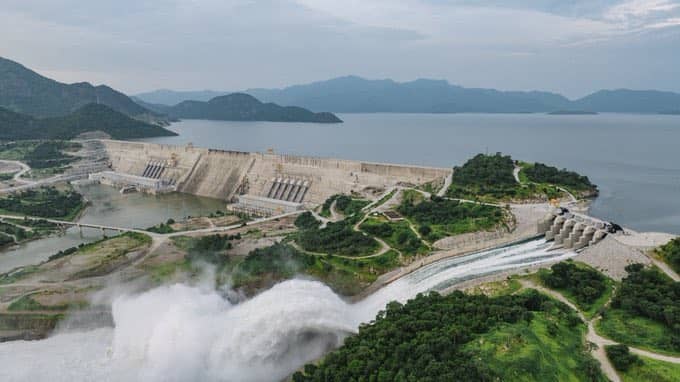
Ethiopia is on the eve of inaugurating its centuries-old aspiration, the Grand Ethiopian Renaissance Dam (GERD), this coming September. The GERD symbolizes resilience, unity, and self-reliance.
Despite external pressures and historical challenges, the project embodies Ethiopia’s determination to make it a reality. GERD, the largest dam in Africa and one of the top 10 in the world, is projected to generate nearly 5.15 GW, igniting hope for millions of Ethiopians by ensuring reliable and affordable electricity. This is particularly vital for rural electrification, which covers nearly half of Ethiopia’s population, thereby bridging the energy gap. The dam will also contribute to overall economic growth by boosting industrialization and modernizing agriculture.
Beyond local consumption, GERD serves as a cornerstone for realizing the African Union’s (AU) agenda of regional integration. Ethiopia has already begun exporting electricity to neighboring countries such as Sudan, Djibouti, and Kenya, fostering interdependence and strengthening regional cooperation.
Ethiopia’s approach to the GERD project has been guided by the principle of Limited Territorial Sovereignty, affirming its stance on the fair and equitable use of Nile waters among the lower riparian states, Sudan and Egypt. Egypt, however, clings to colonial-era agreements that excluded Ethiopia, creating historical imbalances that gave Egypt monopoly over Nile resources—even though Ethiopia contributes over 85% of the river’s waters.
Aligned with the Green Legacy Initiative, launched in 2019 to foster sustainable development by planting billions of trees across urban and rural landscapes, the GERD will play a pivotal role in reducing carbon emissions by providing clean, renewable energy. Together with the Green Legacy, the dam will help mitigate the environmental challenges of the Horn of Africa—an area long plagued by recurrent droughts—while also contributing to global climate change mitigation efforts.
The GERD also stands as a symbol of Ethiopia’s diplomatic achievement. Since the project’s inception, Ethiopia has withstood heavy pressure, mainly from Egypt and other external actors, by balancing its rights with the concerns of downstream countries. By adhering to the philosophy of “African Solutions to African Problems” under AU-led negotiations, Ethiopia has successfully resisted external interference, marking a diplomatic victory.
As H.E. Prime Minister Abiy Ahmed underlined in his recent televised address, the dam signifies “the end of belittling Ethiopia” and marks a turning point that positions the country to play a stronger role in regional geopolitics.
Ultimately, the GERD will transform Ethiopia into a regional power hub, ensuring sustainable development while promoting regional integration. This integration, in turn, will help stabilize the volatile and conflict-ridden Horn of Africa—exactly the kind of transformation the region and the wider world seek.
By IFA Staff
Disclaimer:
The content disseminated by the Institute of Foreign Affairs (IFA) – including, but not limited to, publications, public statements, events, media appearances, and digital communications – reflects the views of individual contributors and does not necessarily represent the official positions or policies of the Institute, its partners, or any affiliated governmental or non-governmental entities.
While the IFA endeavors to ensure the accuracy, integrity, and timeliness of the information presented, it makes no representations or warranties, express or implied, regarding the completeness, reliability, or suitability of such content for any purpose. The Institute expressly disclaims any liability for errors or omissions, as well as for any actions taken or decisions made based on the information provided.
The inclusion of external links, references, or third-party resources does not constitute an endorsement by the Institute. Additionally, engagement on social media platforms – including, but not limited to, likes, shares, retweets (RTs), or reposts – shall not be interpreted as an endorsement or validation of the views expressed therein.
Readers and audiences are encouraged to exercise critical judgment and seek independent verification when interpreting or relying upon any information disseminated through publications and posts on the Institute’s platforms or representatives.