

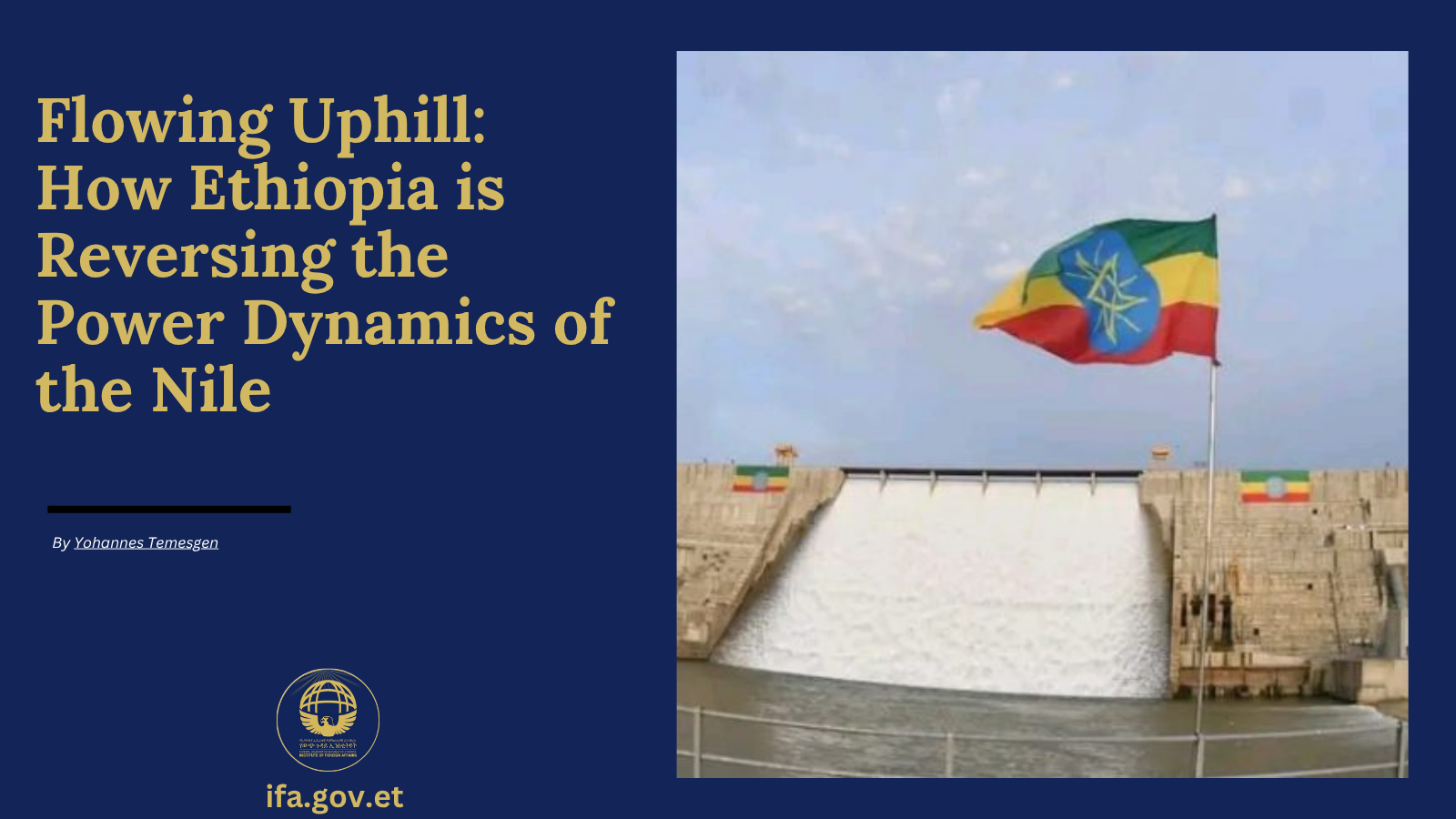
GERD is more than a hydropower project; it’s a geopolitical pivot. This analysis explores how the dam is shattering a century-old status quo and redefining power in Northeast Africa.
In the unforgiving arena of geopolitics, nations are driven by one primal instinct: survival. For too long, the narrative surrounding the Nile has been dictated by downstream powers, framing the river as their historical right and Ethiopia’s development as a threat. This era is over.
The completion of the Grand Ethiopian Renaissance Dam (GERD) is more than an infrastructure project; it is a profound geopolitical pivot. It is the moment Ethiopia moved from a nation pleading its case to a nation projecting its power, transforming its geography from a constraint into a commanding strategic asset.
As noted in a previous analysis on Abren, “From the River to the Sea: Ethiopia’s Geopolitical Destiny”, Ethiopia’s historical sovereignty over the source of the Blue Nile has rarely translated into leverage. For centuries, the nation was caught between its own needs and the demands of downstream capitals. The GERD has shattered that paradigm.
The dam is not merely a source of electricity; it is a source of national pride and unassailable negotiating strength. It is Ethiopia’s ultimate bargaining chip in a world governed not by morality, but by the ruthless law of the fittest. To remain relevant and secure, a nation must command respect, and the GERD does exactly that.
The corridors of power in Cairo now echo with alarmist rhetoric, a testament to this shifted balance. They claim simultaneously that the GERD causes both water shortages and flooding—an impossible contradiction that reveals their true anxiety. It is not about the Nile’s flow, which technical assessments consistently confirm remains unaffected for downstream nations. The real contest is for leverage and regional dominance. Egypt’s growing unease stems from Ethiopia’s undeniable emergence as an economic and geopolitical force in the Horn of Africa.
Egypt’s persistent demand for a “binding agreement” is, in essence, a coded attempt to control GERD from within Ethiopia’s borders. But let us pose an honest question: if the roles were reversed, would Cairo ever allow Addis Ababa to dictate terms over the Aswan High Dam? The answer is self-evident. In fact, Egypt explicitly excluded Ethiopia’s involvement in the construction of its own Aswan high dam. Emperor Haile Selassie’s request on information was rebuffed in the 1950s. Ethiopia was systematically excluded from any meaningful dialogue or data-sharing regarding the Nile throughout the 1950s.
This demand for veto power is a historical anomaly. When Türkiye built 22 dams on the Euphrates and Tigris, no downstream nation was granted control. When China erected massive dams on the Yarlung Tsangpo (Brahmaputra) or when the U.S. built the Hoover Dam, neither India nor Mexico sought binding oversight. Why, then, should Ethiopia be held to a different standard? The language of “historic rights” is a language of the weak; the language of sovereign development is the language of the strong.
This dynamic is not unique to the Nile. Across the globe, the same pattern endures: power respects power, while weakness invites interference. In the Gulf, Saudi Arabia and the UAE cooperate when interests align but compete fiercely for dominance. In Asia, the rivalry between China and India mirrors their relentless pursuit of global stature.
Ethiopia, with the GERD, has entered this arena not as a supplicant, but as a peer. It has demonstrated the strategic wisdom to build a project that commands respect, forcing the world to acknowledge its right to utilize its own resources for the prosperity of its people.
Yet, true survival in geopolitics requires more than raw might. It demands the strategic wisdom to negotiate, to cooperate, and to build partnerships without surrendering sovereignty. The future will not belong merely to the strong, but to the wise.
Ethiopia’s path is clear. It must continue to champion equitable and reasonable utilization, as enshrined in international water law. It must engage with Sudan and Egypt, not from a position of weakness, but from the solid foundation of its operational dam and its unwavering national resolve. The goal is not to beggar thy neighbor, but to turn a zero-sum rivalry into a collective opportunity for progress, stability, and shared energy security in the region.
The GERD is the embodiment of a new Ethiopian destiny—one where it is no longer defined by the river, but defines the river’s future. The arena is unforgiving, but for the first time in a long time, Ethiopia is not just a participant; it is a power.
By Yohannes Temesgen,
The article was originaly published on ABREN Flowing Uphill: How Ethiopia is Reversing the Power Dynamics of the Nile – Abren November 4, 2025
Disclaimer:
The content disseminated by the Institute of Foreign Affairs (IFA) – including, but not limited to, publications, public statements, events, media appearances, and digital communications – reflects the views of individual contributors and does not necessarily represent the official positions or policies of the Institute, its partners, or any affiliated governmental or non-governmental entities.
While the IFA endeavors to ensure the accuracy, integrity, and timeliness of the information presented, it makes no representations or warranties, express or implied, regarding the completeness, reliability, or suitability of such content for any purpose. The Institute expressly disclaims any liability for errors or omissions, as well as for any actions taken or decisions made based on the information provided.
The inclusion of external links, references, or third-party resources does not constitute an endorsement by the Institute. Additionally, engagement on social media platforms – including, but not limited to, likes, shares, retweets (RTs), or reposts – shall not be interpreted as an endorsement or validation of the views expressed therein.Readers and audiences are encouraged to exercise critical judgment and seek independent verification when interpreting or relying upon any information disseminated through publications and posts on the Institute’s platforms or representatives.