

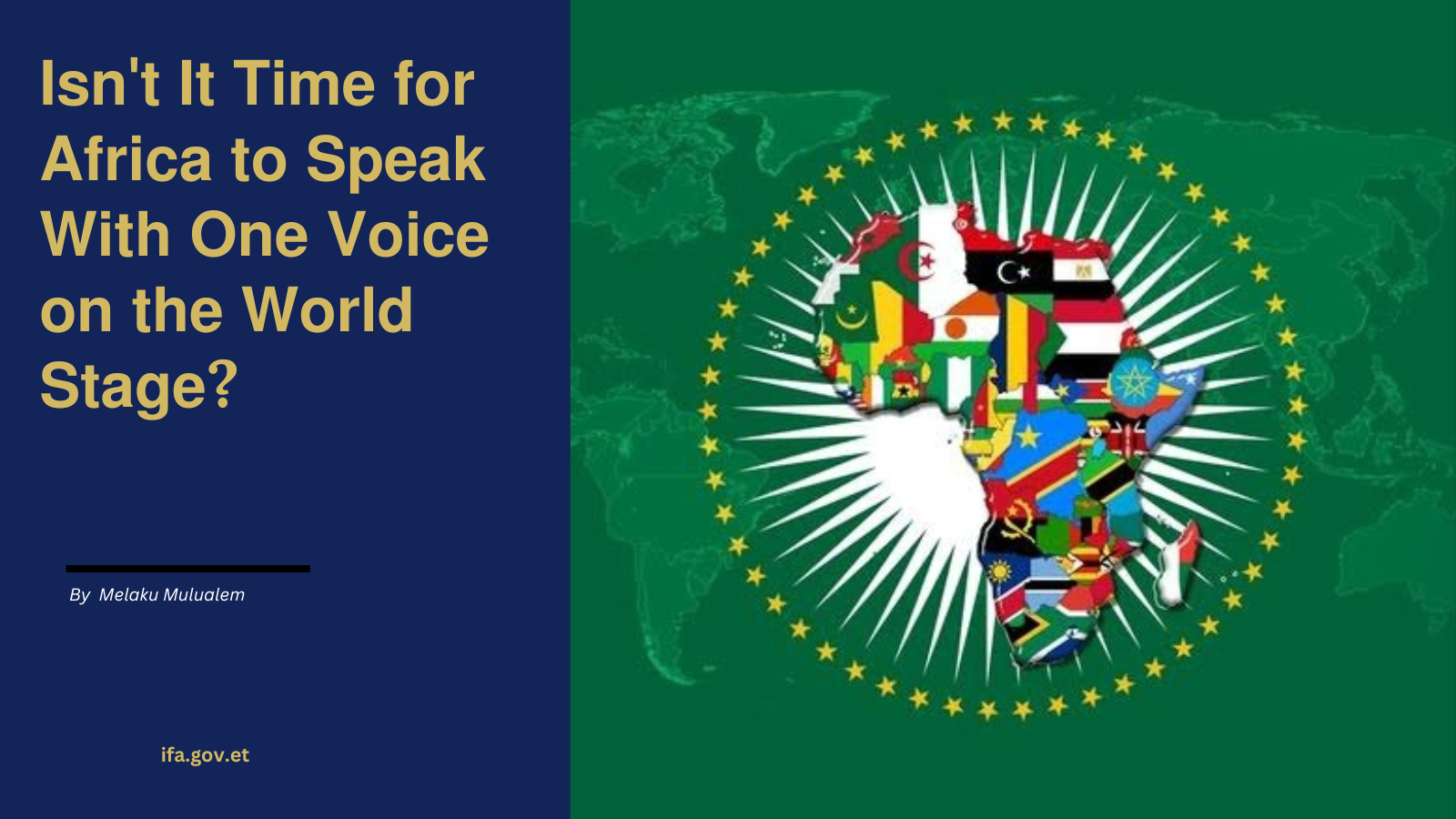
Foreign policy is a set of principles of governments that defines their external relations with other countries. It also serves as an instrument to achieve the national interests of a nation. In implementing their foreign policy, governments manage their relations worldwide through their foreign ministries, embassies and consulates.
In general terms, the foreign policy of governments are targeting in promoting national interests, mainly economic, political, and security interests. In achieving their foreign policy governments use several ways that range from peaceful negotiation and diplomacy to the use of military power.
Some countries have developed their foreign policy towards continents. For instance, the US and the People’s Republic of China have designed their foreign policy towards Africa. In their policy they mention what kind of relationships they want to establish with the continent. On the other hand, the European Union, which is not a sovereign state, has also developed its own foreign policy for dealing with international affairs.
Having said this much about the general foreign policy, I will focus on Africa’s relations with other countries and continents. In the foreign policy document of China towards Africa, it is stated that China has an interest to “establish and develop a new type of strategic partnership with Africa, featuring political equality and mutual trust, economic win-win cooperation and cultural exchange”. Moreover, the policy also underlines that China will support Africa in the field of agriculture, economic aid, culture, environment, human resource development, medical assistance, debt relief and cancellation, increase cooperation in science and technology and the like.
Similarly the US has stated its foreign policy towards Africa by saying “…support for democracy and the strengthening of democratic institutions on the continent, including free, fair, and transparent elections; supporting African economic growth and development; conflict prevention, mitigation, and resolution; supporting presidential initiatives;…working with African nations on transnational issues such as drug smuggling, money laundering, illicit arms, and trafficking in persons”.
In order to translate their foreign policy towards Africa into practice some countries have established forums and partnerships with the African Union. African countries are also trying to utilize these forums for their own political and economic benefits. My argument on this issue is that the African Union should also have its own foreign policy in dealing with the rest of the world. Otherwise, there will be policy incoherence between Africa and other countries of the world.
Africa has 54 independent countries which have their own foreign policies. Taking this crude fact into consideration, one can argue that it is difficult to establish one foreign
policy for all African countries. But my argument is that Africa has common interests and issues that can be translated into foreign policy by which the continent can undertake joint actions.
Some of the common interests of African countries are the security and stability of the continent, sustainable economic development, good governance, democracy and human rights, technology transfer, development of culture, environment and the like. These common interests can be translated into foreign policy document of the continent. Such foreign policy would help Africa to be proactive than to be reactive to the policies and interests of other countries.
When we see the current trends and interaction of the African Union with other big countries it is possible to say that the latter develop their own foreign policies towards the former and either a forum or a partnership will be established. This means that Africa is fulfilling the agenda of the great countries. But this doesn’t mean that Africa is not getting some benefit from such interaction. Through such forums Africa could get political and economic benefits as well as a chance of experience-sharing in various fields. Just to mention one example, China built the new conference building of the African Union based on the partnership which has been established between them.
So far Africa as a continent has established strategic partnerships at various levels. These partnerships are at the level of continent-to-continent, continent-to-country and institution-to-institution. These partnerships are Africa-Turkey Partnership, Africa- Europe Partnership, Africa-South America partnership, Africa-India Forum Summit, Forum on China–Africa Cooperation (FOCAC) and the Tokyo International Conference on African Development (TICAD) with Japan. I would like to argue that developing an African policy should get priority than establishing partnership or any other multilateral forums with big countries, continents and institutions.
The European Union, which comprises 28 member states, has its own foreign policy in interacting with others. The 1992 Treaty on European Union was a base for establishing the Common Foreign and Security Policy (CFSP) of the Union. Regarding the implementation of the foreign policy “most foreign and security policy decisions are taken by unanimity – all EU countries have to agree on a decision”. This decision-making process is a guarantee for member states in protecting the sovereignty of the country.
The foreign policy of the European Union deals with “international issues of a political or diplomatic nature, including issues with a security or military orientation”. The Union has established a broad set of principles that would help them in guiding the external relations and actions. But this doesn’t mean that member countries of the Union have stopped in exercising their own national foreign ministries and their own national foreign policies.
Similar to European countries, African counties have also a common ground that can be developed into a kind of “African Policy or African Engagement” with other countries
and entities. Such a policy would help Africa to have common positions on various international issues as well as to speak and act as one. Unlike the European Union, the establishment of African Standby Force under the African Union is a leap forward in maintaining peace and security in the continent. The basic principles of establishing the Standby Force can also be formulated into the security policy of the African Union.
The vision of the African Union is to have “an integrated, prosperous and peaceful Africa, driven by its own citizens and representing a dynamic force in the global arena”. From this vision it is clear that the African Union should not be driven by the agenda of other countries. In the absence of such foreign policy towards other countries, Africa will establish relationships based on the agenda and policy of other countries.
The presence of a common foreign policy will help Africa to have a clearly defined strategic partnership and approach to external relations. In designing the common foreign policy there is a need to have unanimous consensus among the member states of the African Union. However, the policy of the continent should not go down to specific policy details.
Africa should develop its own foreign policy which is a mechanism for adopting common principles and guidelines in interacting with other countries. Currently, the African Union is promoting the active participation and contribution of African peoples in the development and integration of the continent. To meet this objective the AU Commission has disclosed the fact that it will receive “inputs informing Agenda 2063 until November 2013.” I believe that the organization will give attention to the issue of common foreign policy of the African Union. I hope that my recommendation on the subject will be considered by the organization.
Melaku Mulualem is a Stakeholder Foreign Affairs Training and Policy Consultancy Director General at the Institute of Foreign Affairs.
Disclaimer :
The content disseminated by the Institute of Foreign Affairs (IFA) – including, but not limited to, publications, public statements, events, media appearances, and digital communications – reflects the views of individual contributors and does not necessarily represent the official positions or policies of the Institute, its partners, or any affiliated governmental or non-governmental entities.
While the IFA endeavors to ensure the accuracy, integrity, and timeliness of the information presented, it makes no representations or warranties, express or implied, regarding the completeness, reliability, or suitability of such content for any purpose. The Institute expressly disclaims any liability for errors or omissions, as well as for any actions taken or decisions made based on the information provided.
The inclusion of external links, references, or third-party resources does not constitute an endorsement by the Institute. Additionally, engagement on social media platforms – including, but not limited to, likes, shares, retweets (RTs), or reposts – shall not be interpreted as an endorsement or validation of the views expressed therein. Readers and audiences are encouraged to exercise critical judgment and seek independent verification when interpreting or relying upon any information disseminated through publications and posts on the Institute’s platforms or representatives.