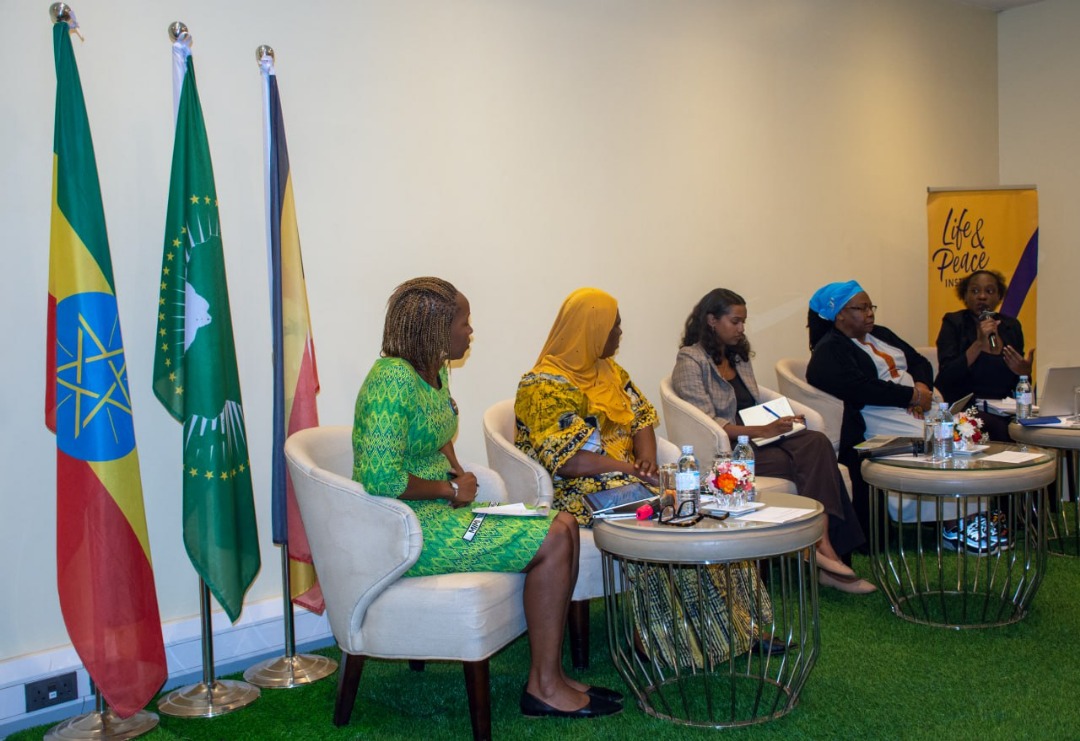
Day 2 of the Horn Dialogue Series IV reinforced a powerful message: peacekeeping in Africa must start with the people it aims to protect. Under the theme “Host Nation, Local Ownership & Community Engagement in Peacekeeping,” experts emphasized that communities are not peripheral to peace—they are its foundation.
Panelist Stella Sabiiti captured this sentiment clearly, noting that “peacekeeping begins with people,” and that real peace is built laterally through relationships, rather than through top-down approaches. Speakers stressed that peacekeeping mandates must reflect community needs, arguing that Peace Support Operations (PSOs) exist to silence guns, protect civilians, and align with people’s aspirations for justice, governance, and livelihoods.
One of the strongest takeaways was the reminder that peace always exists before violence. Traditional mediation practices—dialogue under a tree, neighbour-to-neighbour conversations, and local emissaries—are the first responders when tensions arise. PSOs, panelists said, must recognize and build upon these existing mechanisms rather than overriding them.
Local ownership was highlighted as a decisive factor in the success of any peacekeeping mission. Communities already understand how their societies function and how they want to live; integrating these systems is key to designing effective operations. Panelists also underscored that peacekeeping actors—military, police, and civilians—must model unity and cooperation within their own structures to inspire the same cohesion among communities.
The discussion concluded with a reminder that peace is a shared journey. Communities and leaders are part of the same social fabric, and today’s villagers are tomorrow’s policymakers. Treating communities as partners rather than recipients, speakers noted, is essential for shaping peacekeeping models that endure.
𝐊𝐞𝐲 𝐓𝐚𝐤𝐞𝐚𝐰𝐚𝐲𝐬 𝐟𝐫𝐨𝐦 𝐇𝐨𝐫𝐧 𝐃𝐢𝐚𝐥𝐨𝐠𝐮𝐞 𝐒𝐞𝐫𝐢𝐞𝐬 𝐈𝐕 𝐔𝐧𝐝𝐞𝐫𝐬𝐜𝐨𝐫𝐞 𝐂𝐞𝐧𝐭𝐫𝐚𝐥 𝐑𝐨𝐥𝐞 𝐨𝐟 𝐂𝐨𝐦𝐦𝐮𝐧𝐢𝐭𝐢𝐞𝐬 𝐢𝐧 𝐏𝐞𝐚𝐜𝐞𝐤𝐞𝐞𝐩𝐢𝐧𝐠

Byifa_communication
Dec 2, 2025