

By: Henok Getachew (PhD)
Introduction
African leaders often gather at the annual African Union Summit to discuss issues vital to the continent’s prosperity, development, and security. Since the transition from the OAU to the AU, which culminated in the Durban Summit, essential discussions and decisions have passed, among others, regarding Pan-Africanism and the African Renaissance, eradicating hunger and food insecurity in Africa by 2025, Silencing the Guns in Africa by 2020[1], reform of the African Union, Agenda 2063, and the African Continental Free Trade Area (AfCFTA).
Pan-Africanism and African Renaissance were the theme of the Twentieth Ordinary Assembly of the AU on 27 January 2013. The summit also celebrated the 50th anniversary of the establishment of the Organization of the African Unity.[2] At the African Union Summit at Malabo, Equatorial Guinea, in June 2014, The Malabo declaration on “Accelerated Agricultural Growth and Transformation for Shared Prosperity and Improved Livelihoods” was adopted. It was another member states’ commitment to address “challenges of economic marginalization, hunger and malnutrition”[3]by 2025.
Since 2013, the AU has launched the blueprint for the continent’s sustainable development and economic growth, which is commonly known as Agenda 2063. Indeed, it was the brainchild of the Solemn Declaration of the 50th Anniversary of the OAU/AU in 1963 in Addis Ababa. This 50th Anniversary Solemn Declaration was adopted at the twenty-first Ordinary Session of the Assembly of the Heads of State and Government of the African Union which was held on 26 May 2013. The Declaration testifies to African states’ willingness to work on “African identity and renaissance; the completion of the decolonization process; continental integration; socio-economic development; peace and security; democratic governance; determining Africa’s destiny and seizing the rightful place in global governance”. [4] Agenda 2063 has key projects and initiatives to stimulate rapid economic growth and development and augment the African common identity. Accordingly, it seeks to attain the seven aspirations for 2063. Each aspiration has multiple goals that ultimately ensure Africa We Want by 2063.[5]
The Ordinary Session of the Assembly of the Union of the 2023 Theme of the Year was “The Year of AfCFTA: Acceleration of the African Continental Free Trade Area Implementation” to speed up the implementation of AfCFTA through increasing a close collaboration between different regional mechanisms, regional communities, and the African Union for the benefit of the African people.[6]
Cognizant of the continent is facing education challenges and the consequential impediments to the attainment of the Sustainable Development Goal (SDG) 4 on education, the theme of the year for the 2024 summit was “Educate and Skill Africa for the 21st Century: Building Resilient Education Systems for Increased Access to Inclusive, Lifelong, Quality, and Relevant Learning in Africa”[7]. This summit was aimed at re-galvanizing the member states commitment not only to concretize their pledge to the SDG but also to adhere to the Continental Education Strategy and Education 2030 Framework for Action that help address “out of school rate, the learning poverty rate, 17 million additional teachers and financial needs.”[8] Apart from their challenges and achievements, member states are expected to review their performance in building a resilient education system.
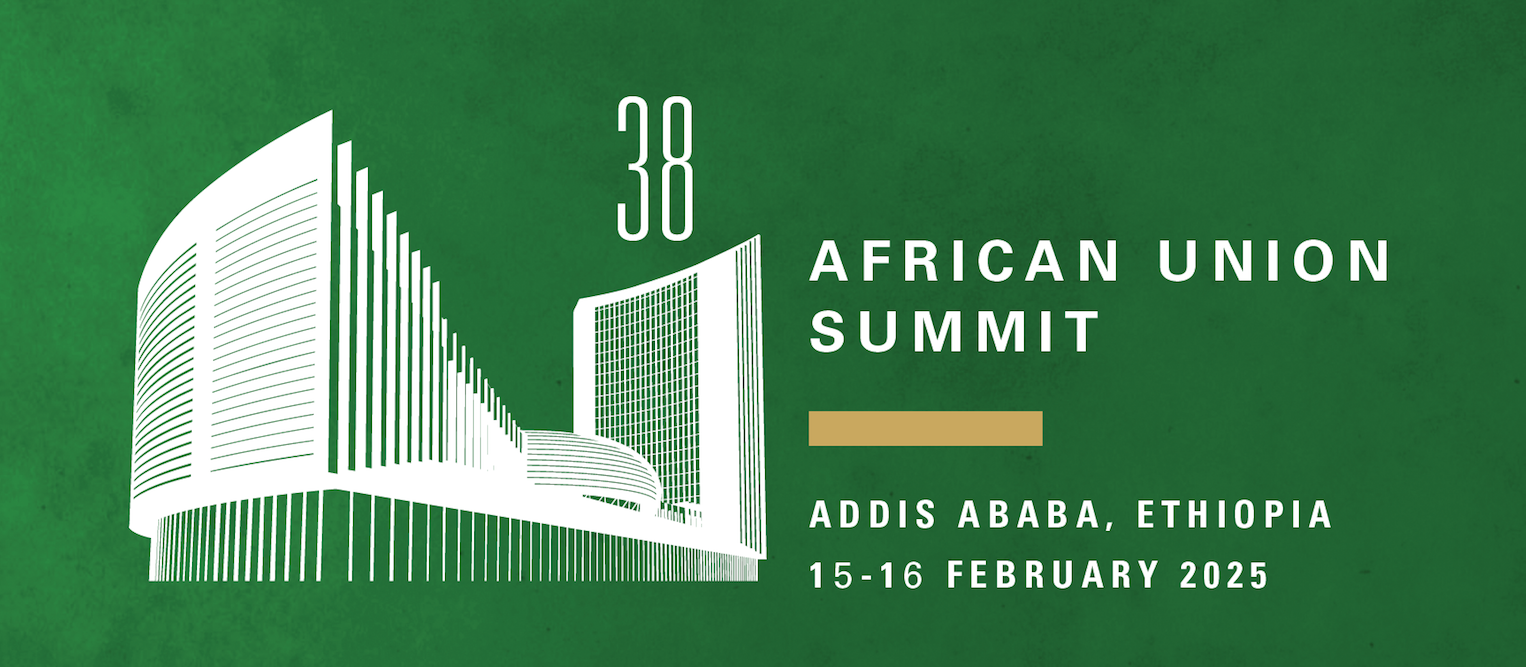
The Forty-Ninth Ordinary Session of the Permanent Representatives’ Committee (PRC) will be held from the 14th to 31 January, 2025. After the PRC meeting, the Forty-Sixth Ordinary Session of the Executive Council will hold its session on the 13th and 14th of February 2025. These two meetings will lay the preparation for the thirty-eighth summit of the Assembly of the continental organization that will be held in Addis Ababa between February 15 and 16, 2025. The agenda item for the summit will be: ‘Justice for Africans and People of African Descent through Reparations’’.
The 2025 Priorities for Africa and the African Union
Geopolitical, environmental, economic, and security issues remain the priorities for 2025. African states are expected to articulate and advance their interests in G-20. AU’s admission to the G-20 could be regarded as one of the “several achievements the AU can claim in the past decade”.[9] The recent G-20 summit, which was held under the chairmanship of President Lula da Silva, Brazil’s priorities aligned with Africa identified six priorities such as “inclusive growth, reforming the global financial architecture, food security, agriculture adaptation to climate change, facilitating a just transition, promoting trade and investment and enhancing health.”[10] South Africa will take the chairmanship of the G-20 and is expected to articulate the African priorities related to poverty and hunger alleviation, reforming the global financial architecture, reforming the UNSC, climate financing, and political instability.
Environmental challenges will remain the main concern of the continent in 2025. African states and partners consider climate financing support the mitigation and adaptation strategies designed to address the causes and consequences of climate change. Although climate financing is still facing challenges, African states still have hope. They will work towards the realization of the goal for climate finance.
The existences of trade barriers are still adversely affecting intra-Africa trade in the continent. Integrating Africa’s economies cannot be realized without firmly committing to AfCFTA. By 2025, African states need to materialize the AfCFTA. They should diversify their bilateral trade relations with regional blocs like the European Union. Indeed, this requires political commitment.
By September 2025, AGOA will expire unless it is subject to renewal. Sub-Saharan African states that are beneficiaries of the preferential trade treatment will engage with the Trump Administration, although no one is certain regarding whether the post-Biden administration has an interest in the extension of the program. Debt servicing and sovereign default may concern some African states in their dealing with creditors. [11]
During 2024, nineteen countries[12] were scheduled to hold presidential and general election.[13] Five countries, such as Burkina Faso, Guinea, Guinea-Bissau, Mali, and South Sudan, postponed the election by reasoning different factors. By 2025, a handful of states, such as Tanzania, Côte d’Ivoire, and Gabon, will host elections. Currently, no one is sure whether the elections will be held according to the electoral norms of the African Union and the expectations of the electoral institutions and the electorates. Nevertheless, the AUC and its Peace and Security Council are responsible for supporting the election processes and encouraging the responsible actors to abide by the voters’ decisions. Earlier preparatory works and drawing lessons from last year’s electoral-related crisis could help, in part, the peaceful holding of elections in those countries.
Likewise, in 2024, regional organizations, particularly the ECOWAS, will continue to grapple with retaining its three members: Burkina Faso, Mali, and Niger. These states have already expressed their exit from the regional club and announced the formation of the Confederation of Sahel States (AES).[14] This trend will continue to have consequences for domestic democratic experiments, regional security cooperation, the increasing involvement of extra-continental actors, and the way AU works with (new) regional security organizations. Put differently, the AU may be compelled to consider emerging security organizations that are parallel to existing ones. In the security domain, conflicts, terrorism, radicalism, and peacekeeping in different corners of the continent will continue to seize the attention of the African Union, its PSC, and the UNSC. For instance, conflicts in Sudan, political transition uncertainty in South Sudan, unconstitutional change of government, the relation between Ethiopia and Somalia, diplomatic tension between the DRC and Rwanda, and worsening security situations in the Sahel and Lake Chad Basin, and the Great Lake region will continue to be the central peace and security agenda of 2025.
Although several issues will dominate AU’s February Summit, the thirty-eighth assembly will be held with the theme of “Justice for Africans and People of African Descent Through Reparations.’’ Payments of reparations have been the concern of the OAU since 1963. Without coherent and unified positions, different civil society organizations, prominent individuals, and scholars have been pushing for the agenda of justice for victims of colonialism. AU’s Adoption of the theme of justice for Africans and people of African descent for the coming February summit marked the emergence of a coherent position to advance “the cause of justice and the payment of reparations to Africans, and the restitution of cultural artifacts, relics, and heritage pillaged during colonization and enslavement.”[15] The First Pan-African Conference on Reparations was held in Abuja, Nigeria, between 27 and 29 April 1993; World Conference against Racism, Racial Discrimination, Xenophobia and Related Intolerance in Durban, South Africa, in 2001 and the African Commission on Human and People’s Rights of Africans in the Diaspora and People of African Descent Worldwide, recognizing the African Diaspora as the sixth region of the African Union and their contributions to the development of the continent as well as championing roles played by some African states to bring the issue to the attention of the Union have in part guided for the emergence reparatory justice for African descents as the theme of the thirty-eighth annual assembly of the AU.
Another major step that helped provide the policy recommendations for reparatory justice for African descent was the International Conference on Building a United Front to Advance the Cause of Justice and Reparations to Africans. The Accra Reparation conference was held in Accra, Ghana, between 14 and 17 November 2023, and it came up with the Accra Proclamation on Reparations.[16] The Accra Proclamation on Reparations, among others, recommended member states of the AU establish a Committee of Experts on Reparation, develop a Common African Policy on Reparation, establish a Global Reparation Fund and the Office of the AU Special Envoy on Reparation for Africans, and reparation, restitution and safeguarding of African cultural heritages. Hopefully, the thirty-eighth assembly will take the recommendations of the Accra summit, the 1993 Abuja Proclamation, and the 2001 Durban Declaration and Program of Action for the AUC and member states’ commitment to operationalize the theme of “Justice for Africans and People of African Descent through Reparations.”
The summit will also expect to elect the chairperson of the Commission and the deputy chairperson from East Africa and North Africa, respectively. Four candidates from Djibouti (Mahmoud Ali Youseuf), Kenya (Raila Amolo Odinga), and Madagascar (Richard Randriamandrato) have already presented their candidacy and run for the chairperson. From North Africa, Algeria, Egypt, Libya, and Morocco are vying for the position of deputy chairperson. The election of the chairperson and deputy chairperson will succeed the current Moussa Faki Mahamat from Chad and his deputy Monique Nsanzabaganwa from Rwanda. Furthermore, other positions on the Commission will also be up for election. AUC positions opened for elections are Economic Development, Tourism, Trade, Industry and Mining; Agriculture, Rural Development, Blue Economy and Sustainable Environment; Infrastructure and Energy; Education, Science, Technology and Innovation and Health, Humanitarian Affairs, and Social Development. Furthermore, member states will also vie for the seat of the three-year term of the supreme decision-making organ of the AU, the Peace and Security Council, during the coming February session.
Conclusions
As discussed, several issues will dominate the coming assembly of heads of state and government as well as Africa throughout 2025. The works of the AU, the Commission, member states, regional organizations, civil society organizations, the UN and the diaspora, and relevant stakeholders will be particularly guided by the theme of the year: “Justice for Africans and People of African Descent Through Reparations”, however. Reparation for past injustices and current skewed relationships entails a strategic approach, coordination, crafting a coherent position, and building institutions that work towards redressing the downsides of colonialism, trans-Atlantic enslavement, and systematic discrimination. Furthermore, political will and commitment are the necessary inputs for the realization of the theme of the year. Apart from the domestic circumstances, the degree of external actors’ responsiveness and receptiveness to the quest for reparation will significantly impact the translation of the lofty ideals embedded in the theme into practice.
[1] African Union.(2020). African Union calls for redoubling of efforts to silence the guns in Africa.https://au.int/en/pressreleases/20200608/african-union-calls-redoubling-efforts-silence-guns-africa
[2] African Union (2013). 20th Ordinary Session of the AU Assembly Opens with a focus on Pan Africanism and African Renaissance. Press Release No 17/20th AU Summit.
[3] African Union (2014). The Malabo Declaration on Accelerated Agricultural Growth and Transformation for Shared Prosperity and Improved Livelihoods. AU.
[4] African Union (201). 50th Anniversary of the Solemn Declaration. Adopted by 21st Ordinary Session of the Assembly of Heads of State and Government of the African Union, at Addis Ababa, 26 May 2013.
[5] The aspirations are: A prosperous Africa based on inclusive growth and sustainable development; An integrated continent, politically united and based on the ideals of Pan-Africanism and the vision of Africa’s Renaissance; An Africa of good governance, democracy, respect for human rights, justice and the rule of law; A peaceful and secure Africa; An Africa with a strong cultural identity, common heritage, shared values and ethics; An Africa, whose development is people-driven, relying on the potential of African people, especially its women and youth, and caring for children and Africa as a strong, united, resilient and influential global player and partner.
[6] African Union.(2023).36th Ordinary Session of the Assembly of the Union. Addis Ababa, Ethiopia. 18-19 February 2023. https://au.int/en/summit/36
[7] African Union.(2024).37th African Union Summit. Addis Ababa, Ethiopia. February 2024. https://au.int/en/summit/37
[8] AU(2024).Executive Council Forty-fourth Ordinary Session (EX.CL/1476(XLIV)Rev.1)15 January – 15 February 2024. Concept Note on Education as the AU Theme of the Year for 2024. Addis Ababa, Ethiopia.
[9] Djilo, F. and Handy, P. (2024). AU Commissioners must be elected for their ideas, not personalities. ISS Today. https://issafrica.org/iss-today/au-commissioners-must-be-elected-for-their-ideas-not-personalities
[10] Fabricus, P.(2024). G20 Summit ticks most of the African Union’s boxes. ISS Today.
[11] African Development Bank Group.(2024). Annual Meetings 2024: old debt resolution for African countries – the cornerstone of reforming the global financial architecture. https://www.afdb.org/en/news-and-events/annual-meetings-2024-old-debt-resolution-african-countries-cornerstone-reforming-global-financial-architecture-70791
[12]Algeria, Botswana, Burkina Faso, Chad, Comoros, Ghana, Guinea, Guinea-Bissau, Mali, Mauritania, Mauritius, Mozambique, Namibia, Rwanda, Senegal, Somaliland, South Africa, South Sudan and Tunisia.
[13] Siegel, J and Cook, C. .(2024). Africa’s 2024 Elections: Challenges and Opportunities to Regain Democratic Momentum. Africa Center for Strategic Studies. https://africacenter.org/spotlight/2024-elections/
[14] https://www.rfi.fr/en/africa/20241220-ecowas-extends-six-month-grace-period-for-departing-sahel-states
[15]https://au.int/sites/default/files/pressreleases/44073-pr-CALL_FOR_PAPERS_-_AU_ECHO_2025.pdf
[16] African Union.(2023). Accra Proclamation on Reparations. International Conference on Building a United Front to Advance the Cause of Justice and Reparations to Africans. 14 TO 17 November 2023 Accra, Ghana.
About the Author
Henok Getachew (PhD), Senior Researcher at the Institute of Foreign Affairs (IFA).
Disclaimer:-
The opinions stated in this article solely belong to the author and do not reflect the views or positions of the IFA