

Summary
This article provides a comprehensive and theoretically grounded examination of the Grand Ethiopian Renaissance Dam (GERD) within the broader context of Nile Basin hydropolitics. Employing Hegemonic Stability Theory (HST) as its central analytical framework, the authors situate the GERD not merely as an infrastructure project but as a profound geopolitical challenge to the long-standing hydro-hegemonic order dominated by Egypt. The study links theory, empirical analysis, and policy implications to explain how shifts in power, norms, and interests are reshaping cooperation and conflict in one of the world’s most contested transboundary river basins.
Framing the Problem through ‘Hegemonic Stability Theory’
At the core of the article is the proposition that hydropolitical stability in the Nile Basin has historically been underwritten by Egyptian hydro-hegemony, a condition that aligns closely with the assumptions of Hegemonic Stability Theory (HST). As articulated in the article, HST holds that “the stability of the international system hinges on the presence and sustenance of a dominant power capable of furnishing public goods,” including order, predictability, and cooperation. In the Nile context, Egypt historically assumed this role by controlling access to water through colonial-era treaties, diplomatic leverage, and, at times, coercive threats.
The authors emphasize that Egypt’s hegemonic position was not only material but also legal and normative. Colonial agreements granted Egypt and Sudan disproportionate water allocations and veto power over upstream projects, enabling Egypt to “safeguard its interests and maintain the uninterrupted flow of the Nile.” This hegemonic order produced a degree of stability, but it did so by systematically marginalizing upstream states—most notably Ethiopia, which contributes approximately 85 percent of the Nile’s total flow via the Blue Nile.
Within the HST framework, the emergence of a challenger to a hegemon often signals instability. The GERD, the authors argue, represents precisely such a challenge.
The GERD as a Structural Challenge to Hydro-Hegemony
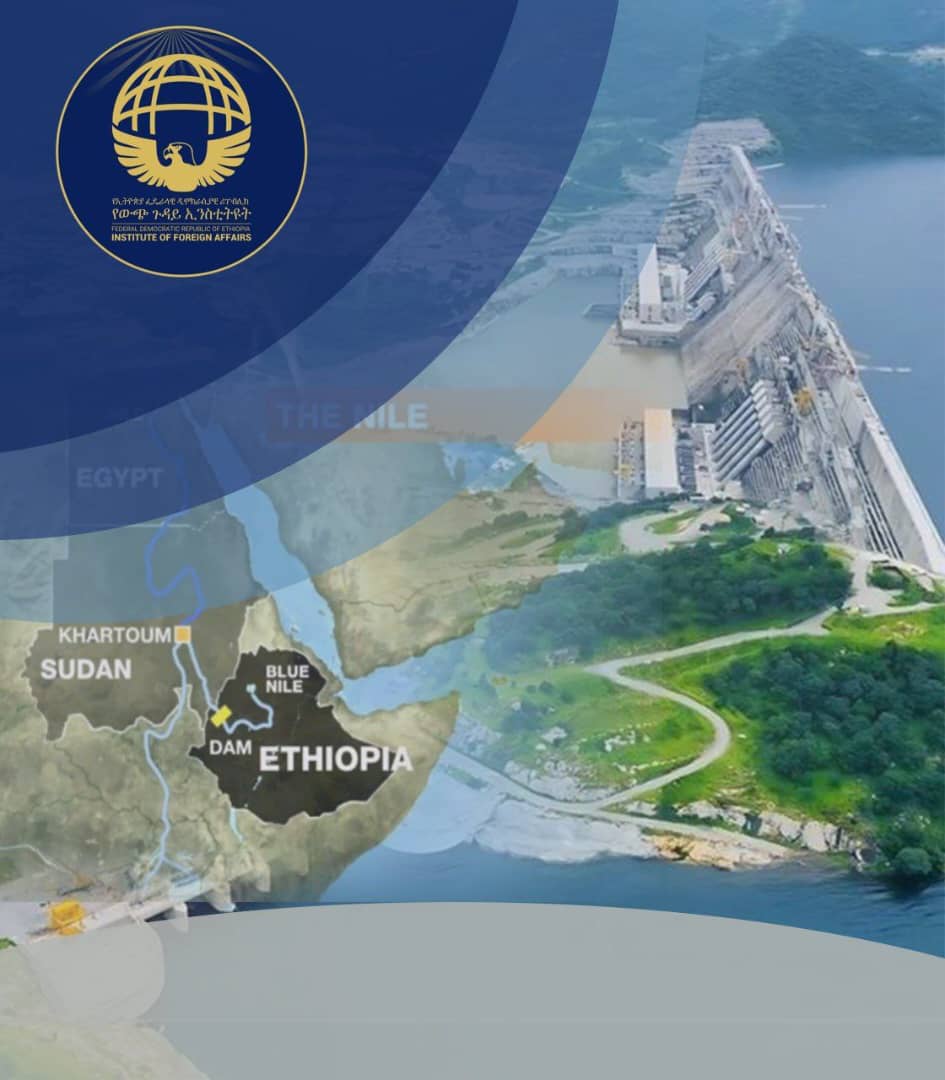
The article conceptualizes the GERD as both a material and symbolic disruption of the Nile Basin’s established order. From Ethiopia’s perspective, the dam embodies national development ambitions, energy security, and sovereign control over natural resources. As the authors note, the GERD is framed domestically as “a symbol of Ethiopia’s national pride and development aspirations,” designed to generate electricity for millions while elevating Ethiopia’s regional standing.
Through the lens of HST, Ethiopia’s actions are interpreted as a classic challenger strategy: mobilizing domestic resources to contest a hegemon’s dominance and to renegotiate the terms of regional order. This challenge, however, produces acute insecurity for downstream states. Egypt and Sudan perceive the GERD as a threat to water availability, agricultural productivity, industrial output, and livelihoods. The article underscores that fears of altered flow regimes, reduced reliability, increased salinity, and ecological disruption have intensified downstream anxieties.
Importantly, the authors do not frame these concerns as irrational. Instead, they situate them within the logic of hegemonic decline and challenge. As HST predicts, when a hegemon’s ability to control outcomes erodes, uncertainty replaces predictability, and conflict becomes more likely unless new arrangements are negotiated.
Normative Shifts in Nile Basin Cooperation
One of the article’s most significant contributions lies in its analysis of shifting norms of cooperation. Historically, Nile governance was dominated by the norm of hydro-hegemony, privileging Egypt’s claims. The GERD, however, accelerates a transition toward alternative norms—most notably equitable and reasonable utilization and, potentially, benefit-sharing.
Drawing on the literature only where analytically necessary, the authors argue that the GERD “represents a shift from the norm of hydro-hegemony to the norm of equitable and reasonable utilization.” This shift challenges the legitimacy of unilateral control and opens space for multilateral governance grounded in fairness, shared benefits, and joint management. The article also highlights the tension between the principle of “no significant harm” and Ethiopia’s development imperatives, suggesting that rigid interpretations of harm may obstruct cooperative outcomes.
Through HST, these normative changes are interpreted as symptoms of systemic transition. Either the hegemon adapts—by accommodating new interests and compensating for perceived losses—or a new order emerges, shaped by redistributed power and revised norms.
External Actors and Systemic Complexity
The analysis further situates Nile hydropolitics within a broader international environment. Regional organizations and external actors influence negotiations, sometimes stabilizing and at other times complicating the system. The authors note that institutions such as the African Union (AU), along with global actors, can function as facilitators, offering mediation, technical expertise, and legitimacy. However, consistent with HST, these actors cannot substitute for a regional order accepted by the principal riparian states themselves.
Climate change, population growth, and uneven development intensify scarcity, compounding the challenges of hegemonic transition. These structural pressures make cooperative solutions not only desirable but necessary for long-term stability.
Synthesis of Analysis and Discussion
In synthesizing theory and empirical analysis, the authors demonstrate that Hegemonic Stability Theory provides a coherent explanation for both conflict and cooperation in the Nile Basin. Egypt’s historical dominance, Ethiopia’s emergence as a challenger through the GERD, and Sudan’s ambivalent position are all intelligible within this framework. The article’s findings reaffirm that hydropolitical outcomes are shaped not solely by hydrology, but by power asymmetries, legitimacy, and the provision—or withdrawal—of public goods.
The discussion underlines that stability cannot be restored through coercion or unilateralism. Instead, it requires negotiated adaptation. As the authors argue, resolution demands either “the restoration of the hegemon’s power and legitimacy” through accommodation and compensation, or “the emergence of a new order” capable of integrating the interests of all riparian states.
Conclusion: GERD, HST, and the Future of Nile Basin Stability
The article concludes that the GERD constitutes a decisive turning point in Nile Basin hydropolitics. Viewed through Hegemonic Stability Theory, it marks the erosion of a long-standing hydro-hegemonic order and the uncertain emergence of a more pluralistic governance structure. The dam simultaneously destabilizes existing arrangements and creates opportunities for a more cooperative, benefit-based system.
The authors underscore that the future stability of the Nile Basin hinges on constructive dialogue, institutionalized cooperation, and mutually recognized norms. The GERD, while a source of tension, also offers pathways toward regional integration, energy trade, and shared development—outcomes that align with a reconfigured understanding of public goods in a post-hegemonic order.
In sum, the article makes a clear and theoretically informed argument: the hydro-politics of the Nile Basin cannot be understood without reference to hegemonic power and its transformation. By integrating HST with detailed empirical analysis, Muktar and Dr. Irshadprovide a rigorous explanation of why the GERD has become such a focal point of contestation—and how it may yet become a foundation for a more stable and equitable Nile Basin order.
The original article was published under the title “Navigating the Waters: A Hegemonic Stability Theory Analysis of the Grand Ethiopian Renaissance Dam and Its Impact on Hydro-Politics in the Nile Basin.”
Find it here: https://www.espjournals.org/IJSHMS/2024/Volume2-Issue1/IJSHMS-V2I1P107.pdf
By Muktar Toyib Usmen and Dr. Irshad Ahmad.
Disclaimer:
The content disseminated by the Institute of Foreign Affairs (IFA) – including, but not limited to, publications, public statements, events, media appearances, and digital communications – reflects the views of individual contributors and does not necessarily represent the official positions or policies of the Institute, its partners, or any affiliated governmental or non-governmental entities.
While the IFA endeavors to ensure the accuracy, integrity, and timeliness of the information presented, it makes no representations or warranties, express or implied, regarding the completeness, reliability, or suitability of such content for any purpose. The Institute expressly disclaims any liability for errors or omissions, as well as for any actions taken or decisions made based on the information provided.
The inclusion of external links, references, or third-party resources does not constitute an endorsement by the Institute. Additionally, engagement on social media platforms – including, but not limited to, likes, shares, retweets (RTs), or reposts – shall not be interpreted as an endorsement or validation of the views expressed therein.Readers and audiences are encouraged to exercise critical judgment and seek independent verification when interpreting or relying upon any information disseminated through publications and posts on the Institute’s platforms or representatives.