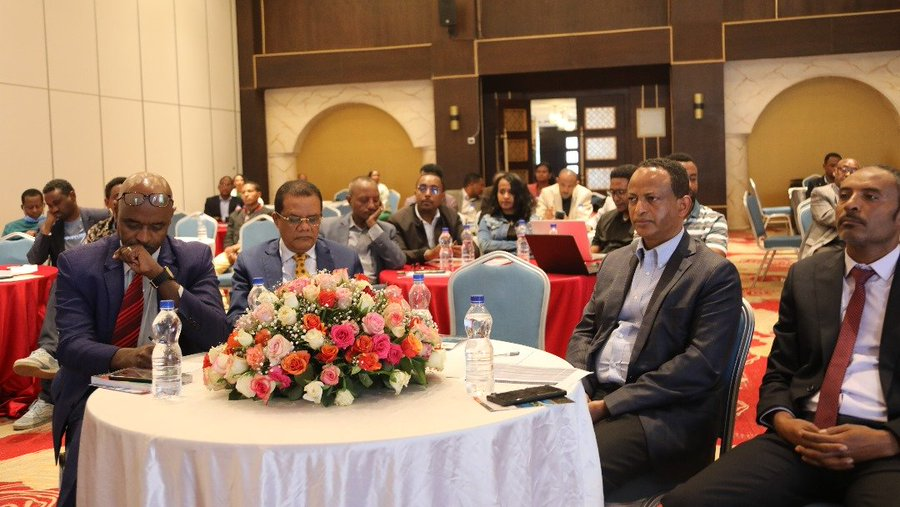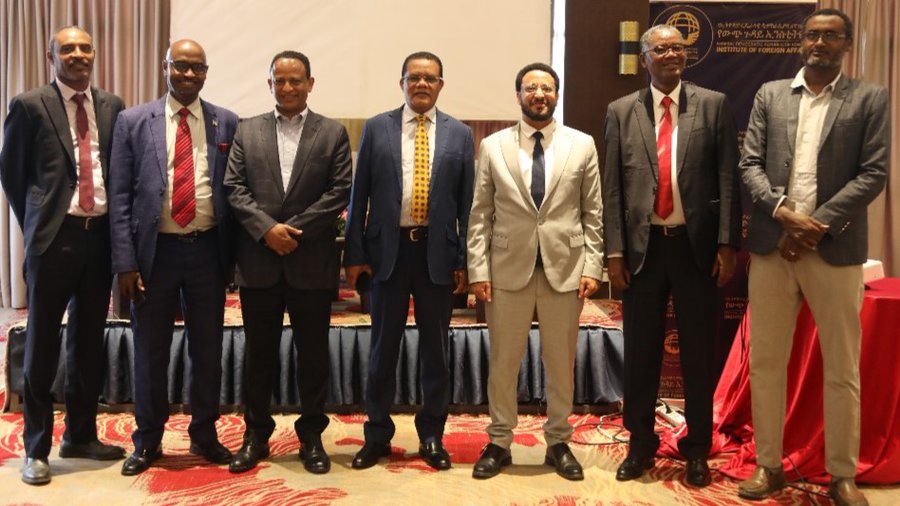
High-level officials and legal experts gathered at the Pyramid Hotel in Bishoftu today, December 20, 2025, for a national consultative workshop co-organized by the Institute of Foreign Affairs (IFA) and the Federal Justice and Law Institute (FLJI).
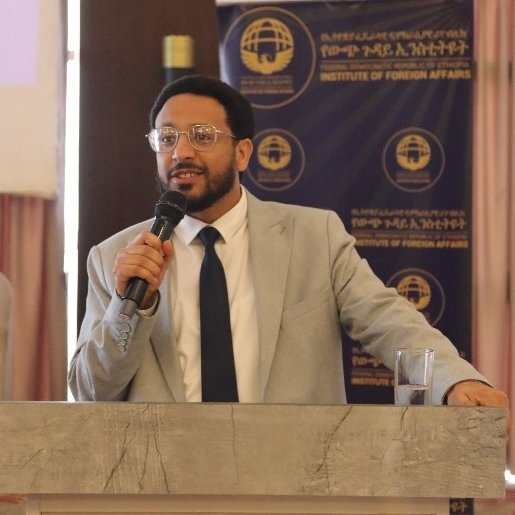
The forum examined the legal framework and strategic implications of Ethiopia’s potential ratification of the Hague Apostle Convention, signaling a significant move toward modernizing the nation’s document authentication system and streamlining international trade and legal cooperation.
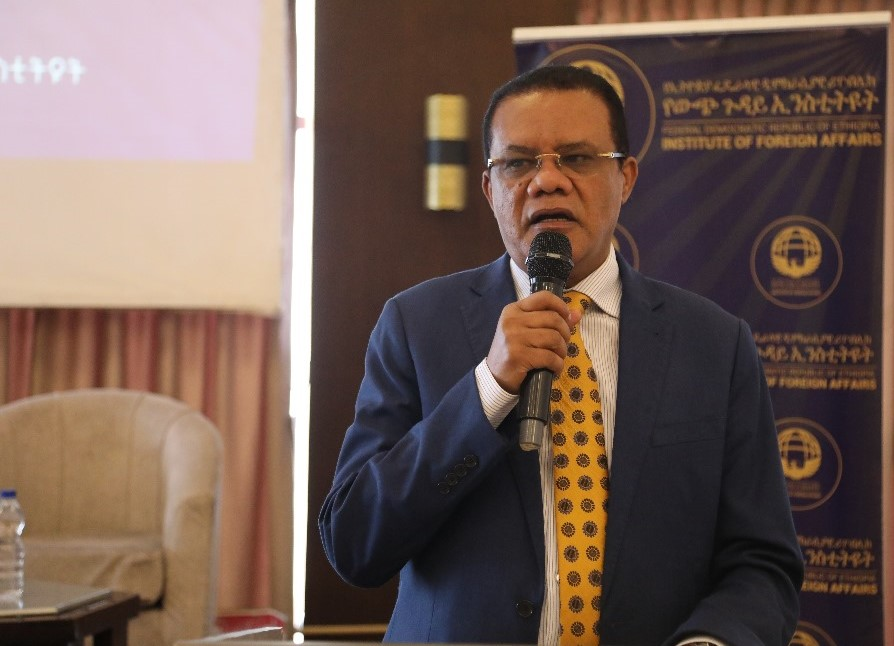
The workshop focused on a comprehensive research report titled “The Legal Framework and Implementation System of the Hague Apostle Convention: Significance and Implications of its Ratification in Ethiopia.” Joining the convention would eliminate the often-cumbersome, multi-layered “legalization” process for public documents, replacing it with a single “Apostle” certificate recognized by all member states.
H.E. Jafar Bedru, Executive Director of the IFA, emphasized that the convention is a “primary international legal instrument” central to Ethiopia’s diplomatic and economic interests.
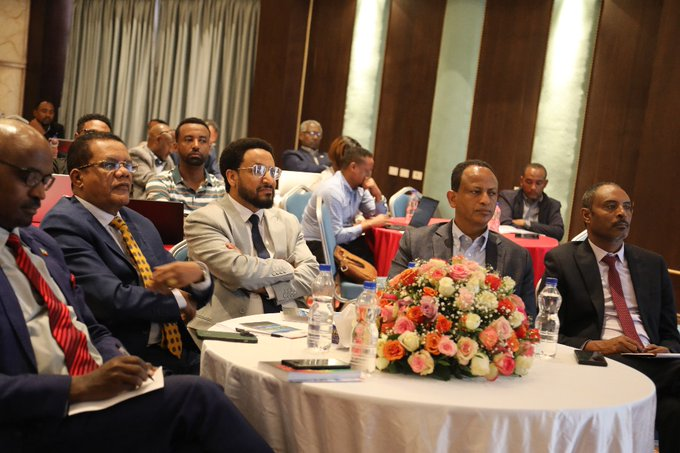
“It has become essential to examine its benefits and implications for our country in depth,” H.E. Jafar noted. “It is believed that ratifying this Convention will play a significant role in streamlining the document authentication system in a way that supports Ethiopia’s development and growth.”
The Director General of the Institute of Law and Justice, Honorable Ambassador Degfe Bula, underscored that the move toward ratification is not merely administrative but a pillar of the nation’s broader economic diplomacy. He highlighted the necessity of ensuring that such transitions are “grounded in knowledge and evidence.”
“These platforms allow for research-based policy options to be developed,” Ambassador Degfe stated. “They provide an opportunity to weigh the pros and cons of complex policy alternatives in a clear, scientific, and evidence-based manner… rather than deciding in isolation.”
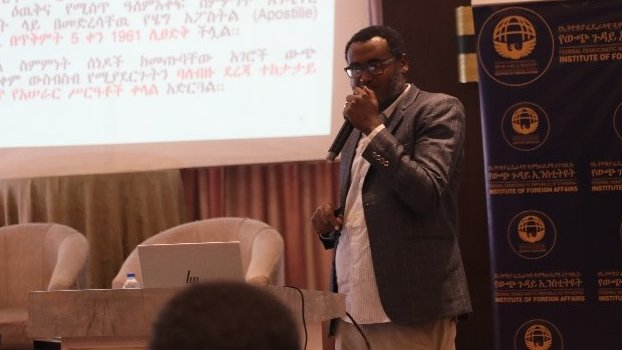
While the opportunities for increased efficiency are clear, the Q&A sessions revealed a cautious approach. Officials acknowledged that while Ethiopia’s existing digital and physical infrastructure is “in good shape,” challenges and potential threats to national interests remain.
The consensus among leadership was that the ratification process must be handled with precision. H.E. Mitiku Mada, Deputy Director of the FLJI, emphasized that the current study is still being refined to address identified gaps before a final policy is launched.
“The Apostle Convention is crucial for Ethiopia but should be joined with due caution,” H.E. Mitiku remarked during the closing session. “We should focus on the national interest of Ethiopia before we delve into adopting the convention.”
The findings of this workshop are expected to serve as a “vital baseline input” for Ethiopia’s high-level leadership. The final policy recommendation will aim to balance the ease of international business with the protection of national legal standards.
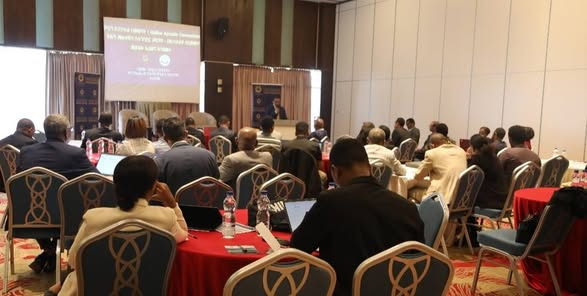
The event saw attendance from senior leadership, including Honorable Ambassador Fitsum Arega, Director General of the Ethiopian Diaspora Service, alongside a wide array of diplomats, legal researchers, and stakeholders from across the justice and foreign relations sectors.