

Introduction
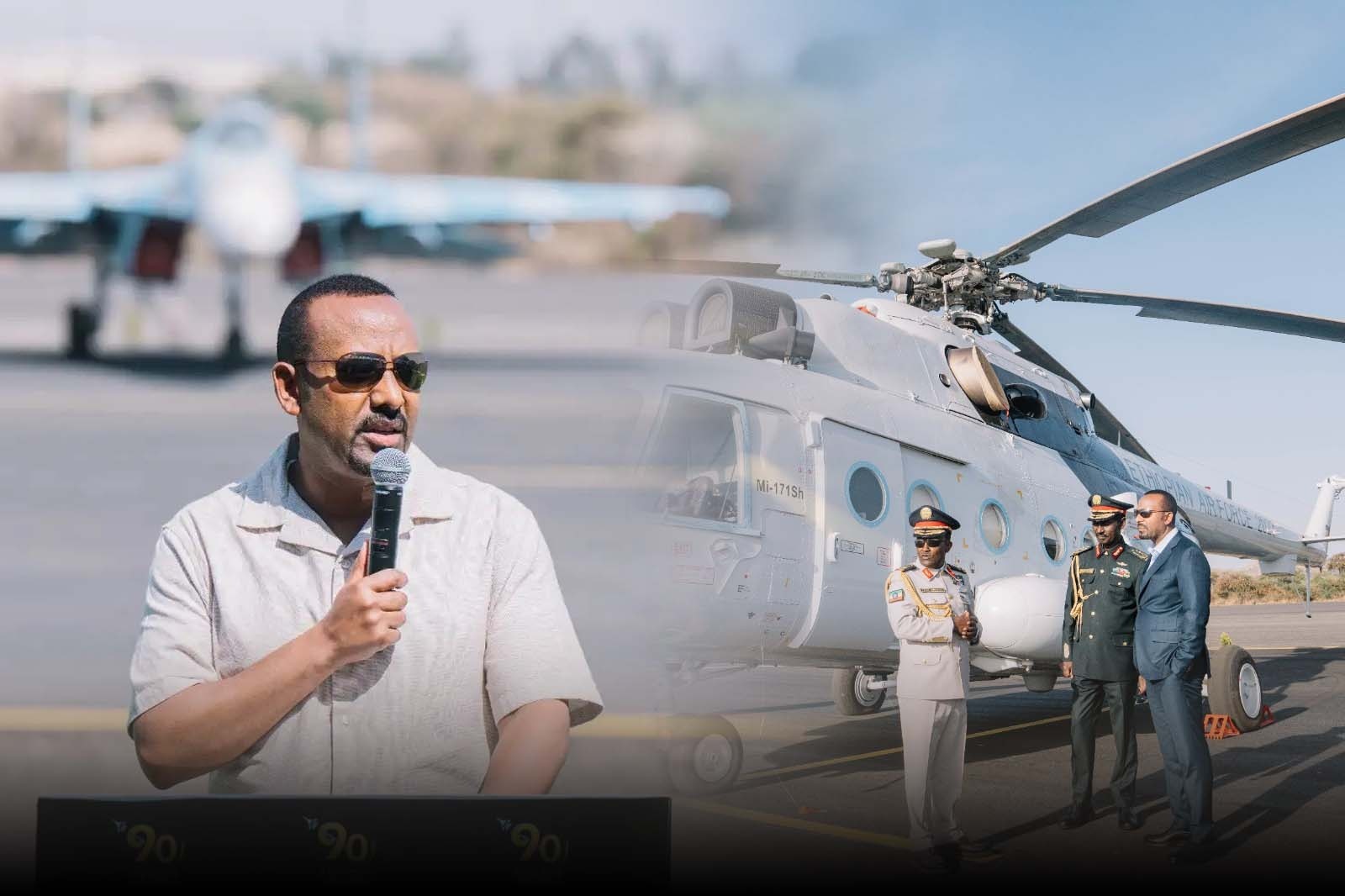
The Ethiopian Air Force’s (EtAF) 90th anniversary celebrations in January 2026 represented a significant moment in Ethiopia’s military evolution. Far beyond ceremonial symbolism, the event publicly showcased a significantly modernized air force with expanded combat aviation, unmanned systems, and growing international military partnerships. The displays confirmed Ethiopia’s transition from a traditionally defensive air posture toward a multidomain, regionally assertive air power.
Key revelations included the operational presence of advanced Sukhoi multirole fighters, the confirmed acquisition of Russia’s Orion-E medium-altitude long-endurance (MALE) unmanned aerial system, and the integration of drones with manned combat aviation. International participation—most notably from the United Arab Emirates Air Force—underscored Ethiopia’s rising relevance in broader Red Sea and Horn of Africa security calculations.
Collectively, these developments indicate that Ethiopia is building not only tactical airpower but also strategic air deterrence. If sustained, EtAF modernization will significantly alter the regional balance of power, with implications for security dynamics involving Eritrea, Sudan, Somalia, Egypt, and Gulf stakeholders.
Event Overview
The 90th anniversary of the Ethiopian Air Force was commemorated between 23–27 January 2026, centered on Bishoftu and Debre Zeit, and anchored by the “Black Lion Air Show 2026” alongside a large aviation and defense exposition. Senior Ethiopian political and military leadership attended, joined by delegations from over 30 African air forces and international partners.
The air show featured live aerial demonstrations, mixed-formation flyovers, unmanned aerial system displays, and static exhibitions of combat aircraft and aviation technology. Prime Minister Abiy Ahmed used the occasion to outline Ethiopia’s ambition to field a technologically advanced, network-enabled air force capable of meeting both national defense and regional security responsibilities by the end of the decade.
International participation added diplomatic weight. Aircraft and rotary-wing assets from the United Arab Emirates Air Force—reportedly including F-16 fighters and AH-64 Apache helicopters—highlighted Ethiopia’s expanding defense relationships beyond Africa and signaled growing interoperability with Gulf partners. Parallel forums such as the Future African Air Forces Forum emphasized Ethiopia’s intent to position itself as a continental leader in aviation development, training, and doctrine.
Inventory and Emerging Capabilities
Fixed-Wing Combat Aviation
The most consequential aspect of the anniversary display was the confirmation of Ethiopia’s expanding high-performance fighter fleet.
Ethiopia currently operates Russian-made Su-30K multirole fighters, acquired from refurbished former Indian Air Force stocks. These aircraft provide extended range, heavy payload capacity, and credible strike and air-to-air capability. Their presence has already improved Ethiopia’s operational depth and deterrence reach.
More strategically significant is the reported induction of the Su-35 “Flanker-E,” a fourth-generation-plus air superiority fighter. Multiple open-source indicators suggest Ethiopia has contracted for up to eight Su-35 aircraft, with at least initial units already observed in Ethiopian markings. Compared to legacy platforms, the Su-35 offers superior sensors, thrust-vectoring engines, advanced electronic warfare suites, and extended beyond-visual-range engagement capability. This places the EtAF among the most capable air forces on the African continent in terms of fighter performance.
Unmanned Aerial Systems
The public appearance of the Orion-E MALE drone marked a milestone. Ethiopia is the first confirmed export customer of this Russian system, which provides long-endurance intelligence, surveillance, reconnaissance (ISR), and precision-strike capability. With endurance exceeding 24 hours and the ability to carry guided munitions, the Orion-E significantly enhances Ethiopia’s capacity for persistent battlefield awareness and targeted operations.
The Orion-E complements previously acquired MALE platforms such as the Turkish Bayraktar TB2, allowing Ethiopia to field a layered unmanned force with both ISR and strike roles. The integration of drones with manned aircraft observed during the anniversary demonstrations indicates doctrinal progress toward coordinated, networked air operations.
Rotary-Wing and Support Assets
While Ethiopia did not publicly unveil new helicopter acquisitions during the celebrations, the participation of foreign attack helicopters and the emphasis on joint demonstrations suggest continued focus on close air support, mobility, and combined arms integration. Rotary-wing aviation remains central to Ethiopia’s internal security operations and border contingencies.
Modernization and Systems Integration
Beyond platforms, EtAF modernization is increasingly systems-centric. Open-source reporting points to upgrades in avionics, electronic warfare, command-and-control connectivity, and precision munitions compatibility—particularly for advanced Sukhoi variants. The emphasis is shifting from platform count to information dominance, survivability, and coordinated employment across domains.
Technology, Training, and Doctrine
The induction of advanced fighters and MALE drones requires corresponding advances in training, maintenance, and doctrine. Ethiopia’s air force is clearly investing in pilot conversion training, technical specialization, and command integration—likely supported through external partnerships.
Operating aircraft such as the Su-35 demands high pilot proficiency, advanced simulator infrastructure, and robust logistics. The presence of international partners, particularly from the Gulf, suggests Ethiopia is leveraging training exchanges and interoperability exercises to accelerate professionalization.
Doctrinally, EtAF is moving toward integrated air operations that combine ISR drones, manned strike aircraft, and ground-based command networks. This evolution supports flexible responses ranging from counter-insurgency and border defense to deterrence signaling and strategic surveillance.
Regional and Geostrategic Impact
Horn of Africa Balance
Ethiopia’s air modernization substantially alters regional military balances. Regional states operate limited and largely aging air assets, leaving Ethiopia with clear qualitative and quantitative advantages. Enhanced Ethiopian air superiority strengthens deterrence while increasing Ethiopia’s freedom of action in crisis scenarios.
Nile Basin and Red Sea Context
While Ethiopia’s air force is not designed for direct confrontation with adversarieal states beyond Ethiopia’s borders, the introduction of Su-35 fighters and long-range ISR assets complicates regional strategic calculations. Ethiopia now possesses improved situational awareness and defensive depth that reinforce its broader national security posture amid unresolved resource disputes.
From a Red Sea and Gulf of Aden perspective, Ethiopia’s growing air capability aligns with shared interests in maritime security, counter-terrorism, and regional stability. The visible involvement of leading Arab and Gulf powers during the anniversary celebrations reflects Ethiopia’s emerging role as a security partner beyond the Horn.
Implications and Outlook
Ethiopia’s air force is entering a new phase—one defined less by numerical expansion and more by qualitative capability sophistication. If current modernization trajectories continue, EtAF will evolve into a regional air power capable of deterrence, rapid response, and sustained operations.
However, success will depend on institutional capacity: training pipelines, maintenance autonomy, budget sustainability, and strategic prudence. Airpower, if misused, can destabilize as much as it deters. Thus, Ethiopia should focus on:-
- Prioritize Sustainability
Ethiopia should invest in domestic training, maintenance, and logistics capacity to reduce long-term dependency on external suppliers.
- Strengthen Regional Confidence-Building
Airpower growth should be paired with transparency and regional communication mechanisms to mitigate risks of regional arms race.
- Deepen Interoperability, Not Just Procurement
Future acquisitions should emphasize systems integration, joint operations, and command connectivity rather than platform accumulation alone.
- Position EtAF as a Continental Asset
Ethiopia can leverage its growing capabilities to lead African airpower cooperation in training, disaster response, and peace support operations.
The 90th anniversary of the Ethiopian Air Force was not merely a commemoration of the past—it was a strategic statement about Ethiopia’s future place in African and Red Sea security. How this power is managed will shape the Horn of Africa for years to come.
By: IFA staff writer
Disclaimer:
The content disseminated by the Institute of Foreign Affairs (IFA) – including, but not limited to, publications, public statements, events, media appearances, and digital communications – reflects the views of individual contributors and does not necessarily represent the official positions or policies of the Institute, its partners, or any affiliated governmental or non-governmental entities.
While the IFA endeavors to ensure the accuracy, integrity, and timeliness of the information presented, it makes no representations or warranties, express or implied, regarding the completeness, reliability, or suitability of such content for any purpose. The Institute expressly disclaims any liability for errors or omissions, as well as for any actions taken or decisions made based on the information provided.
The inclusion of external links, references, or third-party resources does not constitute an endorsement by the Institute. Additionally, engagement on social media platforms – including, but not limited to, likes, shares, retweets (RTs), or reposts – shall not be interpreted as an endorsement or validation of the views expressed therein.Readers and audiences are encouraged to exercise critical judgment and seek independent verification when interpreting or relying upon any information disseminated through publications and posts on the Institute’s platforms or representatives.