

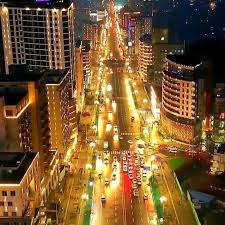
Context and Strategic Backdrop
As a committed member of the United Nations, Ethiopia endorsed the Sustainable Development Goals (SDGs) in 2015, embracing the global mandate to foster inclusive prosperity, environmental responsibility, and enduring peace. These goals form a comprehensive framework for sustainable development, guiding policy and practice for both the present and future generations.[1] Notably, SDG 11 underscores the imperative of cultivating inclusive, safe, resilient, and sustainable urban spaces. Since 2017, urban residents have constituted over 50% of the global population, a proportion projected to rise to 60% by 2030. Urban centers, generating approximately 60% of global GDP, stand at the forefront of economic dynamism.[2]
Despite these opportunities, cities across the developing world, including Ethiopia, confront substantial urbanization challenges. Rapid and often unregulated growth has led to the proliferation of informal settlements, overburdened infrastructure, inadequate public services, deficient waste and sanitation systems, transportation congestion, air pollution, and sprawling development patterns.[3]

Addis Ababa, established in 1886, occupies a distinctive place among African capitals.[4] Unlike cities shaped by colonial blueprints, it emerged organically, deeply rooted in local heritage while gradually integrating national, continental, and international dimensions.[5] Over the past century, it has transformed from a modest encampment into a prominent center of diplomacy and geopolitics. Since the 1950s,[6] its international standing has expanded steadily.
Today, Addis Ababa is more than a capital – it is a vibrant cultural mosaic and a symbol of aspiration. As the seat of the African Union and host to over 135 diplomatic missions, including 53 from African nations, it also accommodates key regional and international institutions such as UNECA, UNDP, and UNESCO. In this context, it stands alongside New York and Geneva as one of the world’s foremost diplomatic hubs.[7]
Yet, the city has experienced periods of volatility. Prior to 2018, it was the locus of political unrest, largely due to controversial expansion policies perceived to threaten the displacement of Oromo farming communities.[8] These tensions were symptomatic of previous urban redevelopment efforts that lacked inclusivity. [9] Infrastructure projects were frequently delayed or mismanaged, eroding public trust and highlighting governance inefficiencies.[10]
Post-2018 Addis Ababa: A New Chapter in Urban and Diplomatic Renewal
The inauguration of Prime Minister Dr. Abiy Ahmed on April 2, 2018,[11] signaled a transformative shift in Ethiopia’s political and developmental trajectory. His leadership quickly prioritized national stabilization and comprehensive reform. For Addis Ababa, this ushered in an era of unprecedented modernization and global engagement.
Under the clarified administrative framework – formally situating the city within the Finfinne Special Zone of Oromia – Addis Ababa gained renewed autonomy to advance strategic development. Collaborating closely with Mayor Adanech Abebe and her cabinet, the federal government pursued an ambitious urban revitalization agenda.[12]
Several landmark projects were initiated: the towering headquarters of the Commercial Bank of Ethiopia, the Adwa Victory Memorial Center, the African International Conference Center, the Science Museum, the Information and Technology Park, and the expansion of the Skylight Hotel. Ethiopian Airlines expanded its operations and announced a major new international airport on the capital’s outskirts. Notably, these initiatives were executed with remarkable efficiency, many completed ahead of schedule – signaling a new standard in project delivery.
Environmental sustainability also gained traction. The Repi Waste-to-Energy facility marked a milestone in clean energy generation. The introduction of digital service centers modernized governance and enhanced the efficiency of public service delivery. Perhaps most transformative was the riverine and urban corridor development initiative, personally championed by the Prime Minister. This nationwide project galvanized participation from citizens across Ethiopia, embodying the unifying ethos of the Grand Ethiopian Renaissance Dam (GERD).

Urban Diplomacy and Foreign Policy: Projecting Transformation Beyond Borders
Ethiopia’s foreign policy is grounded in the principle that domestic development underpins international stature. Accordingly, Addis Ababa’s urban transformation must be strategically leveraged to elevate the country’s global influence. Through alignment with international frameworks such as the SDGs and the Paris Agreement, the city can serve as a diplomatic showcase of Ethiopia’s modernization.
This necessitates a proactive, multidimensional approach to diplomacy. Embassies and foreign missions should function not only as administrative enclaves but as centers of innovation, cultural exchange, and policy collaboration. Public and digital diplomacy should amplify Addis Ababa’s achievements, reshaping perceptions and enhancing the city’s soft power.
Redefining diplomatic engagement within Addis Ababa entails transforming missions into accessible platforms for dialogue and cooperation. Rather than insulated spaces, these entities can contribute to a new urban diplomacy paradigm, one in which Addis Ababa is both a host and a catalyst for international engagement.
Conclusion: Sustaining the Momentum of Transformation and Global Relevance
The post-2018 metamorphosis of Addis Ababa – from infrastructural stagnation and political turbulence to a dynamic, smart, and globally significant city – is a compelling testament to visionary leadership and collective resolve. Yet this success story marks a beginning, not a conclusion.
To sustain this trajectory, continued investment in governance, innovation, and inclusive development is essential. Addis Ababa must deepen its role as a diplomatic capital, not merely in form but in function – becoming a driver of regional integration and a beacon of African modernity.
In its revitalized form, Addis Ababa embodies Ethiopia’s ambitions for prosperity, unity, and international prominence. It stands as a living symbol of transformation – a city reborn through purpose, leadership, and the promise of a brighter future.
[1]UN Office for Sustainable Development https://unosd.un.org/content/sustainable-development-goals-sdgs
[2]UN: Regional Information Centre for Western Europe. https://unric.org/en/sdg-11/
[3] Ibid, UN: Regional Information Centre for Western Europe. https://unric.org/en/sdg-11/
[4] Message of Major Adanech Abebe, https://addismayor.gov.et/
[5] Dirk van Gameren and Anteneh Tesfaye Tola, “A city shaped by diplomacy”, ABE Journal [Online], 12 | 2017, Online since 26 January 2018, connection on 06 May 2025. URL: http://journals.openedition.org/abe/11059; DOI: https://doi.org/10.4000/abe.11059.
[6] Dirk van Gameren and Anteneh Tesfaye Tola, “A city shaped by diplomacy”, ABE Journal [Online], 12 | 2017, Online since 26 January 2018, connection on 06 May 2025. URL: http://journals.openedition.org/abe/11059; DOI: https://doi.org/10.4000/abe.11059.
[7] ENA: A diplomatic hub in transformation. https://press.et/herald/?p=92824
[9] Rebecca Admassu (2018) Urban Redevelopment Challenges in Addis Ababa City Administration: The Case of Kirkos Sub-city. MPMP Thesis, Addis Ababa University, Ethiopia.
[10] Adamu Beyene Negesa (2017) Assessing the Causes of Time Overrun in Building and Road Construction Projects: The Case of Addis Ababa City, Ethiopia. https://www.researchgate.net/journal/Journal-of-Engineering-2314-4912?_tp=eyJjb250ZXh0Ijp7ImZpcnN0UGFnZSI6InB1YmxpY2F0aW9uIiwicGFnZSI6InB1YmxpY2F0aW9uIn19
[11] Wodajo.M.R and Odomaro M . (2021) “Contested Politics in Ethiopia, Post of 2018: Challenges
and Prospects of the Ruling Party”, Aditum Journal of Clinical and Biomedical Research, 1(2);
DOI:http;//doi.org/04.2021/1.1007.
[12] Message of Major Adanech Abebe, https://addismayor.gov.et/
[13] https://x.com/fanatelevision/status/1898120123543961780
About the author
Solomon Tekalign (PhD) is a senior researcher of Multilateral Affairs at the Institute of Foreign Affairs.
Disclaimer:
The content disseminated by the Institute of Foreign Affairs (IFA) – including, but not limited to, publications, public statements, events, media appearances, and digital communications – reflects the views of individual contributors and does not necessarily represent the official positions or policies of the Institute, its partners, or any affiliated governmental or non-governmental entities.
While the IFA endeavors to ensure the accuracy, integrity, and timeliness of the information presented, it makes no representations or warranties, express or implied, regarding the completeness, reliability, or suitability of such content for any purpose. The Institute expressly disclaims any liability for errors or omissions, as well as for any actions taken or decisions made based on the information provided.
The inclusion of external links, references, or third-party resources does not constitute an endorsement by the Institute. Additionally, engagement on social media platforms – including, but not limited to, likes, shares, retweets (RTs), or reposts – shall not be interpreted as an endorsement or validation of the views expressed therein.
Readers and audiences are encouraged to exercise critical judgment and seek independent verification when interpreting or relying upon any information disseminated through publications and posts on the Institute’s platforms or representatives.