

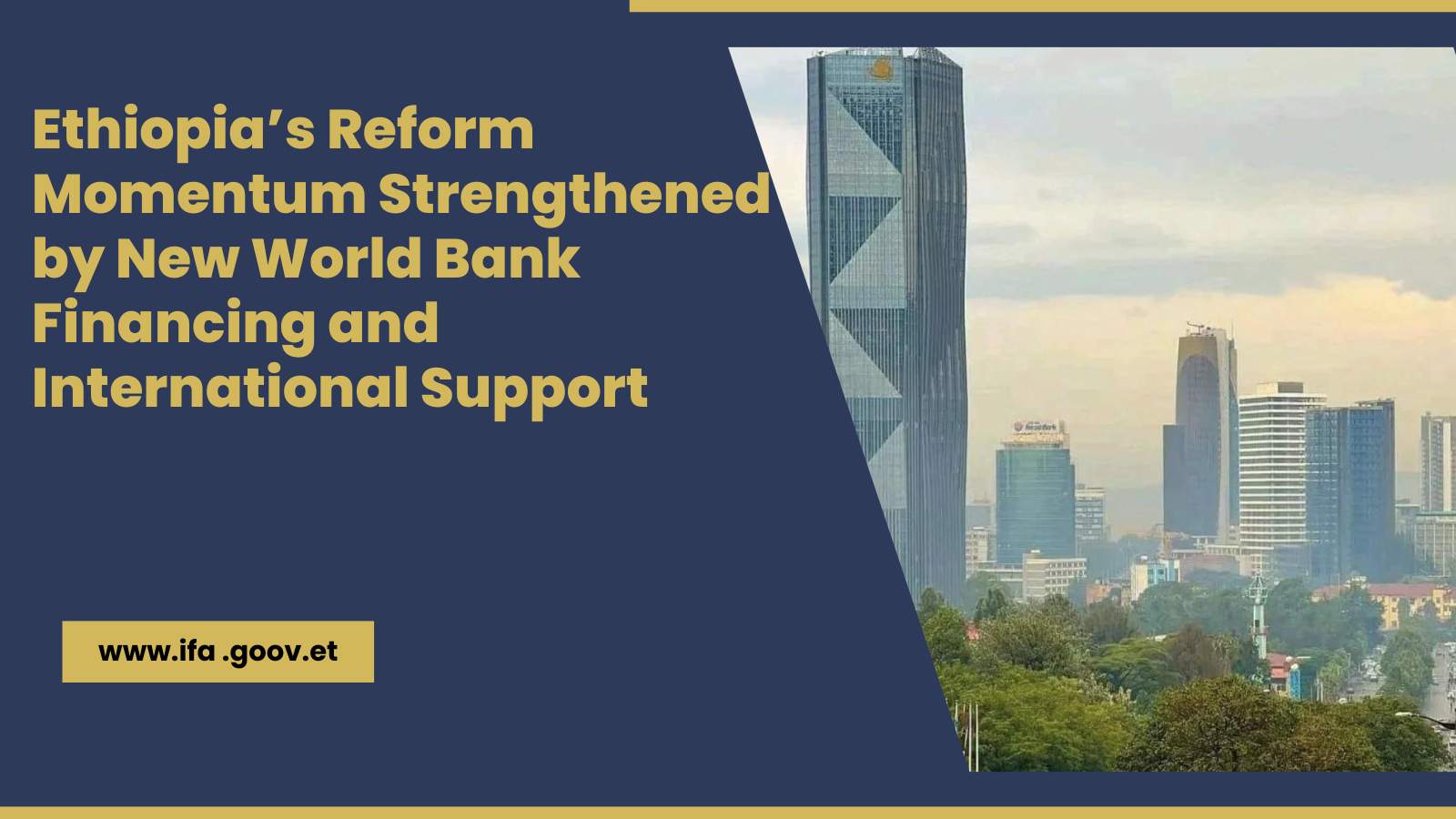
Ethiopia has recently secured $1 billion in fresh funding from the World Bank, marking the latest strong demonstration of international support for the country’s ongoing economic reforms. This development follows closely on the heels of a $262 million disbursement from the International Monetary Fund under its Extended Credit Facility, as well as a landmark $3.5 billion debt relief agreement reached under the G20 Common Framework. These coordinated efforts from multilateral institutions clearly reflect growing confidence in Ethiopia’s reform agenda.
Significant progress has been recorded over the current fiscal year, with foreign exchange inflows reaching a record $32 billion. This remarkable inflow is underpinned by diverse sources, including exports totaling $8.1 billion, remittances of $4 billion, foreign direct investment amounting to $4 billion, and expanding service exports, notably in the aviation sector. These robust inflows have contributed to a $2.6 billion surplus in the balance of payments and enabled the National Bank of Ethiopia to nearly triple its foreign exchange reserves. Collectively, these developments have eased pressure on the country’s reserves and reduced reliance on costly short-term borrowing.
Fiscal reforms have also delivered tangible results. For the first time in recent memory, Ethiopia’s federal budget was executed without recourse to borrowing from the central bank, a critical step toward curbing inflationary pressures. Government revenues reached 900 billion birr, while the fiscal deficit was maintained at approximately 300 billion birr. These outcomes signal improved fiscal discipline and an expanding domestic revenue base.
Importantly, Ethiopia has continued to avoid non-concessional borrowing, with the notable exception of financing for the Koysha hydroelectric dam project. Instead, the government has relied on concessional loans, multilateral grants, domestic resource mobilization, and coordinated debt treatment under the G20 Common Framework. The debt restructuring agreement with Ethiopia’s Official Creditor Committee, which includes key bilateral lenders such as China and France, provides crucial fiscal space for the country to stabilize its economy. Although negotiations around the Eurobond remain ongoing, the overall message is clear: donor confidence is steadily returning.
Alongside these achievements, Ethiopia is advancing critical reforms to enhance economic stability and inclusion. Measures to narrow the gap between official and parallel foreign exchange rates are underway, while a new revenue strategy aims to broaden the tax base, with a target of collecting 1 trillion birr in taxes in the 2025/26 fiscal year. Social protection initiatives are being expanded to safeguard vulnerable populations during this transition. These efforts are supported by a strong economic outlook, with projected GDP growth of 8.1 percent reflecting the recovery of key sectors and rising investor confidence.
Looking ahead, the World Bank has committed \$5 billion in new support over the next three years, while the IMF continues its engagement through the Extended Credit Facility program, providing ongoing macroeconomic policy support and technical assistance. These partnerships will play a vital role in anchoring Ethiopia’s reform commitments and attracting further private capital inflows.
In summary, Ethiopia is demonstrating meaningful signs of economic recovery following years of external pressures. Foreign exchange inflows are surging, fiscal policies are tightening, and reform credibility is strengthening. Yet, challenges remain, including rising living costs, the need to sustain export momentum amid global volatility, and the critical importance of durable peace and political stability to secure lasting economic gains.
The reform path ahead is promising, though far from complete, and with continued focus and international support, Ethiopia is poised to build a more resilient and inclusive economy.