

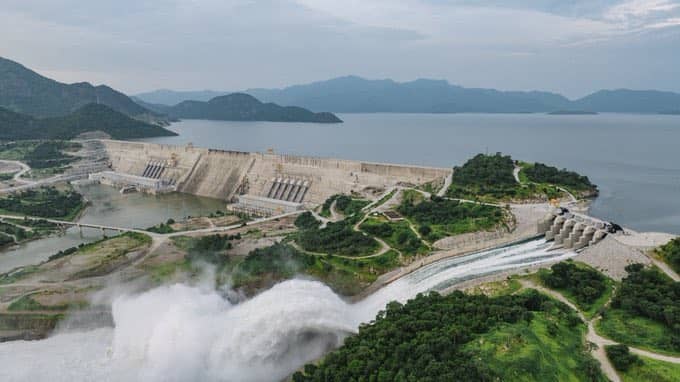
For more than a decade, the Grand Ethiopian Renaissance Dam (GERD) has stood at the center of Ethiopia’s development vision, regional diplomacy and national identity. Initially dismissed by critics as overly ambitious, financially unsustainable or geopolitically destabilizing, the project has now reached its final stage of completion, with the government announcing that inauguration is imminent. This transition from widespread doubt to near-realization marks not only a symbolic victory but also a material turning point in Ethiopia’s pursuit of sustainable economic transformation. Ethiopia has long faced a structural energy deficit that constrained industrialization, rural development and social services. GERD, with its projected capacity exceeding 6,000 megawatts, represents a game-changer. By more than doubling the nation’s electricity output, the dam positions Ethiopia to electrify its rural communities, power new industrial parks and reduce dependence on imported fuels[1]. Affordable and reliable energy will lower production costs, attract investment and enable Ethiopia to move closer to middle-income status.
Equally important is GERD’s potential as an export commodity. Ethiopia is negotiating transmission agreements with Kenya, Djibouti and Sudan, with prospects for foreign exchange earnings estimated at over one billion dollars annually[2]. Energy exports, if managed transparently, can alleviate Ethiopia’s chronic foreign-currency shortages, stabilizing macroeconomic conditions and creating fiscal space for investment in education, health and infrastructure. GERD is also a pillar of Ethiopia’s Climate-Resilient Green Economy strategy. By providing low-carbon electricity, it reduces reliance on biomass and supports Ethiopia’s pledge to a green transition. Beyond environmental benefits, GERD reflects a new model of strategic autonomy; the dam has been financed largely through domestic bonds and citizen contributions rather than foreign loans. This financing strategy preserved national ownership, limiting external leverage and reinforcing the project’s symbolic role as a “people’s dam.”
Beyond Construction – Government Efforts and Regional Outreach
Beyond the technical progress on construction, Ethiopia has consistently framed GERD within a broader developmental and diplomatic strategy. At the domestic level, the state has pursued a two-pronged approach; expanding infrastructure to absorb the dam’s electricity output and aligning GERD with its Climate-Resilient Green Economy (CRGE) strategy. Industrial parks in places such as Hawassa, Kombolcha and Dire Dawa are designed to be powered by renewable energy, anchoring Ethiopia’s industrialization drive in clean electricity. Likewise, the government has invested in rural electrification programs under the National Electrification Program (NEP 2.0), which aims for universal access by 2030[3]. These efforts illustrate that GERD is not being treated in isolation but as the backbone of a larger energy-development nexus.
By embedding GERD in a regional grid, Ethiopia has demonstrated awareness that hydropower exports can serve as instruments of interdependence rather than unilateral dominance. This complements its diplomatic outreach through the African Union and United Nations, where Ethiopia has repeatedly emphasized the principle of “equitable and reasonable utilization” of trans-boundary waters. Even though negotiations with Egypt and Sudan have been contentious, Ethiopia’s willingness to engage in AU-brokered talk’s shows recognition that regional diplomacy must remain part of the equation.
The government has also taken steps to mitigate some of the ecological and technical risks associated with a large hydropower project. For example, the phased filling of the reservoir despite criticism was presented as a strategy to balance Ethiopia’s domestic needs with downstream concerns. Additionally, Ethiopia has invested in complementary renewable sources, including solar and wind projects in Metehara and Aysha, acknowledging the dangers of over-reliance on hydropower in an era of climate volatility. While these investments are still modest compared to GERD’s scale, they signal policy awareness that energy diversification must accompany mega-dam development.
Moreover, the symbolic and political aspects of GERD have been carefully managed by the state. Public bond sales, diaspora contributions and media campaigns were not only fundraising tools but also nation-building exercises. They created a sense of collective ownership that has helped legitimize the project even during moments of economic hardship and political fragmentation. The government’s decision to highlight GERD’s progress during times of crisis, during internal conflicts or economic inflation reflects a calculated use of the dam as a unifying national narrative. This political management is itself an effort worth acknowledging, as it demonstrates the government’s recognition that infrastructure is about legitimacy, cohesion and identity.
From Doubt to Inauguration- Why It Matters
That GERD is nearing inauguration after years of suspicion is itself transformative. It marks a profound political and developmental shift in Ethiopia’s modern history. For over a decade, financial analysts questioned Ethiopia’s capacity to fund such a colossal endeavor without external assistance; regional powers doubted its legitimacy and feared its consequences; and even within Ethiopia, critics worried that the sheer scale of GERD could overwhelm the country’s fragile political economy. The fact that the government has now announced the dam’s imminent inauguration fundamentally alters this narrative, carrying with it implications that extend far beyond energy production. The project demonstrates Ethiopia’s capacity to mobilize domestic resources, resist external pressure and complete one of the most complex infrastructure projects in Africa. For citizens, it embodies resilience and collective sacrifice; for policymakers, it offers leverage in regional integration.
Politically, the successful completion of GERD consolidates a discourse of sovereignty and self-reliance that has been central to Ethiopia’s state-building project. Unlike many African mega-projects, GERD was financed primarily through domestic bonds and citizen contributions, a strategy that while imposing heavy sacrifices secured Ethiopian ownership of the project. Inauguration thus becomes a symbolic reaffirmation of national dignity. It signals to both domestic and international audiences that Ethiopia, despite internal political instability and external pressure, can mobilize its own resources to achieve ambitious goals. For a population grappling with political polarization, conflict and economic hardship, GERD serves as a rare unifying achievement a tangible outcome that embodies collective resilience.
Regionally, the shift from doubt to inauguration reshapes Ethiopia’s diplomatic posture. For years, Egypt and Sudan leveraged skepticism about GERD’s feasibility as part of their bargaining position, assuming delays or collapse would dilute Ethiopia’s leverage. Now, with finalization in sight, the strategic calculus is inverted. Ethiopia’s capacity to operationalize a project of such scale enhances its standing as a regional power and forces neighboring states to contend with a new reality the Nile Basin has entered an era in which Ethiopia is no longer a passive upstream state but an active shaper of the river’s future. This does not erase disputes, but it transforms the bargaining environment. Future negotiations will no longer revolve around whether the dam should exist, but how it will be managed, integrated and potentially shared.
Economically, inauguration reinforces Ethiopia’s claim to be a future hub of green industrialization in Africa. With more than 6,000 megawatts of renewable capacity, GERD can double national electricity output, power industrial parks and enable regional energy exports. But the political importance lies in how this capacity can be leveraged. If exports to Sudan, Kenya and Djibouti materialize, Ethiopia will use electricity as a diplomatic tool, creating webs of interdependence that strengthen its bargaining position in both economic and security domains. In this sense, GERD’s finalization is a shift in Ethiopia’s soft power strategy energy becomes a mechanism for influence, cooperation and even deterrence.
However, the project’s completion may embolden nationalistic rhetoric, which, while useful for domestic mobilization, could harden positions in regional diplomacy. Downstream states, particularly Egypt, may perceive the dam’s finalization as the closing of negotiation space, intensifying pressure in international forums. For Ethiopia, the challenge is to avoid triumphalism and instead frame inauguration as a pivot to cooperative water governance. If managed diplomatically, GERD could become a platform for regional integration rather than a permanent fault line.
Thus, finalization is not an endpoint. It is a starting point for addressing three critical questions; How will Ethiopia ensure equitable distribution of electricity at home? How will it mitigate climate and technical risks tied to hydropower dependency? And how will it navigate Nile Basin diplomacy in a way that turns confrontation into cooperation?
On the domestic front, inauguration will also test governance. Having mobilized extraordinary levels of public sacrifice, the Ethiopian state must now demonstrate that GERD’s benefits are widely shared. Failure to deliver reliable electricity to rural communities or the perception that energy exports are prioritized over domestic needs, could undermine the legitimacy of the project. Politically, then, the inauguration is both a moment of victory and a moment of accountability. Citizens will expect dividends proportional to their contributions and sacrifices.
Ultimately, the significance of GERD’s journey from doubt to inauguration lies in what it symbolizes. It is a story about the politics of ambition in a developing country context, where material constraints are severe but determination reshapes possibilities. It is a story about Africa’s place in global development narratives ‘an African-led, African-financed’ megaproject that challenges stereotypes of dependency. And it is a story about the balance of power in one of the world’s most contested river basins. Why it matters is not only that GERD will produce electricity, but that it demonstrates Ethiopia’s ability to redefine its political economy, assert its sovereignty and alter the dynamics of regional diplomacy.
Inauguration, therefore, is not an endpoint but a political inflection point. It closes one chapter of uncertainty and opens another defined by responsibility, negotiation and opportunity. The dam that once symbolized doubt now embodies Ethiopia’s capacity to claim its future.
Conclusion
The Grand Ethiopian Renaissance Dam’s journey from doubt to imminent inauguration is more than the completion of a mega-infrastructure project. By addressing domestic energy shortages, supporting industrialization and generating foreign exchange through power exports GERD creates opportunities for structural change. Its alignment with low-carbon development strengthens Ethiopia’s green credentials, while its financing model reflects a broader pursuit of sovereignty it is the embodiment of Ethiopia’s determination to pursue sovereign development while contributing to regional transformation.
Supporting the government’s ongoing commitment is therefore not only a patriotic duty but also a rational policy stance. By investing in complementary sectors, deepening regional cooperation and strengthening environmental safeguards Ethiopia is actively shaping a development pathway that aligns energy security with social progress. As the dam nears inauguration, it signals to the world that Ethiopia can transform challenges into opportunities and doubt into determination. A government-led, people-driven vision has carried GERD this far and it will remain essential in ensuring that its benefits are fully realized for generations to come. Hence, with diversified energy investment and proactive diplomacy, GERD will not only illuminate homes and factories but also light a pathway toward a sustainable and sovereign economic future.
[1] France24. “Ethiopia Says Mega-Dam Doubles Electricity Output.” France24, August 28, 2024. https://www.france24.com/en/live-news/20240828-ethiopia-says-mega-dam-doubles-electricity-output
[2] Arab Center Washington DC. “The Grand Ethiopian Renaissance Dam: Limited Options for a Resolution.” Arab Center, 2023. https://arabcenterdc.org/resource/the-grand-ethiopian-renaissance-dam-limited-options-for-a-resolution/
[3] Jote, G. G. “Analysis of Environmental and Socioeconomic Impacts of Country’s Industrial Parks.” [Journal Name], no. S2405844024143083 (2024). https://www.sciencedirect.com/science/article/pii/S2405844024143083#:~:text=3.,14%2C59%2C60%5D.
About the Author
Kidus Tesfaye is a PhD candidate at Addis Ababa University with a multidisciplinary understanding of sustainable development, including infrastructure, water systems and public services. He previously worked on technical systems such as energy and water, exploring their roles in fostering inclusive and resilient growth across the continent. Currently focuses on exploring the intersection of education, youth empowerment and regional cooperation, particularly how curriculum development, higher education and vocational training can drive inclusive economic growth and soft power in Africa. He also brings experience in project management, business consulting and diplomacy-related initiatives that contribute to Ethiopia’s development agenda.
Disclaimer:
The content disseminated by the Institute of Foreign Affairs (IFA) – including, but not limited to, publications, public statements, events, media appearances, and digital communications – reflects the views of individual contributors and does not necessarily represent the official positions or policies of the Institute, its partners, or any affiliated governmental or non-governmental entities.
While the IFA endeavors to ensure the accuracy, integrity, and timeliness of the information presented, it makes no representations or warranties, express or implied, regarding the completeness, reliability, or suitability of such content for any purpose. The Institute expressly disclaims any liability for errors or omissions, as well as for any actions taken or decisions made based on the information provided.
The inclusion of external links, references, or third-party resources does not constitute an endorsement by the Institute. Additionally, engagement on social media platforms – including, but not limited to, likes, shares, retweets (RTs), or reposts – shall not be interpreted as an endorsement or validation of the views expressed therein.
Readers and audiences are encouraged to exercise critical judgment and seek independent verification when interpreting or relying upon any information disseminated through publications and posts on the Institute’s platforms or representatives.Edit