

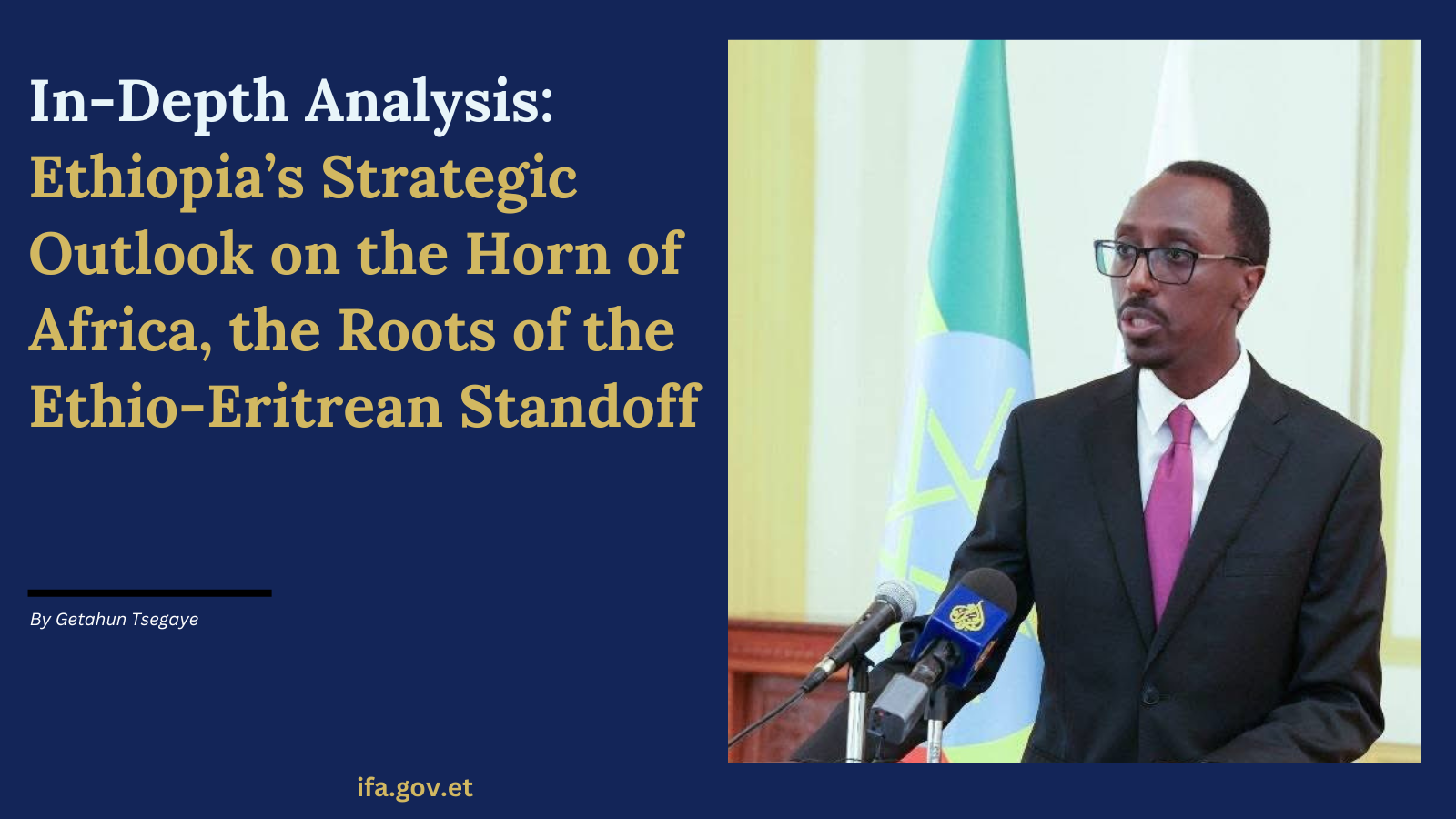
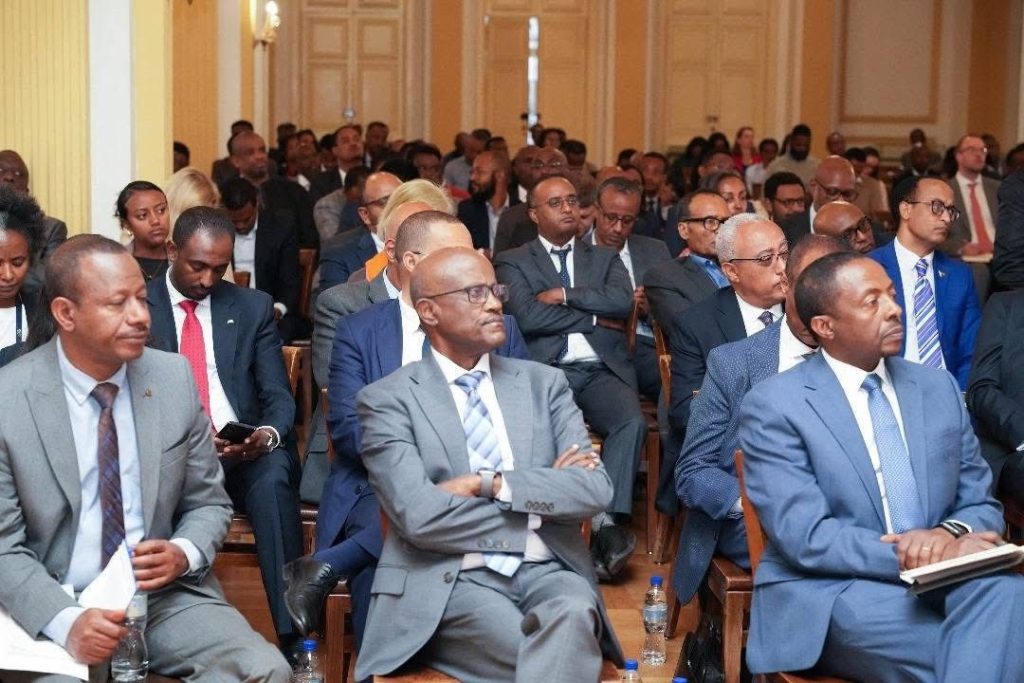
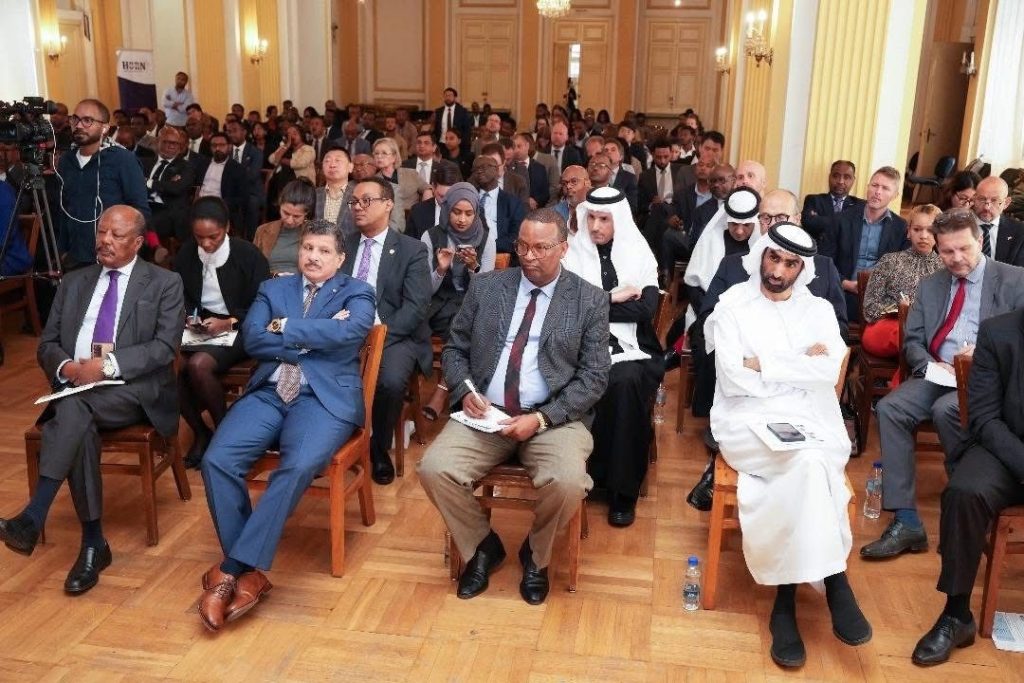
Ethiopia’s latest articulation of its regional policy—delivered by Foreign Minister H.E. Gedion Timotheos (PhD) at a Foreign Policy Forum co-organized by Horn Review and Addis Ababa University—marks one of the most comprehensive and candid assessments of the Horn of Africa’s instability in recent years. Speaking to diplomats, academics, and policy practitioners at Ras Mekonnen Hall on November 13, 2025, his analysis bridged historical context, current tensions, and a forward-looking blueprint for regional integration.
At the center of his message lay a stark acknowledgment: “the Horn of Africa is going through a very turbulent period,” with “considerable challenges virtually in every country.” This turbulence, he observed, is paradoxical for a region “generously endowed” with vast human and natural resources. Yet conflict—not cooperation—has defined its modern political landscape.
The minister devoted a significant portion of his speech to what he called “one of the perennial flashpoints in the Horn of Africa”—the Ethiopia–Eritrea relationship. His historical sweep underscored a pattern of political reconfiguration that has repeatedly failed to produce lasting peace. In 73 years, he said, the two countries cycled through federation, unilateral annexation, secession, and intermittent war. A 30-year civil war ended in 1991, recalling Eritrea’s long-aspiration to succeed from Ethiopia, followed by a brief window of peaceful coexistence from 1993 to 1998. But the 1998–2000 border war reversed the gains, and the minister reminded the audience that the Eritrea–Ethiopia Claims Commission had “found Eritrea to be the aggressor.” The Minister mentioned that although the Algiers Agreement stopped open hostilities, it did not resolve the deeper political rupture, and the two countries entered what FM Gedion described as an “18-year… no-peace and no-war hostile limbo.” Ethiopia’s 2018 rapprochement—hailed globally as a breakthrough—was framed as a bold Ethiopian initiative to “break the deadlock,” restore Eritrea’s global standing, and champion the lifting of sanctions. Yet this thaw was short-lived. Even so, the minister emphasized that the brief moment of hope demonstrated “the overwhelming will and aspirations of the peoples of Ethiopia and Eritrea to live in peace.” Today’s renewed tensions, he said bluntly, are “a matter of public knowledge and a cause for alarm.”
FM Gedion warned sharply against what he called “superficial understanding” of current tensions—particularly external claims that Ethiopia’s aspirations for sea access triggered the crisis. He noted that similar misreadings occurred in the 1990s, when many believed the dispute over Badme caused the war. Drawing on the scholarship of Tekeste Negash and Kjetil Tronvoll, he stressed that conflicts between Ethiopia and Eritrea have always involved “a complex web of economic, historical, and cultural factors.” His message was clear: the Assab port issue is not the root of today’s tensions. To assume otherwise, he argued, would be “a gross oversimplification… which would hamper a proper understanding of reality.”
To foreground the complexity, the minister outlined five deep-rooted drivers of conflict—an unusually candid diagnosis by an Ethiopian foreign minister. The first is the Eritrean government’s persistent desire to enjoy the privileges of belonging to the Ethiopian body politic while insisting on sovereign status, a contradiction FM Gedion summarized as the aspiration to be sovereign yet to retain the benefits historically tied to unity. He argued that Eritrean elites feel entitled to influence Ethiopian political and economic matters without accepting reciprocal responsibilities. He then criticized Eritrea’s tendency to position itself as an instrument for all actors harboring hostile intentions toward Ethiopia, noting that this pattern makes peaceful coexistence exceedingly difficult. The third issue he identified was what he termed the “Isayas doctrine”—a worldview that defines Eritrea’s security as contingent upon Ethiopia’s insecurity and fragmentation. He cast this doctrine as neither original nor constructive, but as a strategic choice that perpetuates instability.
Lastly, he explained Ethiopia’s feelings of grievance tied to the events of 1993 and the structural vulnerabilities caused by its landlocked status. He argued forcefully that maritime access is “an existential matter for Ethiopia,” warning that without durable access, “a poverty-stricken Ethiopia… will collapse under the weight of its demographic boom and economic bust.” This, he suggested, frames the urgency behind Ethiopia’s push for secure and sustainable access to the sea.
Despite “serious provocations and violations against its sovereignty and territorial integrity,” FM Gedion emphasized that Ethiopia has chosen restraint. He confirmed that Eritrea is providing “substantial material support to groups that have raised arms against the Government,” which offers Ethiopia ample grounds for self-defense under international norms. Yet he stressed that Ethiopia has consciously decided not to escalate the situation. However, he added a clear warning: such restraint is not indefinite or unconditional. “The continued Eritrean aggression is making further restraint more and more difficult,” he cautioned. Even so, he reiterated that Ethiopia, focused on long-term economic transformation, will do everything possible to avoid conflict with a neighboring state.
The Minister then shifted toward Ethiopia’s proposed long-term solution by locating it within a broader regional vision. He articulated Ethiopia’s view of the Horn as a “geo-economic and cultural space with a shared history and a common destiny.” The minister explained that regional integration—involving infrastructure linkages, increased trade, investment flows, and the gradual development of a common market—is essential for durable peace. As the region’s anchor state, sharing borders, populations, and economic ties with all Horn countries, Ethiopia sees itself in a unique position to foster this integration.
Yet he stressed that two fundamental preconditions must be met before this vision can begin to materialize: strategic autonomy for Horn states and mutually respectful relations among them. Strategic autonomy is necessary, he argued, because external powers seek to turn the Horn into their “backyard,” filled with weak client states incapable of independent decision-making. The minister invoked the spirit of Gundet and Gura to underscore the importance of safeguarding regional sovereignty. Trust and mutual respect, he continued, are equally necessary since economic integration cannot proceed amid hegemonic ambitions—whether external or internal. Ethiopia’s vision, therefore, is rooted in “long-term enlightened self-interest,” anchored not in dominance but in shared prosperity.
He then applied this framework directly to Ethiopia–Eritrea relations, describing the two states as having “virtually one people” who are historically and culturally intertwined, though he fully acknowledged their separate sovereignties and borders. He argued that these deep commonalities provide a solid foundation for peaceful coexistence and make Ethiopia and Eritrea ideal candidates to serve as the nucleus of a regional economic community. Within such a framework, he insisted, the underlying drivers of tension could be resolved. He suggested a phased process beginning with a Free Trade Area, followed by enhanced economic policy harmonization and the free movement of goods, services, capital, and people. Joint investments in strategic infrastructure could further institutionalize cooperation. Importantly, he explained that Ethiopia’s aspiration for maritime access could be addressed within this integration model, drawing lessons from similar arrangements elsewhere in the world. He even described this approach as “the closest thing Ethiopia could offer by way of a decaffeinated coffee,” a metaphor highlighting its pragmatic and non-threatening character. He acknowledged, however, that such a project requires political will and difficult conversations, emphasizing that failing to pursue such options may doom both countries to perpetual antagonism.
Gedion drew on Ambassador Zewde Reta’s influential book The Eritrean Affair, praising it as an “honest and critical account” of past policy failures, particularly the dissolution of the Eritrean federation. He framed this reference as a call to imagine a different future—a future rooted in healing, cooperation, honesty, and mutual responsibility. The minister admitted that this will not be easy and will require civil society, political actors, and governments to engage in deep soul-searching, yet he insisted that it remains both possible and necessary.
The speech concluded with a direct appeal to the international community. He called on actors whose interests are “not malevolent” to support Ethiopia’s vision of regional integration and to help dissuade Eritrea from what he labeled a misguided policy approach toward Ethiopia and the region. The world, he said, “cannot afford another 30 years of conflict, poverty, displacement, and chaos in the Horn.”
He urged external partners to encourage Eritrea to take tangible steps toward peaceful engagement. Gedion’s closing remarks carried both hope and resolve: “We should not be captives to our history but masters of our future destiny.” He affirmed Ethiopia’s readiness for dialogue and cooperation, provided that Eritrea ceases its provocations and engages in good faith. The speech, overall, signals a pivotal moment in Ethiopia’s foreign policy posture: a clear diagnosis of the roots of regional instability, a firm articulation of national interests, a rejection of externally imposed narratives, and a strategic opening for a cooperative and integrated future in the Horn of Africa.
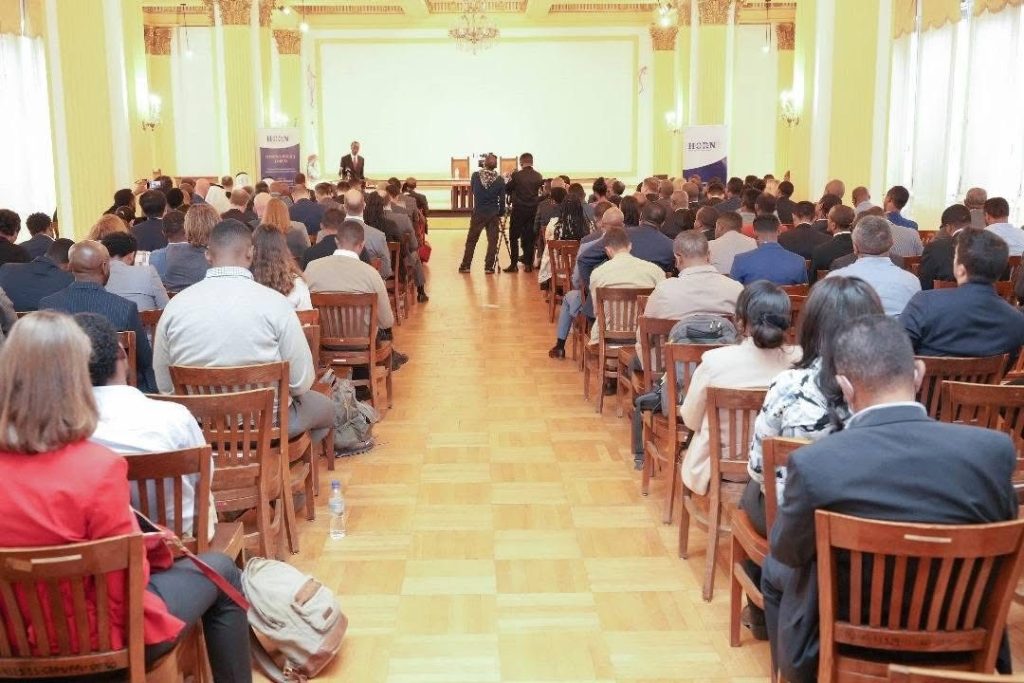
Participants raised several questions during the moderated Q&A, focusing on Eritrea, port access, and regional diplomacy. Responding to the French Ambassador, the Minister urged the international community to “publicly and unequivocally condemn” Eritrea’s violations of Ethiopia’s territorial integrity, warning that Asmara’s “spoiler” behavior cannot persist while Ethiopia is expected to show “indefinite restraint.” He noted the difficulty of negotiations due to Eritrea’s weak institutional structures and stressed the need for stronger public diplomacy. On maritime access, he reaffirmed Assab as Ethiopia’s primary priority and recalled the loss of the port 27 years ago, emphasizing Ethiopia “will not allow itself to face similar vulnerability again” while also diversifying transit options with other coastal states.
The Minister added that Ethiopians and Eritreans share a natural will for reconciliation, saying “there is no need to reinvent public will” for mutually respectful reintegration. Asked about alternatives should diplomacy fail, he stressed Ethiopia’s determination to avoid war and reiterated that its pursuit of sea access is “fair, reasonable, and legitimate.” He also addressed broader regional issues, affirming Ethiopia’s support for Sudan’s stability and urging Egypt to move beyond rhetoric toward constructive engagement. The dialogue concluded with reflections on maritime strategy, economic cooperation, and regional integration.
By: Getahun Tsegaye, Associate Researcher at the Institute of Foreign Affairs
Disclaimer:
The content disseminated by the Institute of Foreign Affairs (IFA) – including, but not limited to, publications, public statements, events, media appearances, and digital communications – reflects the views of individual contributors and does not necessarily represent the official positions or policies of the Institute, its partners, or any affiliated governmental or non-governmental entities.
While the IFA endeavors to ensure the accuracy, integrity, and timeliness of the information presented, it makes no representations or warranties, express or implied, regarding the completeness, reliability, or suitability of such content for any purpose. The Institute expressly disclaims any liability for errors or omissions, as well as for any actions taken or decisions made based on the information provided.
The inclusion of external links, references, or third-party resources does not constitute an endorsement by the Institute. Additionally, engagement on social media platforms – including, but not limited to, likes, shares, retweets (RTs), or reposts – shall not be interpreted as an endorsement or validation of the views expressed therein.Readers and audiences are encouraged to exercise critical judgment and seek independent verification when interpreting or relying upon any information disseminated through publications and posts on the Institute’s platforms or representatives.