

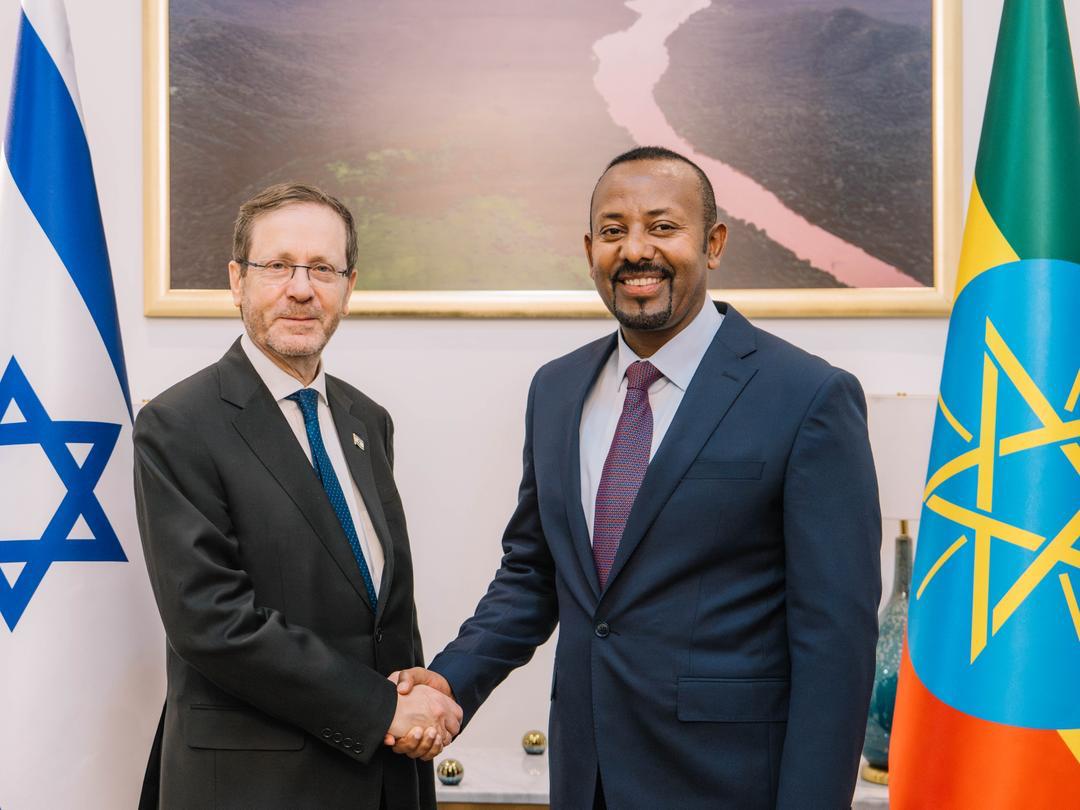
Why does the Israeli President’s visit to Ethiopia on February 24–25 matter—not only for Addis Ababa, but for the wider strategic landscape of the Horn of Africa? At a time of intensifying geopolitical competition in the Red Sea corridor and shifting alliances across the Global South, high-level diplomatic engagements carry implications far beyond protocol and symbolism. This visit signals more than bilateral goodwill; it reflects a recalibration of regional partnerships, security cooperation, technological exchange, and economic diplomacy.
As Ethiopia reasserts its role as a pivotal state in the Horn of Africa, and as external powers deepen their engagement in the region, the visit raises critical questions about alignment, sovereignty, and strategic autonomy. Understanding its significance requires situating the moment within the broader currents of regional security, historical ties, and emerging global competition.
Ethiopia has long occupied a unique geopolitical position due to its population size, historical statehood, and role as host of continental institutions such as the African Union. As a result, high-level visits are rarely symbolic; they signal strategic interest. The Israeli presidential visit demonstrates recognition of Ethiopia as not only a bilateral partner but also a gateway to African diplomacy and regional security discussions, particularly those connected to the Red Sea corridor, migration routes, and counter-terrorism cooperation.
Diplomatic relations between Ethiopia and Israel date back to the early years of Israel’s outreach to Africa in the 1950s. Ethiopia was among the first African states to maintain formal diplomatic ties with Israel, and despite temporary disruption following the 1973 Arab-Israeli war, relations were restored in the late 1980s and gradually deepened. Today, cooperation spans agriculture, water management, health technology, cybersecurity, and intelligence coordination. Israeli expertise in irrigation and arid-land farming aligns closely with Ethiopia’s development priorities, especially as the country focuses on food security and climate resilience. Human connections also play an important role; the Ethiopian Jewish diaspora in Israel has created enduring cultural and political bridges that reinforce bilateral engagement beyond traditional diplomacy.
The significance of the upcoming visit lies in its timing and strategic context. Ethiopia is increasingly seen as a stabilizing anchor in a volatile region marked by conflict, maritime competition, and economic transformation. Israel’s engagement reflects broader Middle Eastern interest in the Horn, particularly regarding Red Sea security and trade routes linking Europe, Asia, and Africa. Strengthening ties with Ethiopia allows Israel to expand diplomatic presence in Africa while also contributing to development partnerships that enhance its soft power. At the same time, Ethiopia benefits from technology transfer, investment opportunities, and diversified foreign relations that reduce reliance on any single partner.
The visit also follows closely after the presidential engagement from Turkey, highlighting Ethiopia’s increasing attraction for multiple external powers. Over the past two decades, Turkey has built a strong presence in Ethiopia through infrastructure development, trade expansion, education cooperation, and defense partnerships. Ankara’s model combines economic diplomacy with strategic engagement, positioning Ethiopia as a key partner in its broader Africa policy. The sequencing of Turkish and Israeli high-level visits suggests that Ethiopia is becoming a space where different regional actors pursue influence through cooperation rather than direct confrontation, creating a competitive yet opportunity-rich diplomatic environment.
For the Horn of Africa, these developments carry several implications. First, they reinforce Ethiopia’s role as a diplomatic hub capable of shaping regional dialogue on security, development, and integration. Second, the growing interest of external powers contributes to a more multipolar regional order in which Middle Eastern, African, and global actors interact simultaneously. This can generate investment and technological opportunities but also requires careful diplomatic balancing to avoid geopolitical rivalry spilling into local politics. Third, increased engagement underscores the strategic importance of Red Sea connectivity, where stability in Ethiopia is linked to broader maritime security concerns affecting global trade
The Rivalry of Israel and Turkey in the Horn of Africa :What would the response of Ethiopia
The growing engagement of middle powers such as Israel and Turkey in the Horn of Africa reflects a broader geopolitical shift in which regional actors seek influence through development, security cooperation, and diplomatic partnerships. These dynamics intersect directly with Ethiopia, which sits at the center of regional diplomacy and strategic connectivity. Israel’s expanding engagement with parts of the region — including its political signaling toward Somaliland — contrasts with Turkey’s deep partnership with Somalia, particularly in state-building, military training, humanitarian aid, and infrastructure development. This divergence illustrates how Middle Eastern rivalries and diplomatic alignments increasingly intersect with Horn of Africa politics.
The situation became more visible at the beginning of 2024 when Ethiopia signed a memorandum of understanding with Somaliland seeking maritime access, an issue that immediately drew strong reaction from Somalia, which emphasized sovereignty concerns. Turkey, as one of Somalia’s closest partners, reiterated the importance of respecting territorial integrity while continuing its broad economic and diplomatic cooperation with Ethiopia. This demonstrates how middle power competition can create overlapping partnerships rather than simple alliances.
Ethiopia maintains extensive investment and development cooperation with Turkey while simultaneously deepening engagement with Israel in technology, agriculture, and security. These parallel relationships show Ethiopia’s attempt to pursue a pragmatic foreign policy grounded in national interest rather than bloc politics.
From Ethiopia’s perspective, middle power competition presents both opportunities and risks. On the opportunity side, diversified partnerships can support infrastructure, defense capacity, digital transformation, and — most importantly — Ethiopia’s long-standing objective of secure access to seaports. Competition among partners may generate investment leverage and diplomatic space.
However, risks include the potential export of Middle Eastern geopolitical tensions into the Horn, the politicization of Ethiopia’s maritime agenda, and pressure from partners seeking alignment on sensitive regional issues. If not carefully managed, such dynamics could complicate Ethiopia’s relations with neighboring states and undermine regional stability.
Ethiopia’s official position is increasingly framed around strategic non-alignment and pragmatic engagement. Rather than choosing sides between competing middle powers, Ethiopia seeks to work with all partners based on mutual benefit, respect for sovereignty, and regional stability.
This approach reflects a rational calculation that Ethiopia’s size, geography, and development needs require diversified diplomacy. Maintaining balanced relations with both Israel and Turkey allows Ethiopia to benefit from security cooperation, investment, and technological support while preserving policy autonomy. In this sense, Ethiopia’s foreign policy mirrors a broader Global South strategy of multi-alignment engaging multiple powers without exclusive commitments.
Diplomatically, several recommendations emerge.
Firstly, Ethiopia should continue emphasizing that its maritime access agenda is economic and developmental rather than geopolitical, reducing the perception that external actors can frame the issue within broader regional rivalries.
Secondly, Addis Ababa should strengthen dialogue mechanisms with Somalia and regional organizations to ensure transparency and confidence-building around port access discussions.
Thirdly, Ethiopia should institutionalize parallel strategic dialogues with both Israel and Turkey, ensuring that cooperation in one relationship does not undermine the other. Fourth, Ethiopia should promote multilateral frameworks in the Horn that include middle powers but are led by regional priorities, limiting the risk of external competition escalating into proxy dynamics.
Finally, Ethiopia must maintain policy consistency — clearly communicating that neutrality does not mean passivity but rather calculated engagement that protects national interests and regional stability.
By Kuchim Silesh at IFA
Disclaimer:
The content disseminated by the Institute of Foreign Affairs (IFA) – including, but not limited to, publications, public statements, events, media appearances, and digital communications – reflects the views of individual contributors and does not necessarily represent the official positions or policies of the Institute, its partners, or any affiliated governmental or non-governmental entities.
While the IFA endeavors to ensure the accuracy, integrity, and timeliness of the information presented, it makes no representations or warranties, express or implied, regarding the completeness, reliability, or suitability of such content for any purpose. The Institute expressly disclaims any liability for errors or omissions, as well as for any actions taken or decisions made based on the information provided.
The inclusion of external links, references, or third-party resources does not constitute an endorsement by the Institute. Additionally, engagement on social media platforms – including, but not limited to, likes, shares, retweets (RTs), or reposts – shall not be interpreted as an endorsement or validation of the views expressed therein.
Readers and audiences are encouraged to exercise critical judgment and seek independent verification when interpreting or relying upon any information disseminated through publications and posts on the Institute’s platforms or representatives.