

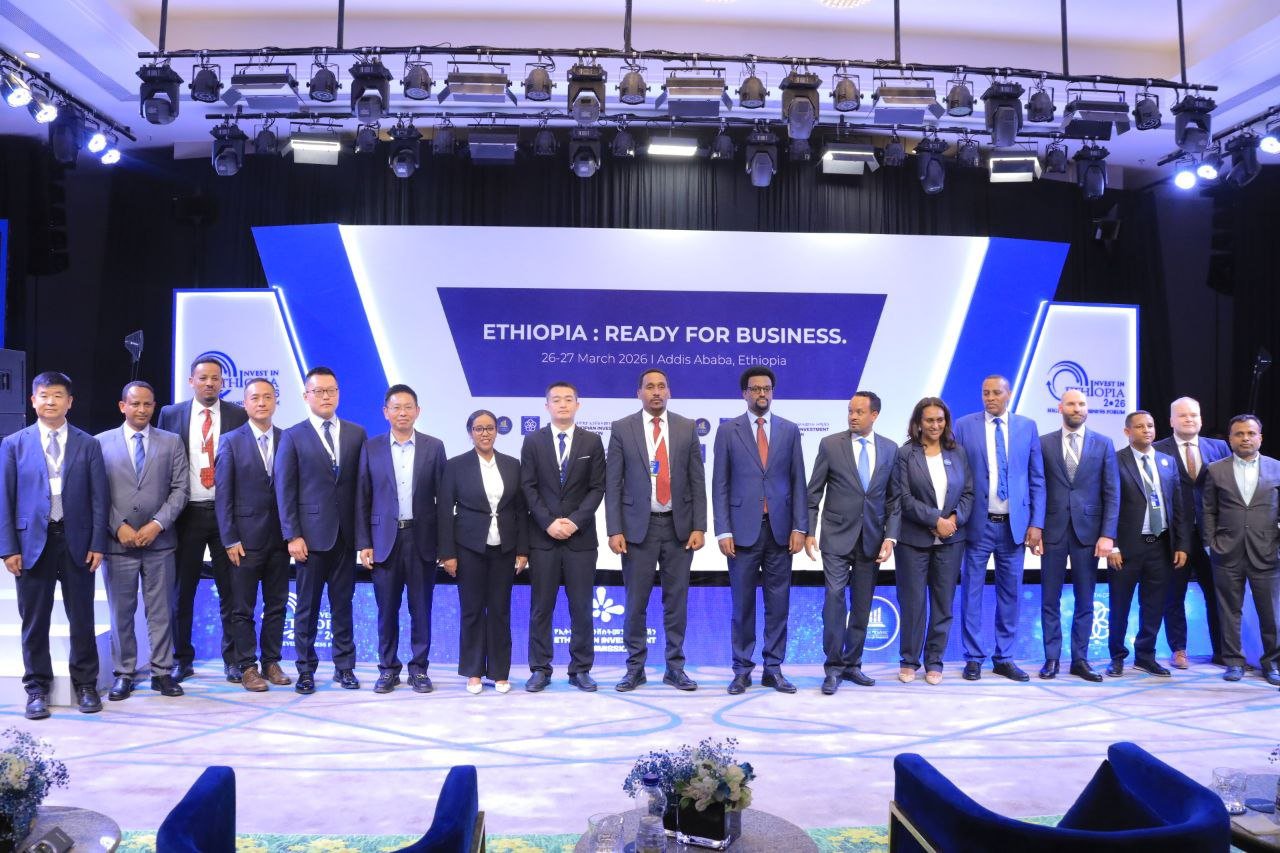
The announcement that Ethiopia has secured over USD 13 billion in investment commitments during the fourth “Invest in Ethiopia 2026 Forum” marks a significant inflection point in the country’s economic diplomacy and structural transformation agenda. Far exceeding the initially anticipated USD 2.4 billion, this outcome signals not merely investor confidence but a broader recalibration of Ethiopia’s positioning within regional and global economic systems. When situated within the wider trajectory of Ethiopia’s homegrown economic reform program, the Digital Ethiopia 2025 strategy, and large-scale corridor and infrastructure developments, the investment surge reflects a deliberate statecraft approach aimed at transforming the country into a continental investment hub anchored in African Union diplomacy and integration.
At the core of this development lies Ethiopia’s strategic use of high-level investment forums as instruments of economic diplomacy. The 2026 forum, convened in Addis Ababa, brought together over 800 investors from more than 50 countries, underscoring the city’s enduring role as Africa’s diplomatic capital. Beyond symbolic value, Addis Ababa’s status as host of the African Union offers Ethiopia a unique comparative advantage: proximity to continental policymaking processes. This enables the country to align its investment narrative with Africa-wide development frameworks such as Agenda 2063, thereby positioning itself as a gateway for investors seeking access to continental markets. Consequently, the investment outcomes should be interpreted not as isolated transactions but as part of a broader geopolitical-economic convergence.
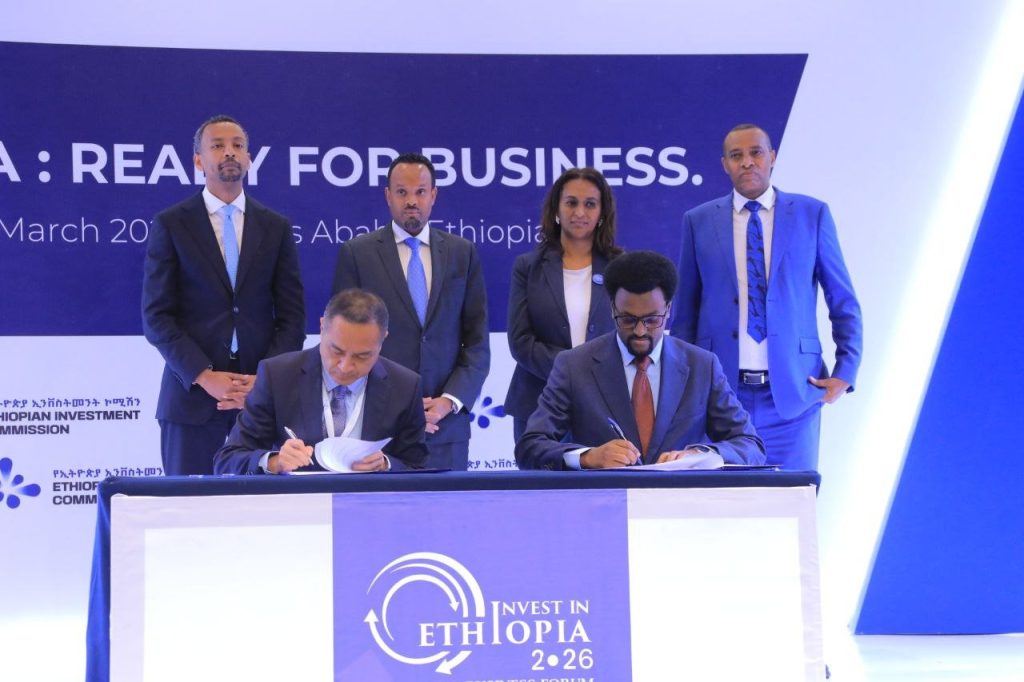
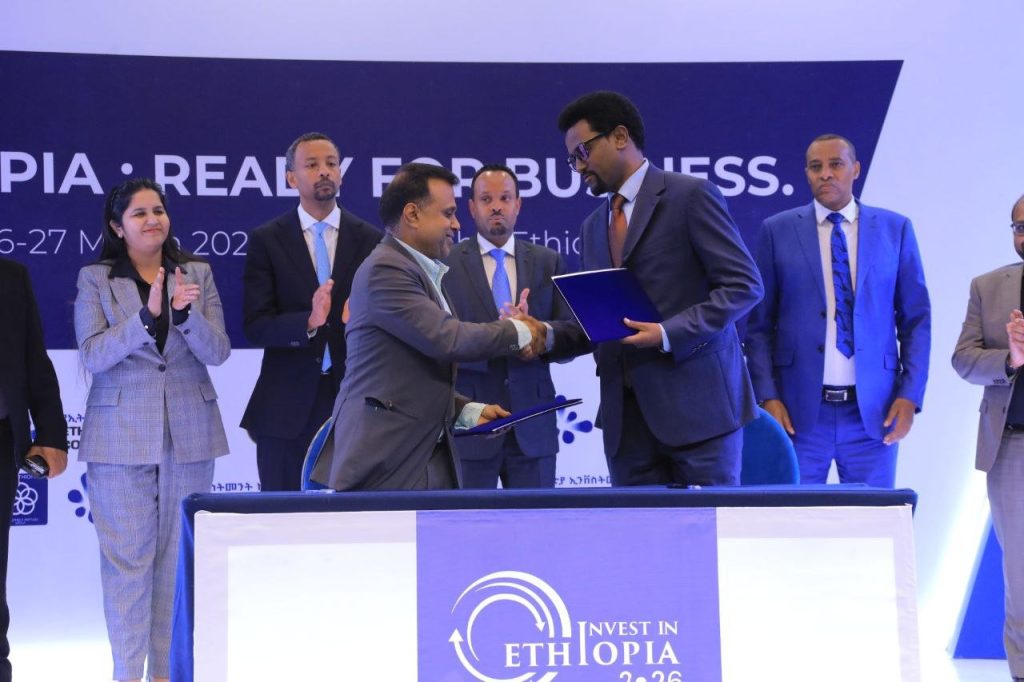
Sectorally, the distribution of investments reveals a coherent alignment with Ethiopia’s industrial policy priorities. Manufacturing, agro-processing, renewable energy, mining, and construction dominate the agreements, reflecting a continued emphasis on import substitution, export diversification, and value addition. For instance, the planned USD 10 billion investment by Ming Yang Smart Energy Group Ltd. in green ammonia and electrical equipment signals Ethiopia’s ambition to enter emerging global value chains associated with green industrialization. Similarly, the involvement of Liaoning Fangda Group Industrial Co. in steel and pharmaceutical manufacturing illustrates a targeted effort to build domestic industrial capacity in strategic sectors.
These investments reinforce the objectives of Ethiopia’s Homegrown Economic Reform Agenda, which prioritizes macroeconomic stabilization, private sector development, and structural transformation. Since its inception in 2019, the reform program has sought to liberalize key sectors, enhance the business environment, and attract foreign direct investment (FDI). The 2026 forum results suggest that these reforms are beginning to yield tangible dividends. Importantly, the scale of commitments indicates that investors are not merely responding to short-term incentives but are making long-term bets on Ethiopia’s demographic potential, market size, and reform trajectory.
Equally significant is the integration of these investments with Ethiopia’s Digital Ethiopia 2025 strategy. The digital transformation agenda aims to expand connectivity, modernize public services, and foster a knowledge-based economy. Investments in manufacturing and energy—particularly those involving advanced technologies—create critical complementarities with digitalization efforts. For example, solar manufacturing projects by companies such as Sun King and Gobez Electric Manufacturing Plc are likely to support the expansion of off-grid energy solutions, which are essential for digital inclusion in rural areas. In this sense, the convergence of industrial and digital strategies enhances productivity and strengthens Ethiopia’s competitiveness in the Fourth Industrial Revolution.
Infrastructure development further amplifies these dynamics. Ethiopia’s ongoing corridor development initiatives—encompassing transport, logistics, and urban connectivity—are central to reducing transaction costs and improving trade efficiency. The construction of the USD 12.5 billion Bishoftu International Airport by Ethiopian Airlines exemplifies this approach. With a projected capacity of over 100 million passengers annually, the airport is poised to become Africa’s largest aviation hub, significantly enhancing Ethiopia’s connectivity to global markets. When combined with industrial parks and special economic zones, such infrastructure investments create an integrated ecosystem that supports export-oriented growth.
Industrial parks, in particular, have emerged as critical nodes in Ethiopia’s industrialization strategy. With over 90 percent occupancy across 177 industrial sheds and the creation of more than 100,000 jobs, these parks demonstrate the viability of the plug-and-play model. The attraction of USD 377 million in new investment and the generation of USD 112 million in export revenue within half a fiscal year further underscore their effectiveness. By clustering industries and providing ready-made infrastructure, industrial parks reduce entry barriers for investors and facilitate technology transfer—key components of sustainable industrial development.
From a regional perspective, Ethiopia’s investment momentum carries significant implications for the Horn of Africa. As one of the fastest-growing economies in the region, Ethiopia’s industrial expansion can generate positive spillovers through trade linkages, supply chains, and labor mobility. Projects such as the USD 2.5 billion Gode Fertilizer Plant, developed in partnership with the Dangote Group, have the potential to reduce regional dependence on imported inputs while enhancing agricultural productivity. Such initiatives contribute to regional food security and economic integration, aligning with broader objectives of the African Continental Free Trade Area (AfCFTA).
However, while the investment surge is promising, it also raises critical strategic considerations. First, the effective absorption of large-scale investments requires robust institutional capacity. Delays in project implementation, bureaucratic inefficiencies, and regulatory uncertainties could undermine investor confidence. Second, macroeconomic challenges—particularly foreign exchange constraints and inflation—remain potential risks that could affect the sustainability of investment flows. Third, geopolitical dynamics in the Horn of Africa necessitate careful navigation to ensure that economic gains are not offset by security vulnerabilities.
In this context, Ethiopia’s positioning as both a diplomatic hub and an investment destination presents a unique opportunity to integrate economic and foreign policy objectives. By leveraging its role within the African Union, Ethiopia can advocate for policies that facilitate cross-border investments, harmonize regulations, and enhance regional infrastructure connectivity. This dual role enhances the country’s strategic leverage, enabling it to shape continental economic governance while advancing national development goals.
Furthermore, the emphasis on renewable energy and green industrialization aligns Ethiopia with global sustainability trends. As international investors increasingly prioritize environmental, social, and governance (ESG) criteria, Ethiopia’s investments in solar energy and green ammonia production position it as a forward-looking destination. This not only attracts capital but also enhances the country’s reputation as a responsible and sustainable investment hub.
In conclusion, the USD 13 billion investment commitments secured during the Invest in Ethiopia 2026 Forum represent more than a quantitative milestone; they signify a qualitative shift in Ethiopia’s economic trajectory. By integrating industrial policy, digital transformation, infrastructure development, and economic diplomacy, Ethiopia is crafting a comprehensive strategy to position itself as Africa’s premier investment hub. The convergence of these elements—anchored in Addis Ababa’s status as the seat of the African Union—creates a powerful platform for sustained growth and regional leadership.
To consolidate these gains, some insights are helpful to consider. First, strengthening institutional capacity and streamlining regulatory frameworks will be essential to ensure timely project implementation. Second, continued macroeconomic reforms aimed at stabilizing inflation and improving foreign exchange availability will enhance investor confidence. Third, deepening regional integration through AfCFTA mechanisms and cross-border infrastructure projects will amplify the impact of investments. Finally, prioritizing human capital development and technology transfer will ensure that economic growth translates into inclusive and sustainable development outcomes.
Ultimately, Ethiopia’s success will depend on its ability to translate investment commitments into tangible economic transformation. If effectively managed, the current momentum could redefine the country’s role in Africa’s economic landscape, transforming it into a dynamic nexus where diplomacy, investment, and development converge.
By Kena Seyife, IFA
Disclaimer:
The content disseminated by the Institute of Foreign Affairs (IFA) – including, but not limited to, publications, public statements, events, media appearances, and digital communications – reflects the views of individual contributors and does not necessarily represent the official positions or policies of the Institute, its partners, or any affiliated governmental or non-governmental entities.
While the IFA endeavors to ensure the accuracy, integrity, and timeliness of the information presented, it makes no representations or warranties, express or implied, regarding the completeness, reliability, or suitability of such content for any purpose. The Institute expressly disclaims any liability for errors or omissions, as well as for any actions taken or decisions made based on the information provided.
The inclusion of external links, references, or third-party resources does not constitute an endorsement by the Institute. Additionally, engagement on social media platforms – including, but not limited to, likes, shares, retweets (RTs), or reposts – shall not be interpreted as an endorsement or validation of the views expressed therein.
Readers and audiences are encouraged to exercise critical judgment and seek independent verification when interpreting or relying upon any information disseminated through publications and posts on the Institute’s platforms or representatives.