

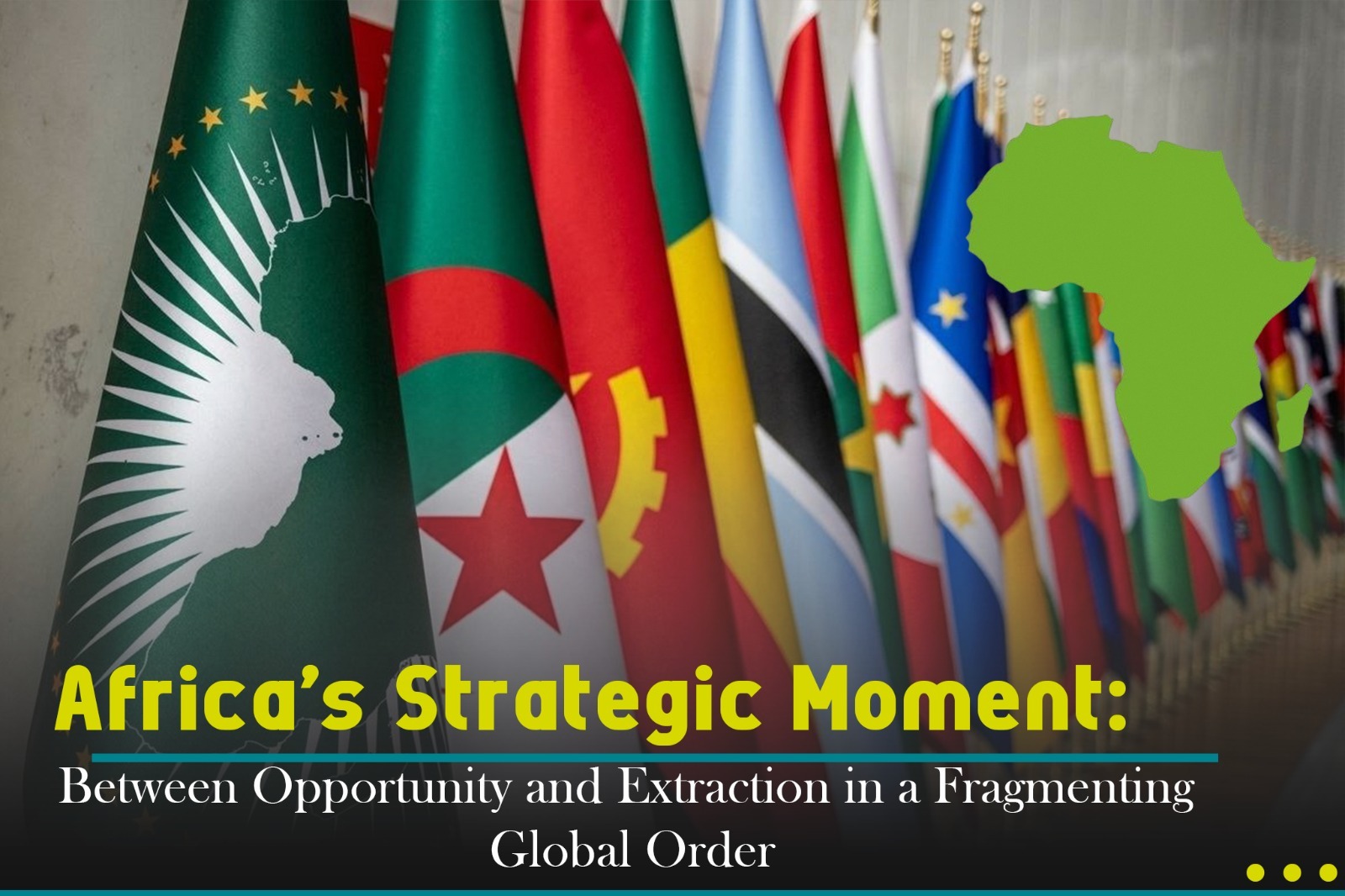
Geopolitical transformation often presents itself not as a clean rupture, but as a paradox: moments of heightened opportunity are simultaneously moments of heightened vulnerability. Africa’s emerging centrality in global energy and mineral supply chains exemplifies precisely such a contradiction. At a time when the global system is undergoing recalibration—driven by energy insecurity, supply chain fragmentation, and intensifying great power competition—the continent finds itself both courted and contested. Yet, while external narratives frame this as Africa’s “strategic moment,” the deeper question remains whether this moment will yield structural transformation or merely reproduce new modalities of dependency.
This article captures this tension by situating Africa within a broader reconfiguration of global engagement. However, a closer examination reveals that the unfolding dynamics are less about Africa’s rise per se and more about the systemic anxieties of external powers—particularly the United States—as they seek to hedge against vulnerabilities exposed by geopolitical shocks such as the disruption of the Strait of Hormuz.
The Illusion of Sudden Shifts: Historical Continuities in Strategic Reorientation
The framing of recent U.S. engagement in Africa as a “reset” risks overstating novelty while obscuring continuity. Historically, U.S.–Africa relations have oscillated between strategic neglect and episodic engagement, often catalyzed by external shocks rather than intrinsic prioritization of the continent. From Cold War proxy engagements to post-9/11 security partnerships under AFRICOM, American involvement has consistently been shaped by broader global imperatives.
In this context, the Hormuz disruption serves not as a catalyst for transformation but as an accelerant of pre-existing trends. The strategic logic of diversification—reducing reliance on geographically concentrated chokepoints—has long informed U.S. energy policy, particularly since the shale revolution reduced direct dependence on Middle Eastern oil. What is novel, however, is the convergence of this logic with intensifying competition from China and Russia, thereby elevating Africa from a peripheral theater to a central arena of contestation.
Yet, this recalibration should not be mistaken for a shift toward partnership grounded in mutuality. Rather, it reflects a realist adaptation to systemic risk, where Africa is instrumentalized as part of a broader hedging strategy.
The Strait of Hormuz and the Politics of Vulnerability
The disruption of the Strait of Hormuz underscores a foundational principle of global political economy: the concentration of critical flows—whether energy, finance, or information—creates systemic fragility. Approximately one-fifth of global oil trade passes through this narrow chokepoint, rendering it a perennial site of geopolitical anxiety.
However, the implications extend far beyond energy markets. Disruptions cascade across fertilizer production, food security, and industrial supply chains. This interconnectedness reveals the extent to which globalization has created efficiency at the expense of resilience.
For policymakers in Washington, Brussels, and Beijing, the lesson is unequivocal: resilience requires diversification. Yet, diversification is not merely a technical adjustment; it is inherently political. It necessitates the reconfiguration of alliances, investment flows, and strategic priorities—processes that inevitably reshape power relations.
Africa’s emerging role must therefore be understood not in isolation, but as part of this broader reorganization of vulnerability.
Africa as a Parallel Pillar: Strategic Geography and Resource Endowment
Africa’s appeal within this framework is multifaceted. First, its resource endowment—ranging from hydrocarbons in Nigeria, Angola, and Libya to critical minerals in the Democratic Republic of Congo (DRC) and Zambia—positions it as indispensable to both traditional and emerging energy systems. The DRC alone accounts for approximately 70 percent of global cobalt production, a critical input for battery technologies central to the energy transition.
Second, the continent’s geography offers alternative trade routes that bypass traditional chokepoints. Atlantic-facing producers provide access to global markets without traversing the volatile corridors of the Middle East, thereby reducing exposure to geopolitical disruption.
Third, Africa’s relative “openness”—manifested in ongoing liberalization efforts and the absence of entrenched supply monopolies—creates space for competitive entry by external actors.
Yet, perhaps most revealing is the way in which these attributes are framed within external strategic discourse. Africa is not positioned as a co-equal partner shaping global systems, but as a “platform” through which external vulnerabilities can be mitigated. This framing, while pragmatic, risks reducing the continent to a functional role within a system defined elsewhere.
From Aid to Transaction: The Reconfiguration of Engagement
One of the most significant shifts is the transition from aid-based engagement to transactional partnerships centered on trade, investment, and supply chain security. This evolution reflects broader changes in global development paradigms.
The reframing of foreign assistance as “strategic capital” is particularly instructive. While ostensibly emphasizing efficiency and mutual benefit, it also introduces conditionalities aligned with donor interests, thereby blurring the line between development and geopolitics.
For African states, this shift presents both opportunity and risk. On the one hand, it enables access to capital, technology, and markets in ways that traditional aid frameworks did not. On the other hand, it embeds engagement within a competitive logic that prioritizes external strategic objectives.
Ethiopia’s Homegrown Economic Reform Agenda illustrates this duality. By emphasizing liberalization, private-sector participation, and export competitiveness, the country has positioned itself as an attractive destination for investment. The reported $13.1 billion in commitments secured in March 2026—up from $1.6 billion in 2025—signals growing investor confidence.
Yet, such inflows must be contextualized within broader structural constraints, including debt sustainability, foreign exchange shortages, and institutional capacity. Without careful management, the influx of capital risks exacerbating rather than alleviating these challenges.
Renewable Energy and Strategic Autonomy: Ethiopia’s Case
In contrast to hydrocarbon-dependent economies, Ethiopia’s energy profile offers a compelling example of how renewable resources can enhance strategic autonomy. With over 98 percent of its electricity generated from renewable sources—primarily hydropower—the country is largely insulated from global oil price volatility.
This insulation is not merely economic; it is geopolitical. In an era where energy insecurity is driving strategic recalibration, the ability to decouple domestic energy systems from global fossil fuel markets constitutes a significant advantage.
However, this advantage is not without its own complexities. Hydropower dependence introduces vulnerabilities related to climate variability and regional hydropolitics, particularly in the context of the Grand Ethiopian Renaissance Dam (GERD). The ongoing tensions with downstream states, especially Egypt, underscore the extent to which energy infrastructure can become securitized within broader geopolitical contests.
Multipolar Competition: China, Russia, and the Limits of Western Re-engagement
The U.S. recalibration cannot be understood in isolation from the broader multipolar contest unfolding across Africa. China’s entrenched position—particularly in critical minerals and infrastructure—represents a structural challenge to Western influence. Through initiatives such as the Belt and Road Initiative (BRI), Beijing has secured long-term access to resources while simultaneously shaping the infrastructure that facilitates their extraction and export.
Russia, by contrast, has pursued a more security-centric approach, leveraging military partnerships, and natural resource extraction, and energy infrastructure. While less economically comprehensive than China’s strategy, it has proven effective in reshaping political dynamics in conflict-affected regions.
Europe occupies a more ambivalent position, emphasizing regulatory frameworks and sustainability but often constrained by slower implementation
This multipolar environment creates both leverage and complexity for African states. The availability of multiple partners enhances bargaining power, yet also increases the risk of strategic fragmentation and policy incoherence.
The Democratic Republic of Congo: Nexus of Resources and Conflict
The DRC exemplifies the intersection of resource wealth and geopolitical competition. U.S. engagement—framed through initiatives such as the Washington Accords—reflects a multi-dimensional strategy encompassing supply chain security, infrastructure development, and conflict stabilization.
However, the underlying objective remains clear: securing access to critical minerals essential for advanced technologies. This raises fundamental questions about the relationship between resource extraction and governance.
Historically, the DRC’s mineral wealth has been both a blessing and a curse, fueling conflict, corruption, and external intervention. The current wave of engagement risks reproducing these dynamics unless accompanied by robust governance frameworks and equitable benefit-sharing mechanisms.
Fragmentation in the Gulf and the Globalization of Uncertainty
The shifting security architecture in the Gulf further reinforces the logic of diversification. As traditional U.S. security guarantees come under scrutiny, regional actors are increasingly exploring alternative partnerships, contributing to a more fragmented and multipolar order.
This fragmentation is not confined to the Middle East; it reflects a broader trend toward the decentralization of power within the international system. For Africa, this creates both opportunities for engagement and challenges in navigating an increasingly complex geopolitical landscape.
Strategic Agency: Between Leverage and Constraint
Ultimately, the decisive variable in this evolving landscape is African agency. The presence of multiple competing partners creates unprecedented leverage, but leverage is not self-executing. It must be translated into strategic outcomes through coherent policy frameworks, institutional capacity, and regional coordination.
Diversification emerges as a central principle—not only in external partnerships but also in domestic economic structures. Equally important is the emphasis on local value addition, which can shift the continent’s position within global value chains from raw material supplier to industrial participant.
Regional mechanisms, such as the African Continental Free Trade Area (AfCFTA), offer potential platforms for coordination, though their effectiveness remains contingent on implementation.
Conclusion: From Strategic Relevance to Economic Sovereignty
Africa’s current moment is neither accidental nor assured. It is the product of systemic shifts that have elevated the continent’s importance within global energy and resource systems. Yet, importance alone does not guarantee transformation.
The central challenge lies in converting strategic relevance into economic sovereignty. This requires moving beyond reactive engagement toward proactive strategy—one that prioritizes long-term development over short-term gains, and structural transformation over transactional advantage.
For that to happen, Africa should take steps forward. First, African states should institutionalize transparency and accountability in resource governance to prevent exploitative arrangements. Second, they should prioritize regional integration and collective bargaining to enhance negotiating power. Third, investment in local processing and industrial capacity must be accelerated to capture greater value from resource endowments.
References
U.S. Department of State, “America First in Africa,” March 19, 2026, https://www.state.gov/releases/bureau-of-african-affairs/2026/03/america-first-in-africa/
The Africa Report, “U.S.-Africa: Who’s Behind Trump’s Offensive to Control African Mines?” 2026, https://www.theafricareport.com/412921/us-africa-whos-behind-trumps-offensive-to-control-african-mines/
The Africa Report, “U.S.-Africa: Who’s Behind Trump’s Offensive to Control African Mines?” 2026, https://www.theafricareport.com/412921/us-africa-whos-behind-trumps-offensive-to-control-african-mines/
Al Jazeera, “They Want to Colonise Us: Brazil’s Lula Warns of Foreign Interference,” March 21, 2026, https://www.aljazeera.com/news/2026/3/21/they-want-to-colonise-us-brazils-lula-warns-of-foreign-interference
Birr Metrics, “Ethiopia Secures $13 Billion Investment in a Single Forum, Surpassing Expectations,” March 27, 2026, https://birrmetrics.com/ethiopia-secures-13-billion-investment-in-a-single-forum-surpassing-expectations/
U.S. Department of State, “2025 Investment Climate Statements: Ethiopia,” 2025, https://www.state.gov/reports/2025-investment-climate-statements/ethiopia
By Bemnet Alemayehu, IFA
Disclaimer:
The content disseminated by the Institute of Foreign Affairs (IFA) – including, but not limited to, publications, public statements, events, media appearances, and digital communications – reflects the views of individual contributors and does not necessarily represent the official positions or policies of the Institute, its partners, or any affiliated governmental or non-governmental entities.
While the IFA endeavors to ensure the accuracy, integrity, and timeliness of the information presented, it makes no representations or warranties, express or implied, regarding the completeness, reliability, or suitability of such content for any purpose. The Institute expressly disclaims any liability for errors or omissions, as well as for any actions taken or decisions made based on the information provided.
The inclusion of external links, references, or third-party resources does not constitute an endorsement by the Institute. Additionally, engagement on social media platforms – including, but not limited to, likes, shares, retweets (RTs), or reposts – shall not be interpreted as an endorsement or validation of the views expressed therein.
Readers and audiences are encouraged to exercise critical judgment and seek independent verification when interpreting or relying upon any information disseminated through publications and posts on the Institute’s platforms or representa