

Introduction
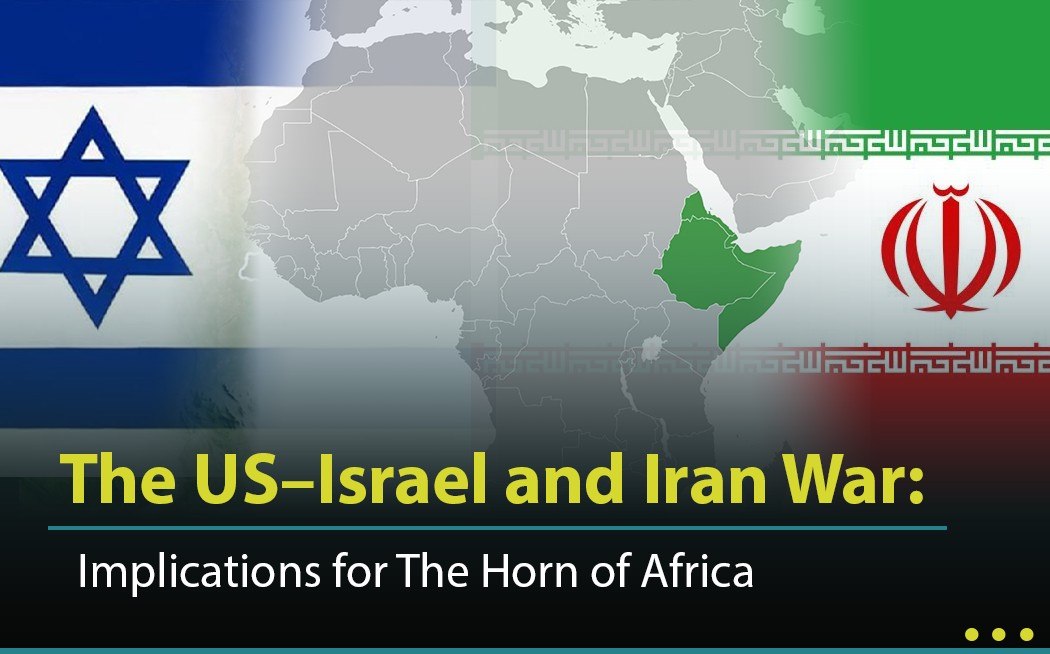
The second joint US-Israel attack on Iran has triggered immense repercussions across global geopolitical and economic spheres on unprecedented scales. The resulting shockwave has been extraordinarily felt by the global community, from North to South. The US-led offensive was primarily motivated by the “Venezuela Regime Change Model”—through the capture of President Maduro, and was further encouraged by Israeli intelligence (Global Witness, 2026). The operations—referred to as “Epic Fury” by the United States and “Roaring Lion” by Israel—involved advanced air and naval capabilities, declared an all-out war on the Islamic Republic of Iran. The military operation, which was informed by a decapitation strategy, decimated the political and military leadership, including the Supreme Leader, Ayatollah Ali Khamenei (Center for International Policy, 2026).
The Iranians using the doctrine of asymmetrical warfare responded to a conventional superior US-Israel military coalition. They launched a missile barrage against Israel, neighboring Gulf States and US military bases in the Middle East. The strike results in significant civilian causalities, and destruction of infrastructure including ports and airports on both sides. Further escalation forced Iran to blockade the Strait of Hormuz, a critical chokepoint through which 20 percent of the global oil and gas supplies transits (Doha Institute for Graduate Studies, 2026; Bruegel, 2026).
The Horn of Africa and the Red Sea region is geopolitically one of the most volatile regions where different actors are competing. The region is a maritime corridor for 15 % of the global trade and constitutes 25 % of the data traffic between Asia and Europe. The proliferations of maritime threats—including piracy, the threat of Houthi in the Babel-Mandeb and the challenges of illegal trafficking in the region underscore the inextricable link between regional security and maritime trade. Fearing the looming maritime threat, a number of European, Asian and Gulf countries have deployed military bases in the region. (Marangio, 2024).The region serves as a geopolitical and economic backyard for emerging powers in the Middle East such as Saudi Arabia, UAE, Iran and Israel. These states are projecting power across the Horn for at least the last two decades, often driven by their own rivalries. The UAE and Saudi Arabia established military bases and invested in infrastructure in many countries of the Horn. Currently, Israel, on its part, is striving to gain a foothold in Somaliland for a strategic deterrence against Iranian proxies while Iran continues to pursue a strategic presence aimed at expanding its influence in Africa.
Against this backdrop, the ongoing US-Israel and Iran war in the Middle East has profound geopolitical, economic and social implications for the security and stability of the Horn of Africa. Henceforth, this policy brief analyzes the implication of the war on the Red Sea and the Horn Africa region.
2. Implications for the Horn of Africa
2.1 Security Implications
Given security threats are trans-boundary in the Horn and the Red Sea region, the region is plunged with many sinister threats like Iranian proxy-Houthi and potential attack on under water internet cable.Iranian proxy—Houthi officially joined the warfollowing the US-Israel military operation against Iran. The blockade of Hormuz is currently reciprocated by the US counter blockade which prohibits the passage of Iranian vessels. In response to this, Iran seeks to use the card of Bab Al-Mendeb to exert influence against the US and its allies. The Houthi in solidarity with Iran started to threaten the blockade of the Bab al-Mandeb, a choke point connecting the Gulf of Aden and the Indian Ocean. The potential expansion of Houthi in the Horn and their alliance with non-state actors like Al-Shababa could exacerbate the security landscape in Somalia and beyond. Supporting this, a 2025 UN report asserted that there is a growing ties between Al-Shababe and Houthi of Yemen. The report explicitly states: “Al-Shabaab’s network of fighters, sympathizers and smugglers across Somalia and northern Kenya, moreover, offers the Houthis more opportunities to get arms shipments (many of which have come from Iran) out of the Indian Ocean and into coast-hugging skiffs or overland to the Gulf of Aden where they may have a better chance of reaching Yemeni shores”.
The sustained blockade of Hormuz along with the potential of Bab-al-Mandab and the subsequent militarization of the region would also undermine regional and national security in the Horn of Africa. This is due to the fact that proliferation of naval deployments increases the risks of attacks on countries hosting military facilities; in this regard, Djibouti—as regional economic hub and a host of foreign military bases would be vulnerable. Ultimately, the spillover of Middle Eastern conflict into the Horn and the Red Sea region could shift the balance of power, further complicating existing civil wars in the Sudan, Somalia and South Sudan (Horn Institute, 2026; Mohammed, 2024).
Another acute threat to the Horn of Africa is the potential disruption of the underwater internet cable passing through the Red Sea. Iran and its proxy have frequently threatened to sabotage this critical infrastructure in response to ongoing military actions by the U.S. and Israel. Ethiopia and the neighboring states are heavily dependent on these fiber-optics links. The severing of these cables would disrupt Horn countries’ digital economy, financial systems, and government operations, with cascading effects on business, education, and emergency services. Given Horn countries’ growing reliance on digital infrastructure, such an attack would constitute a critical regional security breach (Mohammed, 2024).
2.2 Economic Implications
Given Horn of Africa’s dependence on trade with the Middle East, the current US-Israel war with Iran has immediate impact on the economies of the Horn countries. With the population of approximately 300 million, the region is heavily reliant on strategic commodities and remittance. The disruption of the Strait of Hormuz and the potential blockade of the Bab al-Mandab–critical chock points for global trade—threaten the supply of fuel, fertilizer and petrochemical products. Such interruption of energy supply chain spike transportation costs, hinders manufacturing, and disrupts electricity generation, subsequently fueling inflation. For example, even before the outbreak of the second war with Iran, a 10% increase in oil price was estimated to increase African inflation by 2%, a figure that represents a devastating impact on the population who already facing food insecurity(Horn Institute,2026).
The second most serious threat for the horn of Africa as a result of this war is the shortage fertilizer and other agricultural inputs. Given the destruction of petrochemical industries responsible for fertilizer production in the current conflict, the resulting supply chain disruptions apparently impacts the upcoming planting seasons. This would lead to low crop yields, acute food shortages and price spikes, potentially culminating with wide spread mass starvation across and migration out of the region (Ibid).
Last but not least, the economic implication of the War in the Persian Gulf includes the potential decline in remittances for countries in the Horn of Africa. According De Bel-Air (2024) 715,000 nationals from Sub-Saharan Africa are employed across the Gulf States, of which Ethiopia constitute 400,000 of these workers (Mohammed, 2024). The earnings from abroad employment are sources of foreign exchange for home countries and primary livelihoods for millions of households. The sustained disruption in the Strait of Hormuz might lead to the decline of Gulf States’ economy which consequently leading to suppressed wages or in the worst case scenario, mass deportation which could consequently affect remittance dependent economies in the Horn of Africa.
2.3 Geopolitical (Re) alignments
The Red Sea and Horn region is the other theater of geopolitical competition between the superpower and Middle East regional powers. Both actors aspired to project power through complex alliance system. As the risks of the war expanding in the region, a significant reconfiguration of alignments seems inevitable. Although countries of the Horn are framed as geopolitically passive, they are increasingly compelled to react to external currents to mitigate vulnerabilities. This dynamics signifies the reality that Middle East and the Horn Region currently operate under one regional security complex, where instability in one region affects the security architecture of the other (Belayneh, 2026 ; Mohammed,2024)
The ongoing war in the Middle East and its potential escalation in the Horn of Africa would reinforce the existing two distinct alliance blocs: a status quo alliance and status quo ante coalition. The former is represented by states that are preventing geopolitical changes in the region especially on issues regarding the formal statehood of Somaliland or Ethiopia’s pursuit of access to the sea. Conversely, status quo ante alliance advocates a new geopolitical map in the horn of Africa mainly with the independence of Somaliland and the restoration of Ethiopia as a Red Sea littoral state, challenging the established order to create a new maritime and political reality in the region. Countries such as Somalia, Egypt, Saudi Arabia, Turkey, Eritrea, Djibouti, Iran, and the government of Sudan represent the status quo alliance, while Somaliland, Israel, United Arab Emirates, Ethiopia[1] and possibly India would forge a counter status quo alliance(African Digital Democracy Observatory,2024 ; Middle East Forum, 2026 ) .
Conclusion
The 2026 US-Israel war with Iran has significantly transformed the Horn of Africa from a peripheral status to one of the fronts of the Middle Eastern Volatility, connecting the two regions into a single Regional Security Complex. The decapitation of Iran’s leadership and the subsequent asymmetric retaliation ranging from the blockade of the Strait of Hormuz to the potential sabotage of underwater internet cables threatens the Horn with hyperinflation, systematic economic collapse and food insecurity. More importantly, the conflict reinforces the emerging blocs between status quo alliance seeking to maintain the existing borders and a status quo ante coalition advocating the redraw of the regional map through Somaliland’s statehood and Ethiopia’s maritime resurgence. Eventually, the stability of the Horn is currently predicated on the ability to navigate these aggressive external currents as its spillover threatens to escalate local civil war and regional conflagration. This policy brief recommends countries of the Horn strengthen African Agency through Non-Alignment, diversify energy and digital supply chain, and establish an IGAD led inclusive Red Sea governance framework to mitigate the looming risks.
References
African Digital Democracy Observatory (2025), The proxy war in Somalia. Available at: https://disinfo.africa/
Arab Weekly (2026) “In asymmetrical warfare tactic, Iran weaponizes global energy artery”. Available at: https://thearabweekly.com/asymmetrical-warfare-tactic-iran-weaponises-global-energy-artery#:~:text=energy%20artery%20%7C%20%7C%20AW-,In%20asymmetrical%20warfare%20tactic%2C%20Iran%20weaponises%20global%20energy%20artery,has%20now%20effectively%20closed%20it.
Belayneh Zelewe(2026) Geopolitical Fragmentation and Strategic Realignment in the Horn of Africa: A Comprehensive Risk Analysis (2024-2026). Available at : https://www.scribd.com/document/1011631872/Horn-of-Africa-Geopolitics-and-Alliances-1#:~:text=and%20Alliances%20(1)-,The%20Horn%20of%20Africa%20has%20experienced%20significant%20geopolitical%20changes%20from,led%20to%20new%20regional%20alliances.
Bruegel. (2026, April 8). Could a Hormuz toll solve the oil crisis and who pays? https://www.bruegel.org/analysis/could-hormuz-toll-solve-oil-crisis-and-who-pays
Center for International Policy(2026) “Operation Epic Fury, Regime Change, and the Collapse of Legal Constraint” Available at : https://internationalpolicy.org/publications/epic-fury-international-law/#:~:text=by%20Davit%20Khachatryan-,Operation%20Epic%20Fury%2C%20Regime%20Change%2C%20and%20the%20Collapse%20of%20Legal,staff%2C%20and%20extensive%20military%20infrastructure.
De Bel-Air, Françoise (2024) Sub-Saharan African Migrants in the Gulf States. https://gulfmigration.grc.net/wp-content/uploads/2024/07/Francoise-De-Bel-Air-Factsheet-No.-11-SSAfricans-in-the-Gulf-states-FD.pdf
Doha Institute for Graduate Studies. (2026, April 9). Risk Politics and the US-Israeli War on Iran: Emotion Governance, Security Mosaic and Risk Management. https://www.dohainstitute.org/en/ResearchAndStudies/Pages/risk-politics-and-the-us-israeli-war-on-iran.aspx
Global Witness (2026) “Why the US attacked Venezuela: Oil, sanctions and Maduro” Available at : https://globalwitness.org/en/campaigns/fossil-fuels/why-the-us-attacked-venezuela-oil-sanctions-and-maduro/#:~:text=Topics,to%20get%20what%20he%20wants.
Horn Institute (2026) The US-Israel War on Iran and Africa’s Mounting Dilemma. Available at : https://horninstitute.org/the-us-israel-war-on-iran-and-africas-mounting-dilemma/
Marangio, Rossella (2024) International engagement in the Horn of Africa and the Red Sea” Available at :https://www.iss.europa.eu/publications/briefs/shifting-tides-international-engagement-horn-africa-and-red-sea
Middle East Forum(2026) Somalia’s Pivot from the United Arab Emirates. Available at: https://www.meforum.org/mef-observer/somalias-pivot-from-the-united-arab-emirates#:~:text=Israel’s%20recognition%20of%20Somaliland%20has,strategic%20landscape%20is%20evolving%20rapidly
Mohammed Seid Mohammed (2024) The Red Sea Regional Security Complex: The Implications of the Red Sea Forum for Ethiopian National Security, Asian Journal of Middle Eastern and Islamic Studies, 18:1, 15-31, DOI: 10.1080/25765949.2024.2343232
[1]https://substackcdn.com/image/fetch/$s_!8Qew!,f_auto,q_auto:good,fl_progressive:steep/https%3A%2F%2Fsubstack-post-media.s3.amazonaws.com%2Fpublic%2Fimages%2F72b6c8ad-bbef-4996-b058-303fc66b3fb2_678x450.jpeg
About the author
Mohammed Seid (PhD) is a senior researcher in the Institute of Foreign Affairs’ Middle East and Asian Affairs Department.
Disclaimer:
The content disseminated by the Institute of Foreign Affairs (IFA) – including, but not limited to, publications, public statements, events, media appearances, and digital communications – reflects the views of individual contributors and does not necessarily represent the official positions or policies of the Institute, its partners, or any affiliated governmental or non-governmental entities.
While the IFA endeavors to ensure the accuracy, integrity, and timeliness of the information presented, it makes no representations or warranties, express or implied, regarding the completeness, reliability, or suitability of such content for any purpose. The Institute expressly disclaims any liability for errors or omissions, as well as for any actions taken or decisions made based on the information provided.
The inclusion of external links, references, or third-party resources does not constitute an endorsement by the Institute. Additionally, engagement on social media platforms – including, but not limited to, likes, shares, retweets (RTs), or reposts – shall not be interpreted as an endorsement or validation of the views expressed therein.
Readers and audiences are encouraged to exercise critical judgment and seek independent verification when interpreting or relying upon any information disseminated through publications and posts on the Institute’s platforms or representa