

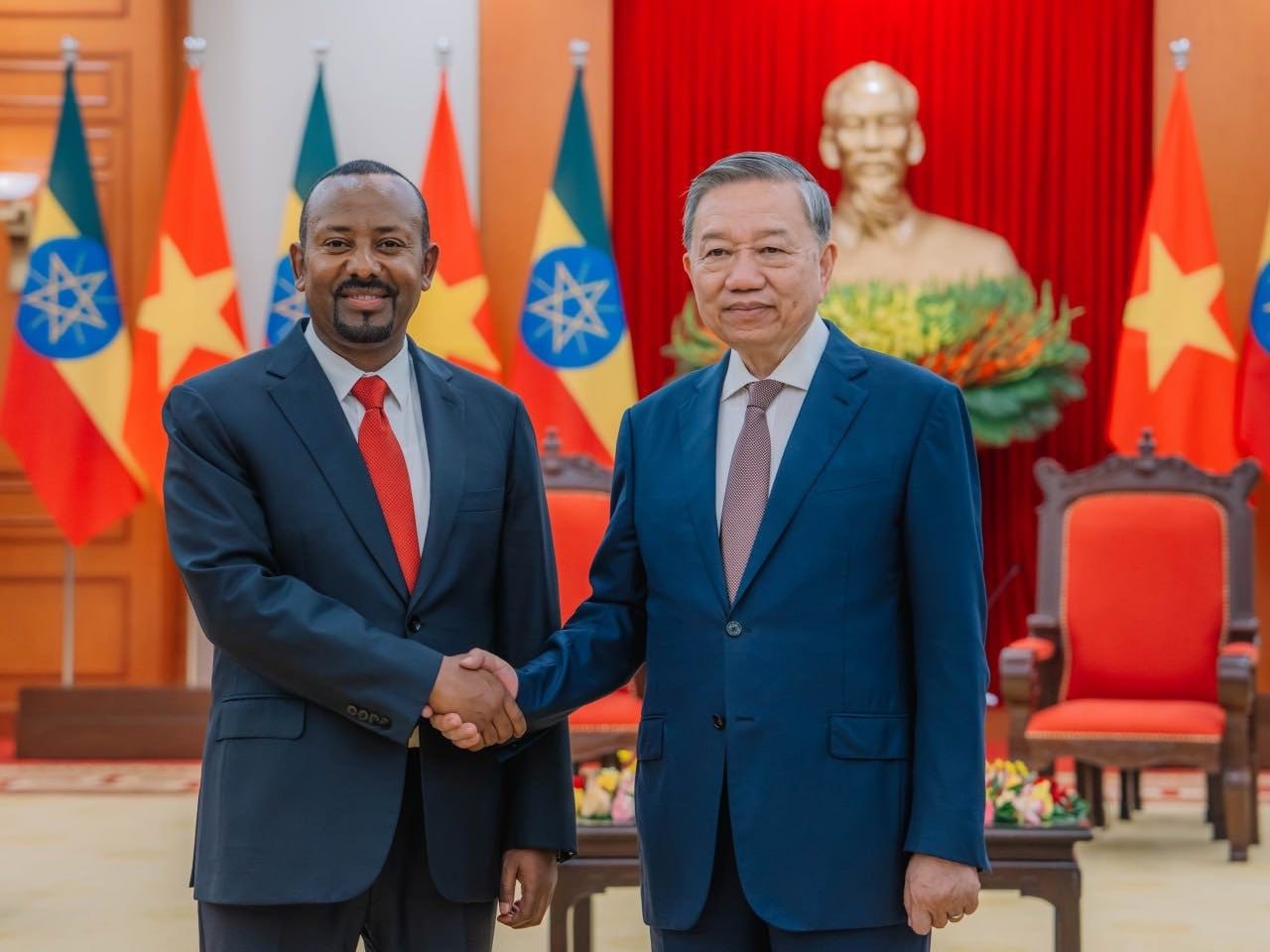
Ethiopia’s Prime Minister Abiy Ahmed and First Lady Zinash Tayachew initiated a four-day official visit to Hanoi on April 14, 2025, a historic milestone marking the first such visit of a senior Ethiopian leader since the two countries, Ethiopia and Vietnam, began diplomatic relations in 1976. The high-level engagement not only marks the end of seven years of no direct communication between the leadership of the two nations but is also a calculated step towards a strategic relationship between two influential and rapidly transforming Global South powers.
On the visit, Prime Minister Abiy will have high-level bilateral meetings with his Vietnamese counterpart and discuss with senior leaders in Vietnam’s most significant state institutions, the Party, Government, and National Assembly. His visit to the fourth Summit of the Partnership for Green Growth and the Global Goals 2030 (P4G), as the guest of Vietnamese Prime Minister Pham Minh Chinh, is testament to Ethiopia’s commitment to collaboration with the top nations at the forefront of green growth. At the summit, Ethiopia’s Green Legacy Initiative, a visionary reforestation and climate action project championed by Prime Minister Abiy, remains very much at the center of the country’s diplomatic priorities and its drive to promote global environmental partnerships.
The significance of this visit is further emphasized by the timing since Ethiopia and Vietnam will be celebrating the historic 50th anniversary of diplomatic relations in 2026. Although the two nations have a bedrock of enduring long-term political goodwill, as evident in cross-voting in global organizations and Ethiopia’s official recognition of Vietnam’s market economy in 2014, the economic dimensions of their relations remain under-exploited. The bilateral trade of 2024 totaled a relatively small $13.1 million, which downplays the large strategic value engaged within both economies. Ethiopian exports to Vietnam include largely coffee and leather goods, with Vietnam exporting an assortment of agricultural and industrial products. In contrast, Vietnam’s international exports totaled over $405 billion during the same time period, reflecting the considerable and unexploited potential of enhancing trade and building strong economic relationships with African economies, with a focus on Ethiopia.
The pace of the visit is also fueled by the prospects of collaborative opportunities on the horizon. One of the greatest highlights was the tour made by Prime Minister Abiy to Toyo Solar, a Japanese-owned solar panel manufacturing company that is located in Vietnam but recently opened its operations in Ethiopia’s Hawassa Industrial Park. During the tour, the Prime Minister encouraged the company to expand its operations beyond manufacturing solar panels to include power generation, a venture that aligns with Ethiopia’s green energy dreams and its rapidly increasing power needs. Such an interaction demonstrates how strategic diplomacy can evolve into revolutionary industrial partnerships, resulting in sustained growth.
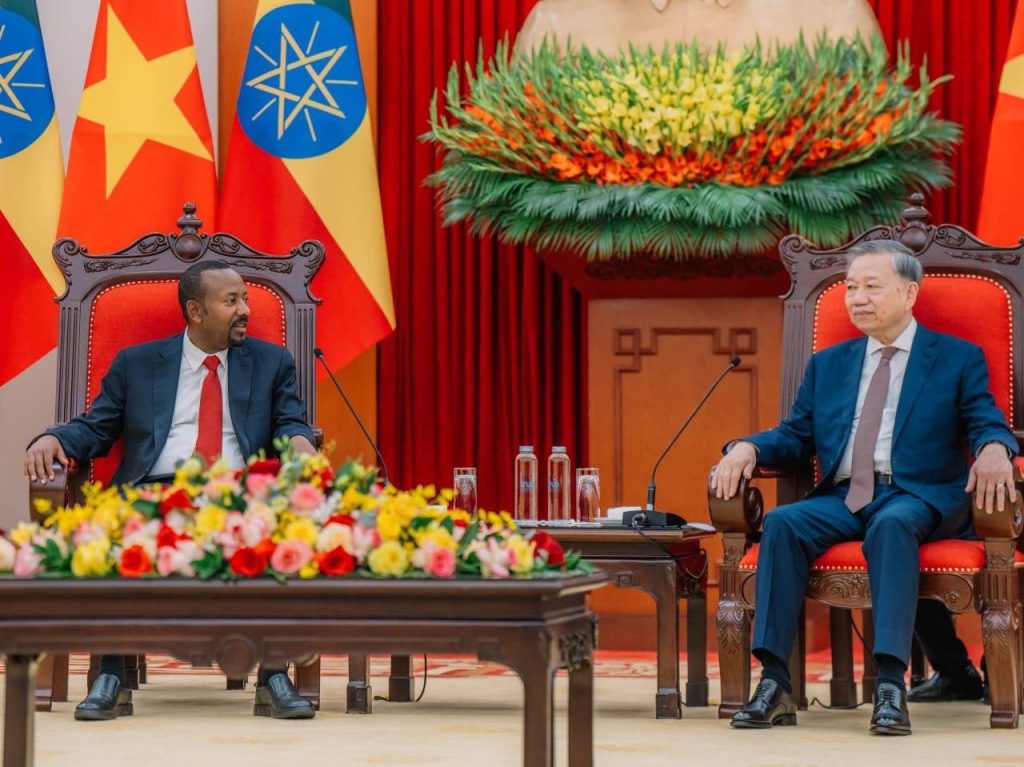
Vietnam would be a natural point for the exportation of Ethiopia to access broader Asian markets. The soon-to-be-opened direct flights between Addis Ababa and Hanoi, starting from July 2025, by Ethiopian Airlines, is a significant occurrence to eliminate logistical hindrances and spur connectivity. These enhanced transport links are to be not only a driver of increased trade and investment but also a means of exchange of knowledge, tourism, and closer people-to-people ties, further cementing the foundation for robust bilateral relations.
In addition to merely enabling trade, this visit paves the way for a closer, more institutionalized type of cooperation. Ethiopia stands to benefit a great deal from Vietnam’s impressive development trajectory, particularly in agro-processing, light industry, digital technology, and infrastructure development.
The potential for strategic joint ventures and the transfer of high technologies is enormous, particularly in sectors where Ethiopia is keen to speed up its industrialization process. Conversely, Vietnam may view Ethiopia as a valued strategic partner in its larger engagement with Africa, particularly with the country’s geographical location at the center of the African Union and as one of the continent’s economies with the fastest growth.
Much more significantly, the partnership could be a viable platform for mutual capacity building. Collaborative efforts in tertiary education, vocational training, and industrial skill development would endow Ethiopia’s youth and labor force with the key competencies required to thrive in more globalized and competitive production environments. Moreover, Vietnam’s strong track record in digital transformation and smart agriculture provide useful lessons that can be adopted and applied within Ethiopia’s development agenda, catalyzing progress in key sectors and assisting in supporting the country’s long-term growth objectives.
Cultural diplomacy is also crucial in cementing this new partnership. By creating deeper cross-cultural understanding and mutual respect, the two countries can ensure that their relationship is sincere and lasting. Public diplomacy measures, ranging from cultural festivals and cultural exchanges to academic collaborations, will ensure that the relationship takes root in their people’s collective consciousness, creating goodwill and reinforcing the relationship between the two nations. Increased human interconnectivity will be a solid basis for long-term strategic cooperation, transcending political and economic platforms to the establishment of a truly multifaceted relationship.
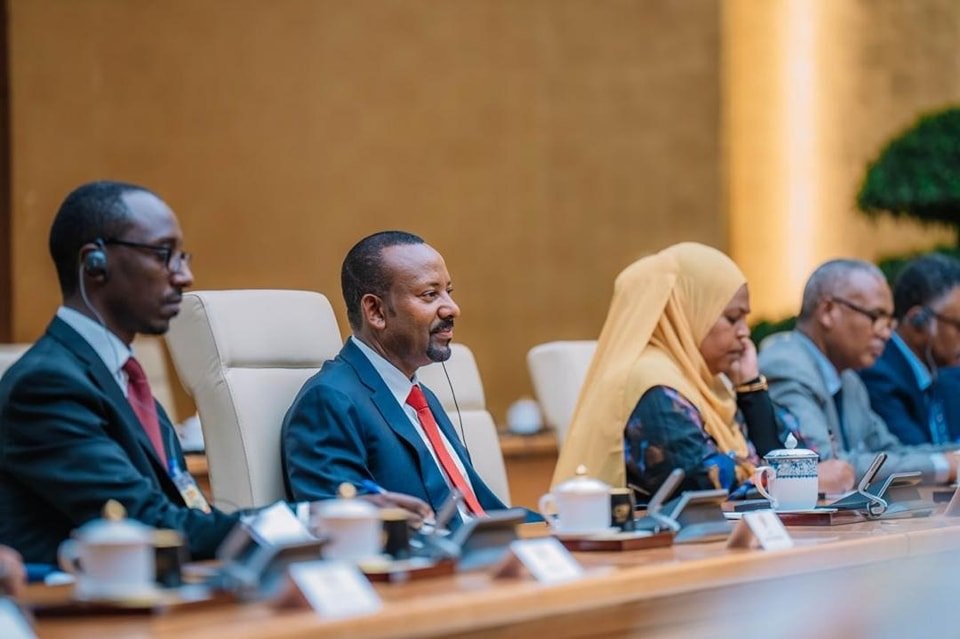
Regionally and at the multilateral level, Vietnam’s leadership in ASEAN and seamless integration into global trade regimes provide Ethiopia with a valuable model and a strategic window of opportunity for improved access to Asian economies. Similarly, Ethiopia’s presidency of the African Union and its geographical proximity to key regional markets positions Vietnam with a coveted gateway for extending its influence across Africa. The convergence of these geostrategic advantages offers a promising frontier for collaboration between the emerging powers of the Global South, with potential for mutual development and regional integration.
To ensure the success of the visit and the sustained impact thereof, both nations are to establish a common bilateral implementation mechanism, whether a task force or steering committee, for regular follow-up on progress and timely implementation of agreements. Concurrently, strategic communications directed at highlighting the mutual benefits of this evolving relationship will be critical in maintaining popular and institutional goodwill in the long term, maintaining the two populations active and interested in the relationship.
The visit of Prime Minister Abiy Ahmed to Vietnam is a milestone in Ethiopia’s diplomatic realignment towards diversified, strategic relations across the Global South. It represents a visionary vision of linking continents by collaborating on sustainability, innovation, and shared prosperity. With their increased cooperation, their convergence could serve as a model for other nations to follow, illustrating how nations with dissimilar histories but convergent visions can co-design new paths to inclusive growth, sustainable development, and resilient global interaction.
About the Author
Anteneh Getachew (PhD), Asia and Pacific Affairs Research Director General at the Institute of Foreign Affairs (IFA).
Disclaimer: The opinions stated in this article solely belong to the author and do not reflect the views or positions of the IFA