

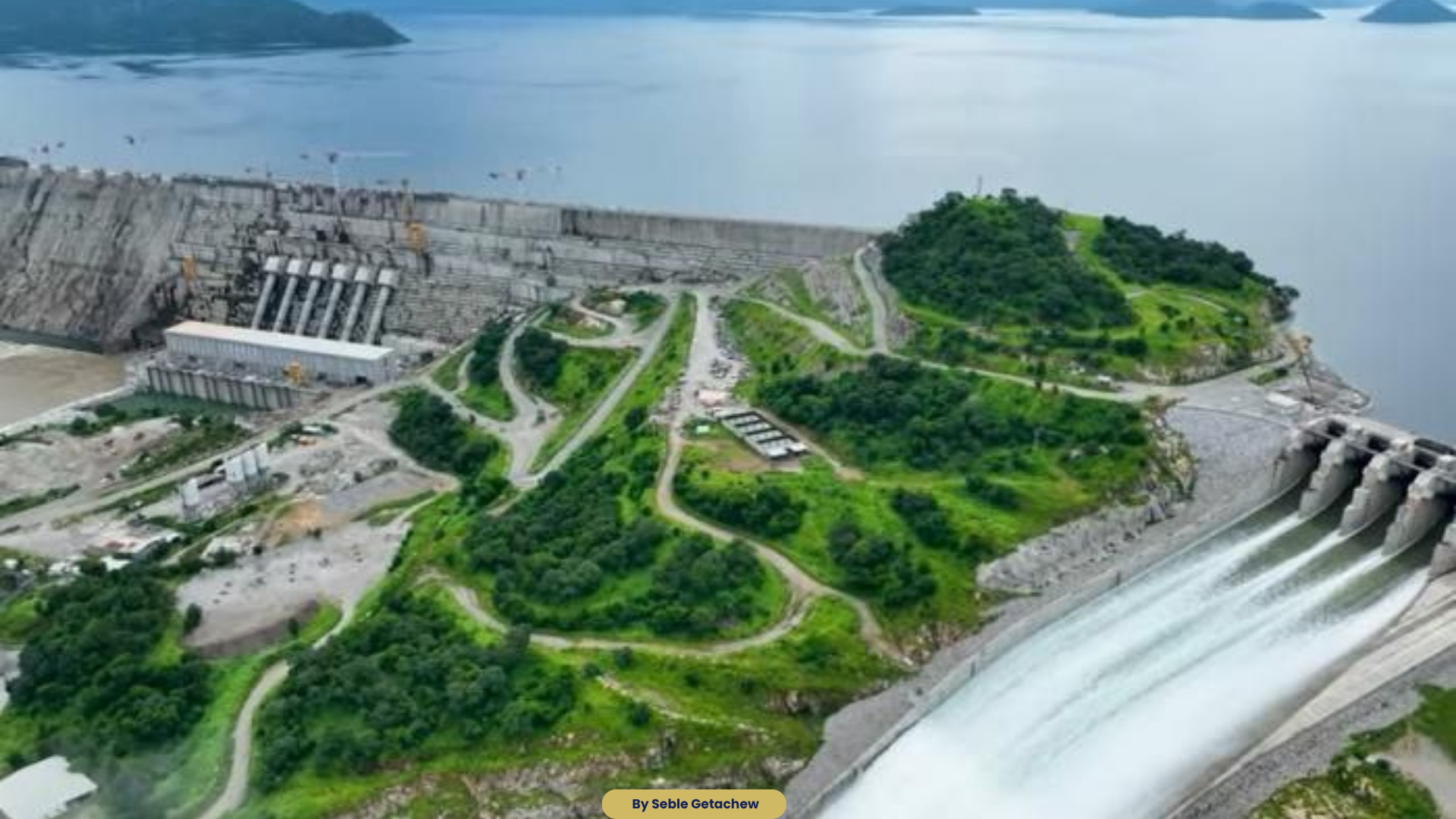
It is important to remember those early days of the GERD dispute, when there was genuine hope that dialogue and diplomacy would prevail. Back in January 2020, South African President Cyril Ramaphosa said it plainly: “There must be a way in which a solution can be found” when Ethiopian Prime Minister Abiy Ahmed had asked him to mediate the tense dispute over the Grand Ethiopian Renaissance Dam (GERD), and Ramaphosa accepted with real optimism, believing a peaceful resolution was possible.
This hope was not unique to leaders alone. Experts echoed the call for solutions led by Africans themselves. A senior analyst from the International Crisis Group at the time suggested that future talks should ideally take place on African soil not in Washington, arguing that an African setting would build trust and ownership among all parties involved. At the same time, a professor from the European University Institute called the conflict “an African problem” that demands a “Pan-African solution,” urging the African Union to take a more active role in bringing the parties together. On the international stage, UN spokesperson Stéphane Dujarric responded at the time to Egypt’s appeal to the UN Security Council in June 2020, calling on Egypt, Ethiopia, and Sudan to work harder to peacefully resolve their differences. He reminded all sides of the 2015 Declaration of Principles, which emphasized cooperation grounded in good faith, international law, and mutual benefit.
These tells from African leaders, international experts, and global institutions shared the same message: it was time to move beyond fighting over “water rights” and towards a shared commitment to cooperation.
Amid this complex blend of history, politics, and hope, I felt compelled in June 2020 to take a step back and reflect on the dam, not just as a structure, but as a symbol shaped by stories, identities, and power struggles that define the GERD and its future. Now, witnessing the project nearing completion, built by the hands and spirit of its own people and clear that the future is unfolding right before us.
For centuries, the Nile flowed with no clear, agreed-upon allocations. That ambiguity fueled conflict and shaped powerful national narratives. According to the known Ethiopian scholar Prof. Yacob Arsano, Egypt began exerting control over the Nile’s sources through military means as early as the 18th and 19th centuries. Despite several invasions, Ethiopia successfully defended its sovereignty and the sources of the Blue Nile, rejecting Egyptian attempts to annex the area (Kendie, 1999). The Nile is not just a river it is a symbol woven deeply into the region’s identity, history, and politics. Ethiopia, which contributes nearly 85% of the Nile’s waters, has historically been sidelined in conversations about how the river’s water is shared. Meanwhile, Egypt has long positioned itself as the river’s rightful guardian, claiming exclusive rights based on colonial-era agreements, such as, the Nile Waters Agreements of 1929 and 1959. These treaties, signed by Egypt, Sudan, and Britain (the colonial power at the time), granted Egypt most of the Nile’s waters and veto power over upstream projects. Ethiopia was notably absent from these talks.
These treaties reflect a colonial mindset designed to serve imperial priorities that favored Egyptian agriculture and British economic interests. But today, these agreements feel like relics outdated frameworks that no longer fit modern ideals of fairness, sovereignty, and regional cooperation. They ignored local realities, human settlements, and the interests of other Nile Basin countries.
This colonial approach to water management is not unique to the Nile, it is across Africa and beyond. Colonial powers manipulated river basins and water systems to serve their own ends, often sidelining local communities and needs. One can mention many stories how colonialists infringed and meddled on African matters. For instance, in West Africa, French colonial rulers took control of the Senegal River Basin, building dams and irrigation schemes that primarily benefited colonial holdings in Senegal ignoring upstream communities in Guinea and Mali. These projects served to boost France’s export economy rather than local food security. In Central Africa, Belgium managed the Congo River Basin mainly to support mining industries in Katanga. Rivers were controlled to fuel resource extraction and transport, with local governance in favor of direct colonial rule over trade routes. In South Asia, the 1960 Indus Waters Treaty between India and Pakistan was shaped by British colonial-era irrigation systems and hydrological maps, sidelining indigenous water-sharing traditions in favor of rigid, technocratic agreements. In the Jordan River Basin, British and French mandates drew borders and water sharing deals that ignored centuries old community-based water uses. In each of these cases, water was a tool of control while upstream and interior regions were politically marginalized and economically neglected.
Why the Nile Dispute Persists?
These colonial legacies live on as contested treaties, outdated infrastructure, and unequal access to water resources. The Nile dispute embodies this pattern. These attempts to enforce “historic rights” based on colonial era treaties prove to deepen old inequalities and hinder the development of a fair and modern water-sharing framework.
Again why does the Nile stir such deep emotions and resistance to compromise?
Many argue by relating the answer with national identity and narrative. For Egypt, the Nile is more than water it is life, identity, and security. The phrase “Egypt is the gift of the Nile” is not just a saying it is a powerful belief embedded in public consciousness. Generations of Egyptian leaders have framed access to the Nile as a matter of national survival and pride. International relations scholars assert that national interests are not fixed they are mostly shaped by identity, culture, and political storytelling. Egypt’s insistence on “historic rights” and its portrayal of the GERD as a security threat reflect this constructed identity. Ethiopia also has powerful stories centered on sovereignty, resilience, and independence. Symbols like the historic Battle of Adwa reinforce national pride and strengthen public support for projects like the GERD. Competing narratives in some ways make compromise difficult but they are powerful mobilizing agencies. Obviously, both nations have emotional, cultural, and political stakes tied to the Nile, and leaders could use these stories as instruments of collaboration.
Looking back, Egypt’s attempts to bring in external powers from the Cold War era to today have always reflected a broader geopolitical strategy. During the Cold War, when Egypt pushed forward with the Aswan High Dam, it played the global powers against each other and emerged with the then Soviet backing after tensions with Western allies. That same instinct to turn a regional dispute into an international one echoed again when Egypt appealed to the UN Security Council and the U.S. during the GERD negotiations.
In June 2020, those echoes of the Cold War felt loud and familiar. But the world had changed. The superpower dynamics of the past had given way to a multipolar landscape. Ethiopia, too, had changed and become confident, assertive, and backed not just by foreign allies, but by the determined contributions of its own citizens.
Today, as I witness the dam over 98% complete with the support of every Ethiopians. I am reminded that the future is not some distant vision. It is unfolding before us. What once seemed abstract in a web of diplomacy and power politics is now a physical, tangible reality. The GERD is no longer a dream or a dispute it is a declaration of resilience and self-reliance.
References:
Statement by President Cyril Ramaphosa, January 2020.
International Crisis Group analyst remarks, 2020.
European University Institute professor’s commentary, 2020.
UN spokesperson Stéphane Dujarric, June 2020.
Arsano, Yacob. (2007). “The Nile Basin and the politics of water.”
Kendie, Daniel. (1999). “Ethiopia’s resistance and sovereignty over the Nile sources.”
Nile Waters Agreements of 1929 and 1959.
Mamadou Diouf, “Colonial water control in the Senegal River Basin,” 2004.
Jean-Luc Vellut, “Belgian colonial hydropolitics in Congo,” 2003.
Indus Waters Treaty, World Bank archives, 1960.
Rashid Khalidi, “Water and Politics in the Jordan River Basin,” 2011.
Alexander Wendt, “Social Theory of International Politics,” 1999.
Note: Originally the article was posted in June 2020 under the title ” ‘Try Africa’ and the Nile Conundrum” on the writer’s personal webpage called ‘Seble’s thought”. As the GERD nearing its completion, the writer revised the article and would like to reflect on the promise of diplomacy.
About the Author
Seble Getachew is an Associate Researcher at the Institute of Foreign Affairs (IFA). She is a dedicated advocate for women’s empowerment and continuous personal growth. Seble has over 18 years of experience working in the UN Offices, Field Services and similar International organizations in Africa, South-East Asia and the Gulf. With her experience working in a post-conflict environment, she has deep understanding of protection of civilians including policy research and administration. Seble has an abundance of multicultural expertise and a passion for diversity. She did her post graduate studies in Global Studies with a emphasis on Peace and Security in Africa from the Leipzig University and International Relations and Development from ISS, the Hague along with Bachelor’s degree in Political Science and International Relations from Addis Ababa University. Seble has been serving the IFA since August 2024 as volunteer in the capacity of Partnership Officer and Researcher in the Multilateral Affairs Research Directorate.
Disclaimer:
The content disseminated by the Institute of Foreign Affairs (IFA) – including, but not limited to, publications, public statements, events, media appearances, and digital communications – reflects the views of individual contributors and does not necessarily represent the official positions or policies of the Institute, its partners, or any affiliated governmental or non-governmental entities.
While the IFA endeavors to ensure the accuracy, integrity, and timeliness of the information presented, it makes no representations or warranties, express or implied, regarding the completeness, reliability, or suitability of such content for any purpose. The Institute expressly disclaims any liability for errors or omissions, as well as for any actions taken or decisions made based on the information provided.
The inclusion of external links, references, or third-party resources does not constitute an endorsement by the Institute. Additionally, engagement on social media platforms – including, but not limited to, likes, shares, retweets (RTs), or reposts – shall not be interpreted as an endorsement or validation of the views expressed therein.
Readers and audiences are encouraged to exercise critical judgment and seek independent verification when interpreting or relying upon any information disseminated through publications and posts on the Institute’s platforms or representatives.