

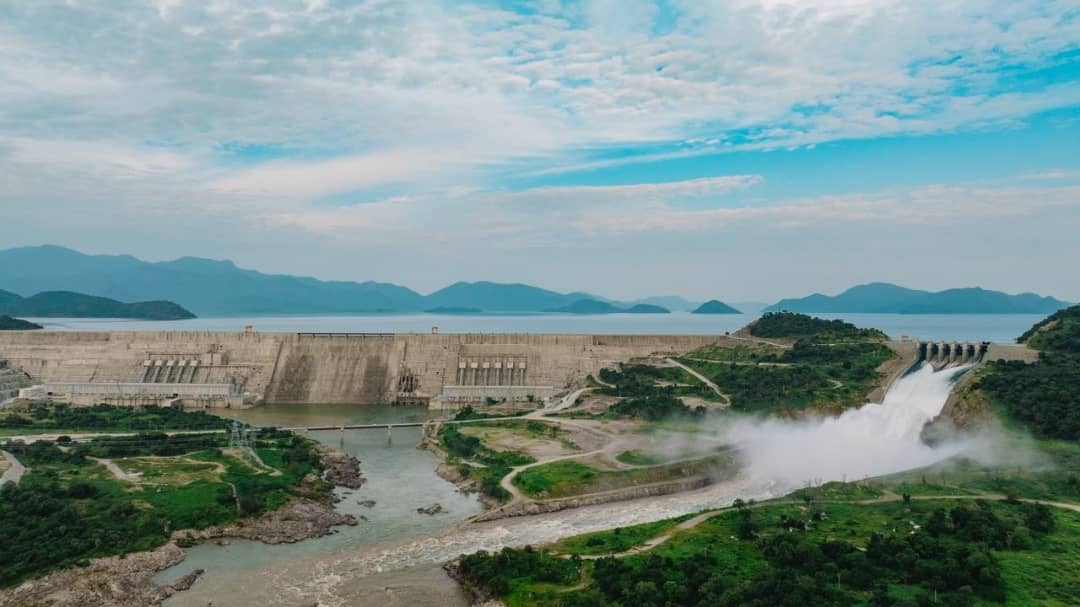
The Grand Ethiopian Renaissance Dam (GERD) has been under construction for 10 plus years. The Dam is an epitome of independence, sovereignty, and African renaissance in economic mega project development. The GERD, beyond its infrastructural largeness, is a center of geopolitical thunderbolt in the region. This dam has a massive capacity to reorder the geopolitical landscape of the greater horn of Africa in terms of power projection, alliance, and resource capture. As the Aswan Dam cemented Egypt’s 20th-century dominance in the region, the GERD defines Ethiopia as a state and contributes to Ethiopia’s 21st-century rise. The dam will equip Ethiopia with a substantial clout in the area in terms of energy dominance, water resources, and diplomacy.
Ethiopia, for the first time, planned to build infrastructure during Emperor Haile Selassie’s regime by authorizing in 1964 the U.S Bureau of Reclamation (USBR) to conduct a scientific study over the Abbay river. This is the first scientific study on the Abbay River in Ethiopia. This study identified four major dam sites, namely Karadobi, Mabil, Mendaia, and Border, for irrigation, hydropower potential, and to address water management in the region. But the study never changed from idea to physical dam. Later, the GERD went under construction at the Border site in 2011 under Ethiopia’s late Prime Minister Meles Zenawi, and it is going to be inaugurated in September under the leadership of Abiy Ahmed.
Colonial Treaties, Egypt’s Dominance, and the Negotiation Over GERD
Egypt’s monopoly over the Nile River traces back to the colonial power architecture of development and exploitation in Africa. The colonial power Britain designed the utilization of the Nile River, considering the downstream state Egypt and the middle stream state Sudan, without considering Ethiopia, the 86 percent source of the river, and other upstream states such as Tanzania, Rwanda, Kenya, South Sudan, and others. The 1902, 1929, and 1959 colonial agreements, which were outdated, allocated to the two states, disregarding Ethiopia. As per the 1959 agreement, the total allocation of 48 Billion Cubic Meters (BCM) was divided, with 55.5 BCM allocated for Egypt and 18.5 BCM for Sudan. The two colonial treaties are against Ethiopia’s natural rights, and they favor Egypt and Sudan, which are zero contributors.
On the Nile River, Egypt built a massive hydropower plant and a modern irrigation system that consolidated its dominance over the utilization of the river significantly. The flagship project built over the Nile is the Aswan High Dam, which was built in the 1960s. This dam serves Egypt as a power generation, irrigation for its modern agriculture, and serves as an impoundment for Lake Nassar, making it the third largest reservoir in the world. Also, the dam served the Toshka project, which irrigated the desert in Egypt. All these projects along the Nile are the manifestation of Egypt’s dominance. Ethiopia proposed to use the Nile River since 1964, but the project was initiated in 2011, when GERD started.
GERD is not only a development project; it also represents Ethiopia’s rejection of Egypt’s Hydro-hegemony over the Nile, and it is a decolonial act. As the Prime Minister Abiy Ahmed asserted, “The Nile is a gift of God given to us for Ethiopians to make use of it.” The colonial mentality over the Nile is gone, and the dam brought new hope for Ethiopians and the African path of economic independence. This Dam is a symbol of African economic independence and manifests Africans’ capacity to self-finance a mega project.
Egypt’s intransigence during the decade-long negotiation pursued the logic of maintenance of dominance, as evidenced in colonial agreements over the Nile and later over GERD negotiations. Egypt’s maximalist negotiation policy is underpinned by “Historical Rights” and maintenance of the status quo as enshrined in its Article 44, as the Nile, of the constitution as a constitutional onus. Egypt’s positional bargaining, which is overly competitive, and Ethiopia’s interest-based bargaining or principled engagement, manifested in cooperation, were the major flashpoints between the two states. In this way, Egypt challenged a win-win settlement agreement over GERD in particular and the Nile in General. The so-called Egyptian water security is the pinnacle of their foreign policy towards Ethiopia and other upstream states.
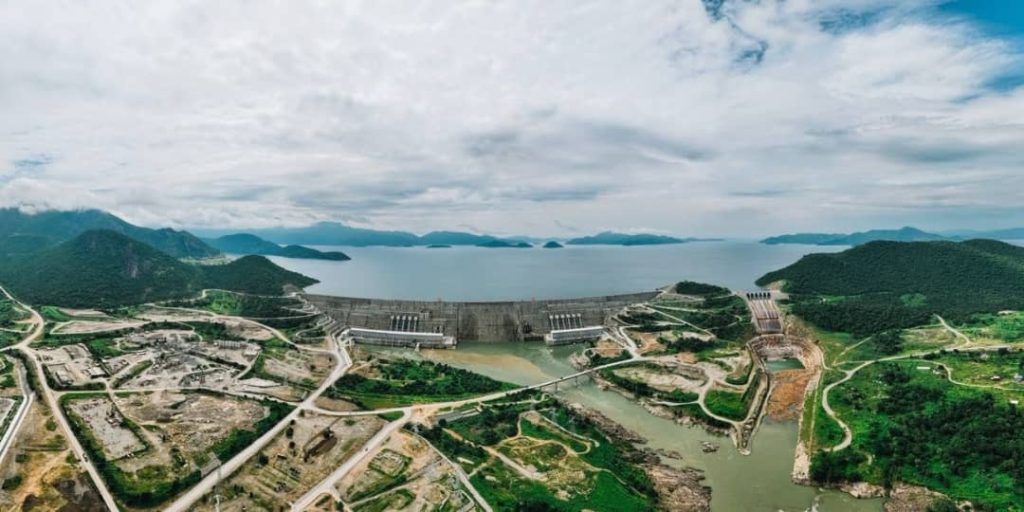
Nile, GERD, and The Great Power Chessboard
The Nile River is located in a geopolitical and geoeconomically significant place in global politics. It is a river that connects 11 states as a basin, and it supports modern agriculture, a hydropower plant, and provides a livelihood for a million people. From colonial times to the present day, it is a place where superpowers, middle powers, and emerging powers compete for geopolitical and geoeconomic advantages. The influence of great powers’ politics is evident in the history of the river. During the Cold War period, the Union of Soviet Socialist Republics and the United States were competing ideologically to influence the Nile basin states.
The influence of great power politics is evident in the Nile basin as a chessboard. The basin states were receiving finance from the great powers and their financial institutions to construct a project over the Nile River. The Aswan High Dam is an essential empirical example that manifests great powers’ support. This dam was first conceived with US and United Kingdom support; later, in the 1960s, it was constructed with the support of the Union of Soviet Socialist Republics in terms of finance and technical support.
The Nile is a global strategic gift for regional and superpowers. This river is a “liquid lifeline” for eleven states and more than 270 million people in the Nile Basin, and since the 20th century, it has been tangled with great power rivalries. For the superpowers such as the US, China, and Russia, the Nile is like a place to command a greater part of Horn Africa’s future. These powers have high stakes in the hydropolitical game, and Egypt’s military support from the USA since 1978, and Ethiopia’s loans from China are a manifestation of the competition to influence states in the basin.
These powers are using a dual-use asset in the region. These assets are economic tools and security levers. China provided turbines or wiring loans for Ethiopia, with the cost estimated at 1.8 billion dollars, and deepened its strategic foothold in the Horn of Africa geopolitical region. The UAE’s “checkbook statecraft” security lever is significant in this geopolitical landscape. The UAE is supporting Addis in Red Sea port deals or policy while supporting Egypt in countering Ethiopia.
These great powers’ moves and regional outcomes are clear in the basin hydropolitical game. The US is playing a role between Ethiopia and Egypt. It is an ally with Egypt over Sinai security, and it is an ally with Ethiopia over trade. Also, Russia is doing business as usual by courting nuclear deals with Egypt and Ethiopia. This is Russia’s act to fill the void that the US created and is part of their geostrategic and geopolitical competition in the Nile basin.
The superpower holds an opposing position on GERD negotiations. This opposing position is the result of geopolitical competition in the greater horn of Africa, where GERD is located to control or influence key waterways and to project strategic influence over Africa or the basin states. The US, under the leadership of Trump, leveraged the issue of GERD to be dealt with at the United Nations Security Council. But Russia and China opposed this move to the United Nations Security Council. These two states preferred an African Union-led Mediation; both China and Russia hold a neutral position between Ethiopia and Egypt. The Trump administration highly influenced Ethiopia by supporting Egypt.
GERD as Ethiopia’s Geopolitical Lever
GERD is a strategic depth for Ethiopia by augmenting its economic independence, sovereignty, and diplomatic leverage in the region. The dam is the largest hydropower dam in Africa, with the capacity to generate 5,150 MW. This dam can make Ethiopia a powerhouse of energy in the Horn of Africa and export energy to its six neighbors. Energy dependence and interdependence will be the mark of the Horn states’ relations in the region. Ethiopia will be the pivot of energy in the area, considering the shift from oil to electric energy. Ethiopia will dominate the energy sector in the region and will be a provider of energy to neighboring states.
The dam has economic clout via the Eastern African Power Pool in reducing the dependence of the regional states on Middle East oil. The regional states are heavily dependent on oil from the Middle East powers, and this dependence will challenge their economic sovereignty. Still, the dam has the potential to emancipate the regional states from oil energy dependence. This dam can reshape the relations of the Horn states and the Arab states.
GERD’s energy can be a diplomatic weapon and bargaining card for Ethiopia in the region. The diplomatic stance of Ethiopia in the prism of African Solutions narratives and Egypt’s several appeals to the United Nations Security Council were the prominent bargaining powers in the negotiations. Still, now the dam is an independent diplomatic tool for Ethiopia. Ethiopia can leverage electricity deals to win allies in the region, particularly Kenya and Djibouti. This can reconfigure the power dynamics between the Horn states or basin states, adding another layer to the political landscape in the area.
The culmination of the dam partly reduces Egypt’s desire for proxies against Ethiopia. Egypt is behind Eritrea in support of the rebels’ activity and other ethnic based secessionist armed movements in Ethiopia in the past and present. Externally, Egypt is establishing military pacts with Eritrea and supporting anti-Ethiopian factions in Somalia and Sudan. Suppose Egypt’s main motives for supporting anti-Ethiopian elements are motivated by Nile politics. In that case, the whole operation of GERD will naturally end its instincts for arming and backing anti-Ethiopian elements in the country and outside of the country.
Sudan’s double game in the context of the Dam will end with the inauguration of the GERD. In the hydropolitical chase game between Ethiopia and Egypt, they were playing a double game. The Sudan political elites know the benefits that the dam can bring to them in terms of flood control, which saves 2 billion dollars per year, freeing the silt-free turbines and their capacity to mitigate unnecessary flood that decimates crops and prevent disturbance of livelihood caused by floods. Turning to Egypt, the elites want to portray the dam as an “existential threat” to their existence. But the inauguration and the commencement of GERD in its full capacity will end the Hydro relations of Sudan and Egypt over the Nile.
GERD will reconfigure the power dynamics in the Nile basin. The hostile hydro-relations of Ethiopia and Egypt, in particular, and Egypt and Upstream states in general, notably Rwanda, Uganda, Kenya, South Sudan, and Tanzania, will be changed. GERD as a project initiated other countries to join the development project on the Nile by disregarding the so-called Egyptian water security and “historical rights”, which the Ugandan President recently refuted. Therefore, Ethiopia’s dominion effect will usher in several development projects on the Nile River. The colonial old norm will be gone, and a new norm will be ushered in by GERD in the region.
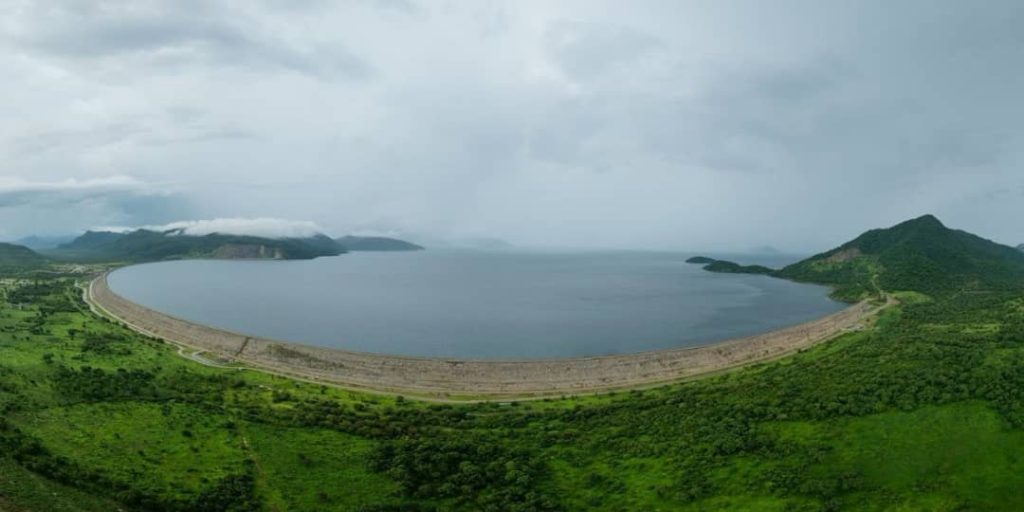
Post GERD new regional realignments, new alliance making, and new fault lines will emerge due to the alliance making and remaking involving GERD’s energy in the Nile basin states and Horn of Africa states. Ethiopia’s African Union-backed diplomacy over GERD by framing the dam as an African development project succeeded in new alliance-making and receiving support from upstream states. Also, the establishment of a new courtship of Nile basin states involving states such as Uganda and Tanzania against Egypt. In the Nile “Hydropolitical chessboard”, new consolidated fault lines are possible, namely water security vs energy sovereignty, Gulf state power play siding, Nile Basin orderings vs Historical rights mantra, and others.
In most riparian states, the Hydro-hegemony is established by upstream states, but in the case of the Nile River, that fact is evaded. Now GERD is laying and restoring the rules of the game in transboundary water. Ethiopia must use this new commanding height and set new rules and dictate the behavior of the downstream states. The foreign policy and water policy of the downstream states are anachronistic, and Ethiopia can remake them according to its needs and other riparian states in a shared destiny.
A century-old battle between Ethiopia and Egypt was conducted over the Nile River. The struggle is between the past and the future. Ethiopia’s battle for the future and Egypt’s battle for the past or history. The GERD concluded the winners, and the future of the Horn of Africa or the Nile basin will be under Ethiopian command height. The dam will prove Ethiopia’s dominance in the Horn region in terms of energy, water, and diplomacy. The benefits of the dam are clear for Sudan and Egypt, but these states have not acknowledged its benefits. This dam is a “climate infrastructure” that controls floods in Sudan, improves climate resilience for Ethiopia, and mitigates drought and floods in Egypt. Therefore, the Federal Government of Ethiopia must work on capitalizing on the potential of the dam in reordering the geopolitical landscape in the Nile basin and the Horn of Africa. This dam will cement Ethiopia’s indispensable power.
This dam will turn Ethiopia from a landlocked state to a power generator, literally and geopolitically. The actual test of the dam is Ethiopia’s capacity to transform from engineering tools to shared resources for the forged cooperation. Ethiopia must work on changing the colonial mindset to Africa’s model of collective prosperity. In this context, the Ethiopian government must conduct rigorous research on the potential of GERD in the Horn of Africa geoeconomics and geopolitical landscape.
About the auther
Biniyam Assefa is a Canada-based independent researcher on Peace, Security, Terrorism, and Geopolitics in the Horn of Africa. He holds a BA and MA degree in Political Science and International Relations, and Peace and Security Studies from Addis Ababa University.
Disclaimer:
The content disseminated by the Institute of Foreign Affairs (IFA) – including, but not limited to, publications, public statements, events, media appearances, and digital communications – reflects the views of individual contributors and does not necessarily represent the official positions or policies of the Institute, its partners, or any affiliated governmental or non-governmental entities.
While the IFA endeavors to ensure the accuracy, integrity, and timeliness of the information presented, it makes no representations or warranties, express or implied, regarding the completeness, reliability, or suitability of such content for any purpose. The Institute expressly disclaims any liability for errors or omissions, as well as for any actions taken or decisions made based on the information provided.
The inclusion of external links, references, or third-party resources does not constitute an endorsement by the Institute. Additionally, engagement on social media platforms – including, but not limited to, likes, shares, retweets (RTs), or reposts – shall not be interpreted as an endorsement or validation of the views expressed therein.
Readers and audiences are encouraged to exercise critical judgment and seek independent verification when interpreting or relying upon any information disseminated through publications and posts on the Institute’s platforms or representatives.