

Introduction
Diplomacy operates on multiple fronts, each providing a strategic avenue for safeguarding national interest. Among these, museum diplomacy is an emerging strategy that leverages cultural institutions and historical heritages. The strategy has become prominent in contemporary foreign relations across the world while recognizing the vital diplomatic work of museum administrators and professionals. In that regard, the contribution of Abdullahi Ali Sheriff, the founder of Sheriff Harar City Museum, is a very good example. Being the only private museum in Ethiopia and East Africa, the Sheriff Harar City Museum could demonstrate how individual initiative plays a crucial role in forging foreign relations through museum diplomacy.
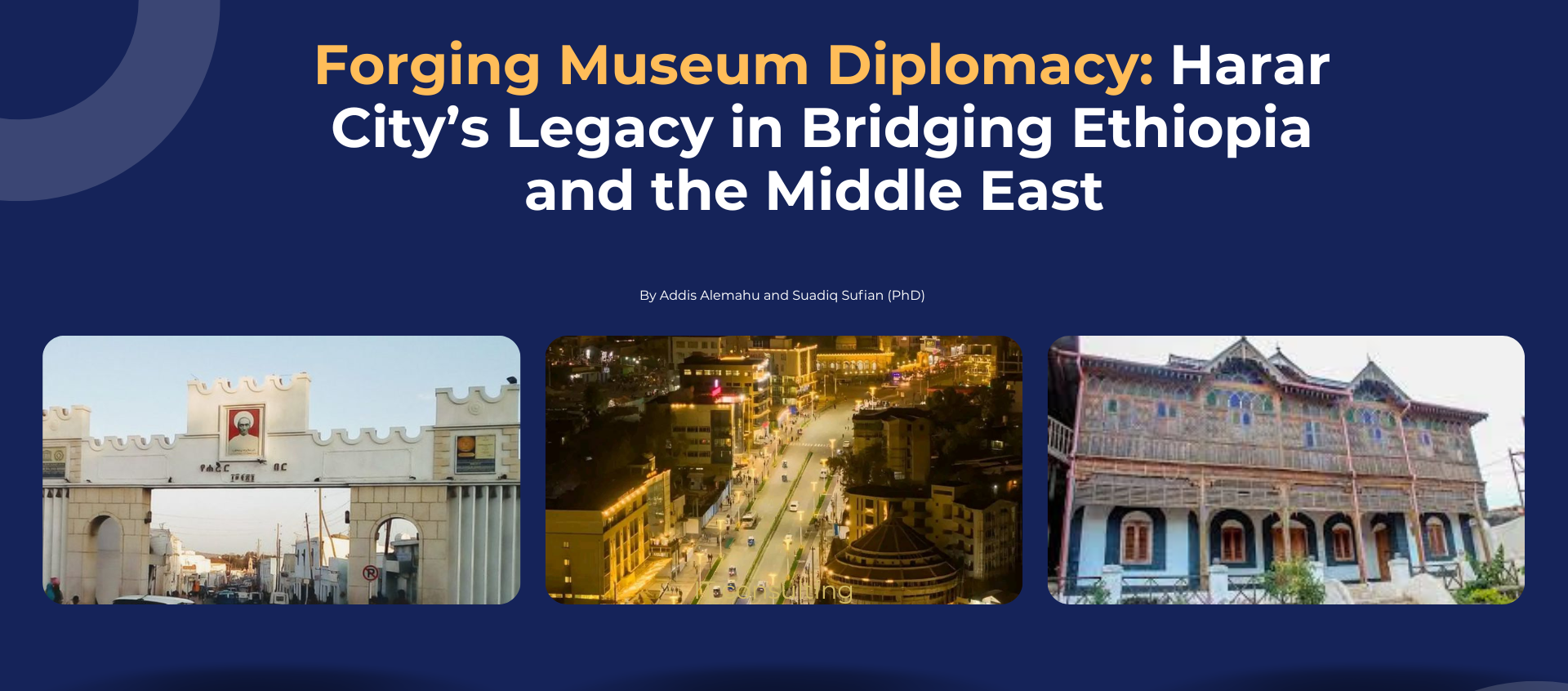
The historic city of Harar and museum diplomacy are two sides of the same coin. Hara is home to numerous well-preserved historical sites, including mosques, shrines, and cultural attractions, making the city an open museum in Ethiopia. The city was established around the 15th-16th century and surrounded by Harar Jugol, a walled area covering one square kilometer. The Jugol compound consists of 2,000 houses, 82 mosques, and 2 churches, according to Hailu Gashaw, a guide from the Harar Tourism Bureau. Due to its magnificent Islamic history and heritage, Harar is considered the fourth-holiest city in the Islamic world, next to Mecca, Medina, and Jerusalem, highlighting its immense potential for Islamic tourism in particular.
Harar consists of several remarkable museums, including the Harar National Museum, the Harari Cultural Museum (Ada Gar), the Arthur Rimbaud Museum, the Traditional Harari House (Gey Gar), the Sheriff Harar City Museum, and the recently established Harari Traditional Alela Hand-Sewing Museum. In this context, museum diplomacy could potentially make Harar a unique tourist destination, attracting both local and international visitors. Echoing this sentiment, the Harar city Tourism Bureau Director underscored that visiting Harar offers “a deep understanding of the other side of Ethiopia” – representing the heritages from the Eastern part of the country – the lowland.
Leveraging Museum Diplomacy as Soft Power
Museum diplomacy bridges cultures and brings them closer for the common good, thereby healing rifts. For instance, forging museum diplomacy through Harar’s historical and cultural heritages may create a fertile ground for Ethiopia to rectify its past misguided policies with respect to Middle Eastern countries. Meanwhile, the Middle Eastern nations may reassess their orientations, such as supporting Egypt’s destabilizing activities against Ethiopia – epitomized by the Arabization of the Nile River. This is mainly because Harar served as vital custodians of Ethiopia’s Islamic heritage, safeguarding artifacts that reflect the historical connection between Ethiopia and the Middle East.
Importantly, Harar, with its five gates of the Jugol wall, representing the five pillars of Islam, offers a rich historical and cultural experience for tourists. The 82 mosques located within a one-kilometer square area demonstrated the highest density of mosques in the world and could also attract a significant number of tourists, mainly from the Middle East countries. Therefore, thanks to museum diplomacy, Harar positions Ethiopia as a key player in the Islamic world, enhancing its global image. In other words, by strategically leveraging Harar’s rich legacy, Ethiopia could strengthen its ties with Middle Eastern nations, thereby unlocking opportunities in Islamic tourism.
Conclusion
With Harar city’s diverse cultural heritages and profound historical sites, museum diplomacy presents a valuable tool for enhancing Ethiopia’s foreign relations through museum diplomacy. In particular, Harar, as an emblem of Ethiopia’s Islamic heritage and history, could offer a window of opportunity to promote diplomatic engagement with the Middle Eastern countries. Notwithstanding, such opportunity has apparently remained untapped in the realm of Ethiopian foreign policy. Therefore, paying attention to museum diplomacy is a pivotal step to establish a meaningful connection with the Middle East countries. In view of that, the new foreign policy document should emphasize the contribution of museum diplomacy as a viable means of developing the country.
About the Authors
Suadiq Sufian (Ph.D.) is a researcher at the Middle East Affairs Department in the Institute of Foreign Affairs.
Addis Alemahu is a researcher in the Institution of Foreign Affairs, specializing in the Multilateral Governmental and Non-Governmental Affairs department. He holds an MA in Journalism and Communication.
His work focuses on:
- Migration and Refugee Issues
- Peacekeeping and Military Issues
- Socioeconomic Issues
He has authored numerous research articles, including:
- France’s Military Strategy Revision Plan in Africa and its Implications: Future Challenges & Opportunities for Africa
- Saudi Arabia’s Vision 2030 and Its Regional Implications
- Trajectories and Geopolitical Implications of the Gulf-Horn Interaction
- Militarization and Commercialization of Ports in the Horn of Africa
For inquiries, you can contact him at addisalemahu@yahoo.com.
Disclaimer:
The content disseminated by the Institute of Foreign Affairs (IFA) – including, but not limited to, publications, public statements, events, media appearances, and digital communications – reflects the views of individual contributors and does not necessarily represent the official positions or policies of the Institute, its partners, or any affiliated governmental or non-governmental entities.
While the IFA endeavors to ensure the accuracy, integrity, and timeliness of the information presented, it makes no representations or warranties, express or implied, regarding the completeness, reliability, or suitability of such content for any purpose. The Institute expressly disclaims any liability for errors or omissions, as well as for any actions taken or decisions made based on the information provided.
The inclusion of external links, references, or third-party resources does not constitute an endorsement by the Institute. Additionally, engagement on social media platforms – including, but not limited to, likes, shares, retweets (RTs), or reposts – shall not be interpreted as an endorsement or validation of the views expressed therein.
Readers and audiences are encouraged to exercise critical judgment and seek independent verification when interpreting or relying upon any information disseminated through publications and posts on the Institute’s platforms or representatives.