

1. Introduction
Over a decade, Ethiopia has grown into an increasingly visible actor in global climate governance. It has embraced determined national climate policies, large-scale environmental programs, and a diplomatic strategy focused on cooperation and climate justice in pursuit of low carbon development (EPA, 2021; WB, 2024). Consequently, the country has emerged as a leading voice for developing countries and especially Africa in both COP30 and G20, where climate issues have featured as a prime part of the negotiation landscape.
Ethiopia’s practical achievements in climate matters, the integration of its climate objectives into economic development, and its multilateral engagement with global partners—including BRICS, the African Union, and G20 member states—embed its influence within the international arena. (AUC, 2023; BRICS Brazil, 2025; UNCTAD, 2025).
2. Key Factors Behind Ethiopia’s Rising Global Attention
The emerging prominence of Ethiopia in the circles of global climate and development discourse can be understood through the lens of strategic diplomacy, converging with comprehensive domestic reforms, and regional leadership. These factors have positioned the country as an influential actor in shaping Africa’s engagement in the global agenda and advancing collective priorities on sustainability and climate action.
Large-Scale Environmental and Climate Action
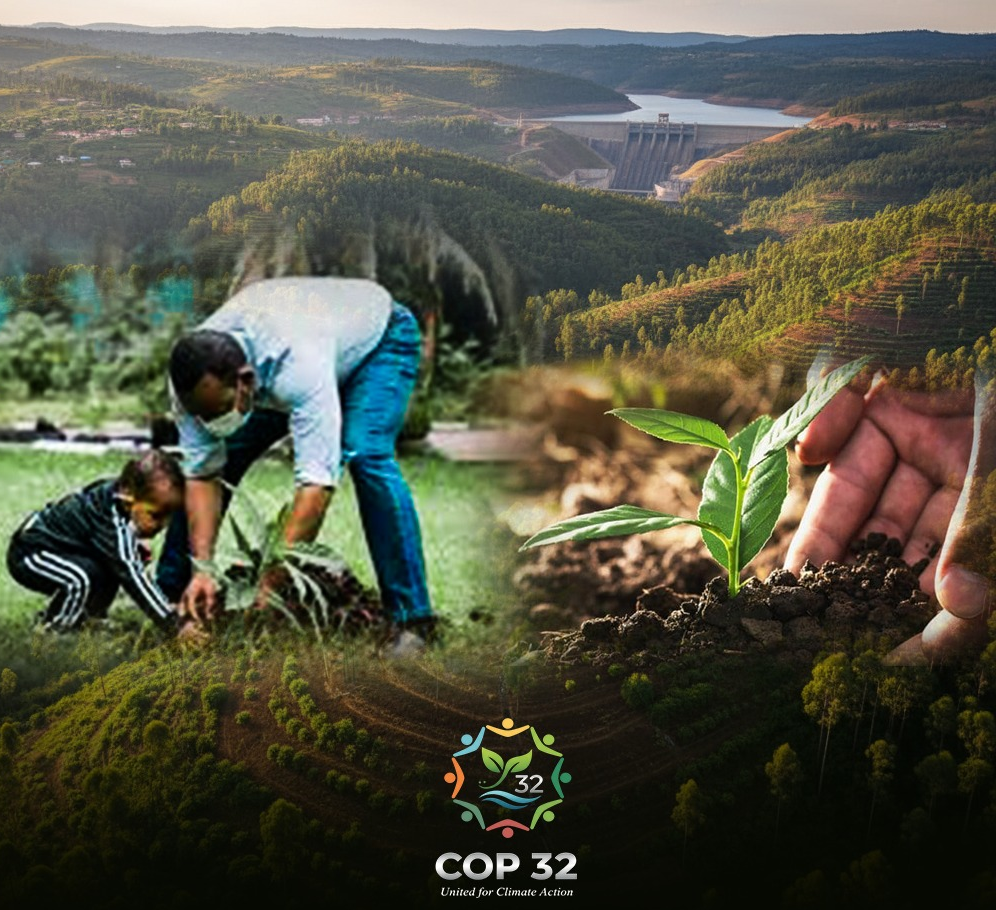
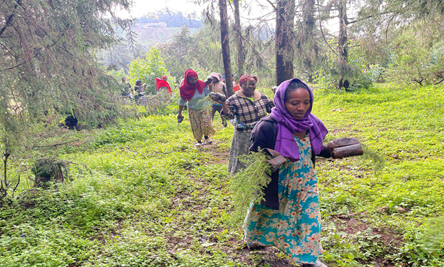
Through the Green Legacy Initiative, it has mobilized citizens to plant billions of trees every year, hence nurturing one of the largest reforestation programs in the world (Tsion and Yigremachew, 2025). Targeting Soil erosion, degraded watersheds, and biodiversity loss, the restoration projects contribute directly to the climate mitigation and adaptation efforts.
Climate-Integrated Economic Reform
Ethiopia’s Home-Grown Economic Reform Agenda embeds climate considerations into national development planning (FDRE, 2020). The reform places emphasis on the diversification of renewable energy, enhancement of climate-resilient agriculture and advancing green infrastructure. One of the flagship projects developed is the Grand Ethiopian Renaissance Dam (GERD), Africa’s largest hydropower project and a cornerstone of Ethiopia’s green energy transition. The GERD, beyond domestic benefits, enables regional economic integration through energy diplomacy allowing cross-border electricity trade and enhancing regional energy security. Presently, Ethiopia exports electricity to Djibouti, Kenya, Sudan, and Tanzania, while an agreement with South Sudan is in the planning phase, thereby strengthening regional cooperation and low-carbon development. (EEP, 2025; Further Africa, 2025; Daba Finance, 2024; African Security Analysis, 2025). In such a context, Ethiopia promotes renewable energy not only as a solution to climate change, but also as a catalyst for regional cooperation and sustainable economic growth.

Ambitious Nationally Determined Contributions (NDCs)
In fact, Ethiopia remains one of the African countries with the robust NDC commitments (EPA, 2021), especially on, among other areas, its commitment to emissions reduction, expansion of renewable energy, and protection of the ecosystem.
Ethiopia’s Africa Representation on the Global Climate Stage
African countries’ support for Ethiopia’s COP32 bid reflects a growing confidence in the nation’s climate leadership. Ethiopia’s proven capability to convene the Africa Climate Summit and champion continental interests has fostered a regional consensus. This reinforces trust in Ethiopia’s ability to coordinate common positions, frame Africa’s priorities, and effectively amplify the continent’s voice within global climate negotiations. ( ENA, 2025a).
3. Ethiopia’s Position on COP30 and the G20, Plus Insights on its Hosting COP32
Ethiopia’s active engagement at COP30 and the G20, alongside its bid to host COP32, opens the way for the country to contribute to global discussions through proactive climate implementation. Africa’s unified voice on climate, Ethiopia’s membership in BRICS, and its principled diplomacy have strengthened its influence. This reflects the continent’s growing role in climate diplomacy and underscores the necessity for greater developing-nation engagement in ambitious climate goals, finance, and adaptation strategies.
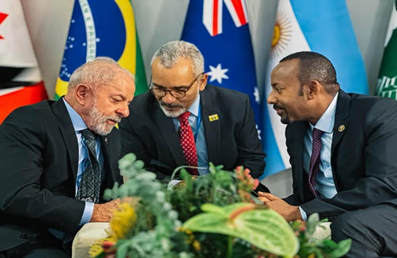
From African perspective and the expanded notion of the Global South, COP32 is an opportunity to profile African-led climate solution pathways and regional cooperation. This leadership emphasizes equity and predictability in climate finance—specifically for renewable energy, ecosystem restoration, and community-based adaptation—while prioritizing locally driven approaches over external or debt-dependent models. (AU, 2025). Ethiopia’s leadership is anticipated to magnify voice of the continent and to stimulate cooperative methods and solutions consistent with developing nations’ shared priorities.
Conclusion
Consequently, Ethiopia’s growing visibility on the global stage reflects its emergence as a strategic climate actor, bolstered by impactful initiatives, credible policy implementation, and proactive diplomacy. This positions the country to not only influence global climate governance but also to attract substantial climate finance and development partnerships. Looking ahead, Ethiopia is poised to scale up its climate programs, develop robust monitoring and evaluation systems, and leverage platforms such as BRICS, the G20, and the COP process. By enhancing its regional leadership and expanding private-sector engagement, the nation can secure tangible, broad-based climate resilience and economic transformation.
References
African Security Analysis. (2025). Ethiopia activates final GERD turbines and expands regional power trade. https://www.africansecurityanalysis.org/updates/ethiopia-activates-final-gerd-turbines-and-expands-regional-power-trade
Africa Union. (2025). ACS2 opens in Addis Ababa with call for climate investment in African-led solutions. https://au.int/en/pressreleases/20250909/acs2-opens-addis-ababa-call-4-climate-investment-african-led-solution
African Union Commission. (2023). Africa’s common position on climate change.
BRICS Brazil. (2025). Climate Financing is the focus of the BRICS Bank. https://brics.br/en/news/climate-financing-is-the-focus-of-the-brics-bank
Daba Finance. (2024). Ethiopia plans power exports to Tanzania via Kenya. https://www.dabafinance.com/en/news/ethiopia-plans-power-exports-to-tanzania-via-kenya
Environmental Protection Authority. (2021). Ethiopia’s Climate Resilient Green Economy (CRGE) Strategy. Government of the Federal Democratic Republic of Ethiopia. https://www.epa.gov.et/images/Polices/CRGE_Strategy_Final.pdf
Ethiopian Electric Power. (2025). Ethiopia’s Energy Crossroads: Balancing Renewable Growth, Economic Reform, and Universal Access. Ethiopian Energy Outlook. https://www.eep.com.et/?article=ethiopias-energy-crossroads-balancing-renewable-growth-economic-reform-and-universal-access
Ethiopian News Agency. (2025a). Ethiopia confirmed as host of COP32 climate summit. Ethiopian News Agency. https://www.ena.et/web/eng/w/eng_7690607
Ethiopian News Agency. (2025b). Ethiopia’s Selection to Host COP-32 Affirms its Commitment to Combating Climate Change. https://www.ena.et/web/eng/w/eng_7754508#:~:text=Addis%20Ababa%2C%20November%2021%2C%202025,Climate%20Change%20demonstrates%20the%20country’s
Federal Democratic Republic of Ethiopia. (2020). A Homegrown Economic Reform Agenda: A Pathway to Prosperity. Addis Ababa.
Further Africa. (2025). Ethiopia’s EEP Surpasses Power Generation and Grows Export Revenue
Tsion Issayas and Yigremachew Seyoum. (2025). Ethiopia Invests Big in Restoring Degraded Land. https://reliefweb.int/report/ethiopia/ethiopia-invests-big-restoring-degraded-land
UN Trade and Development. (2025). A BRICS Agenda for Enhancing Climate Finance. Technical cooperation outcome. https://unctad.org/system/files/official-document/tcsgdsinf2025d1_en.pdf
World Bank. (2024). Ethiopia climate and development report. https://openknowledge.worldbank.org/server/api/core/bitstreams/715c3822-4a9d-437f-8b3c-89585f7fe3b0/content
About the Author
Dr. Haimanot Eshetu is a senior researcher in Multilateral Affairs at the Institute of Foreign Affairs.
Disclaimer:
The content disseminated by the Institute of Foreign Affairs (IFA) – including, but not limited to, publications, public statements, events, media appearances, and digital communications – reflects the views of individual contributors and does not necessarily represent the official positions or policies of the Institute, its partners, or any affiliated governmental or non-governmental entities.
While the IFA endeavors to ensure the accuracy, integrity, and timeliness of the information presented, it makes no representations or warranties, express or implied, regarding the completeness, reliability, or suitability of such content for any purpose. The Institute expressly disclaims any liability for errors or omissions, as well as for any actions taken or decisions made based on the information provided.
The inclusion of external links, references, or third-party resources does not constitute an endorsement by the Institute. Additionally, engagement on social media platforms – including, but not limited to, likes, shares, retweets (RTs), or reposts – shall not be interpreted as an endorsement or validation of the views expressed therein. Readers and audiences are encouraged to exercise critical judgment and seek independent verification when interpreting or relying upon any information disseminated through publications and posts on the Institute’s platforms or representatives.