

“Rome wasn’t built in a day” is a proverb people repeat when they want to calm impatience and protect effort from discouragement. It tells us that big things require time. Time for planning, time for mistakes, time for revision, and time for craft. We say it to students, to new businesses, to young artists, and to societies trying to solve old problems. We say it to remind ourselves that greatness is rarely quick.
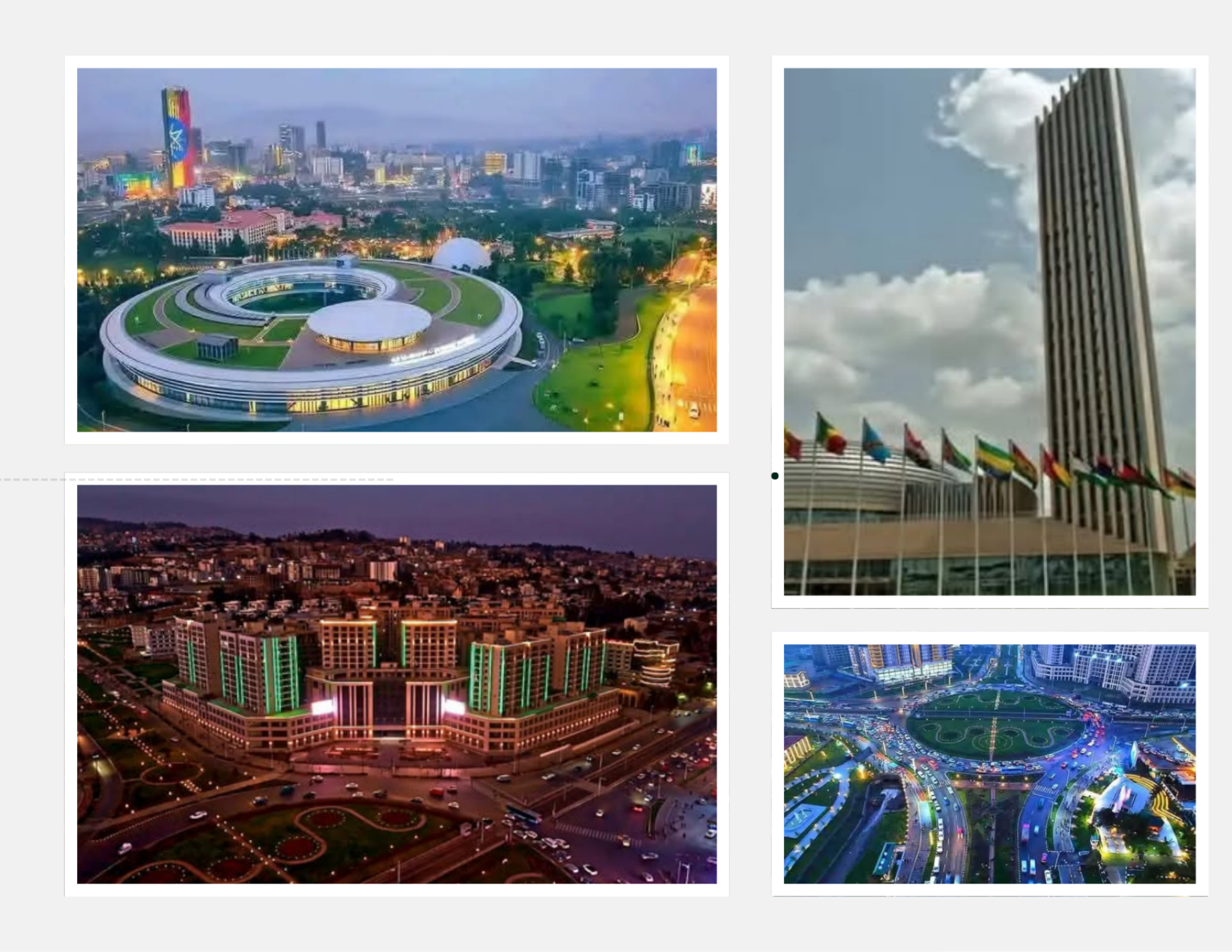
And yet, these days, walking through Addis Ababa, it is hard not to feel the proverb being playfully challenged. Rome may not have risen overnight, but Addis Ababa is. Often looks as if it is being rebuilt at the speed of a deadline. Sidewalks sharpen into clean lines. Road dividers appear where dust used to settle. Lights stitch themselves along avenues that were once dark. Walls get repainted. Trees and flowers arrive as if on a schedule. It is not that the city is finished. No city ever is, but the pace of transformation gives an impression of immediacy: Addis Ababa is being asked to become “ready” in a moment, because the world is coming.
On the eve of the 39th African Union Summit, scheduled for 11–15 February 2026, Addis Ababa stands in full bloom, preparing to welcome heads of state, delegates, journalists, investors, and visitors. The city has always carried a symbolic weight as the diplomatic capital of Africa, but such events intensify everything: the expectation of order, the appetite for beauty, and the demand for security, the desire for a story that photographs well and reads even better. A summit is not only meetings in conference halls. It is the image a host city sends to an entire continent and beyond.
This is why the proverb feels relevant again, but with a twist. Addis Ababa’s preparations are not an argument against patience. They are proof of what urgency can do when a city decides collectively and institutionally to present its best self. The result is an Addis that feels newly polished, newly illuminated, and newly curated, without losing the warmth that has always been its strongest signature.
A City Dressed in Light and Movement
One of the first things visitors notice in a changing city is the road. Roads are not only infrastructure; they are a statement. They tell you what a city values: time, safety, mobility, dignity. In Addis Ababa today, many main routes appear widened, smoothed, and redesigned. Intersections look clearer. Medians, sidewalks, and road markings signal a push for order and predictability. At night, the city’s lighting. streetlamps, decorative illuminations, and carefully placed fixtures, turns major corridors into glowing pathways. Light does something simple but powerful: it makes a place feel secure, walk able, and alive.
Along these roads, banners and large TV screens have become part of the city’s public language. They do more than decorate. They speak. They promote Ethiopia’s history, culture, and tourism with curated visuals: ancient heritage, proud victories, spiritual traditions, natural landscapes, and modern ambition. This is public diplomacy on display communication that happens before anyone enters a meeting room. For guests unfamiliar with Ethiopia, the streets begin telling the story immediately: this is a country of deep roots, not a blank page; a civilization with memory, not a place newly introduced to itself.
The effect is both festive and intentional. Addis Ababa is not merely hosting; it is performing hospitality at city scale, through design, color, and messaging. Even the more uniform color themes of buildings along prominent routes contribute to a sense of coherence. Urban beauty often depends on harmony: not that everything must match, but that the city looks cared for, planned, and respected.
Construction as Confidence: The African Convention Center and Beyond
In Addition to African union summit hall, there are newly emerged halls in the city. A summit demands space, space for plenary sessions, bilateral talks, press briefings, receptions, exhibitions, and security operations. That is why the construction and expansion of major facilities matter. The African Convention Center project signals more than readiness for a single event. It signals a long-term intention: Addis Ababa aims to remain, and strengthen, its role as a continental meeting point. In a world where conferences can move to any city that offers capacity, efficiency, and prestige, building such infrastructure is a strategic choice.
The same can be said for other landmark developments, including the widely discussed Adwa 00 project, which carries national symbolism as well as modern architectural aspiration. Such projects are not only buildings; they are statements written in concrete and glass. They say: Ethiopia remembers, Ethiopia honors, and Ethiopia also builds forward.
And then there is the work of renovation—sometimes less dramatic than new construction, but just as meaningful. Renovating castles, palaces, and historic sites is an act of cultural maintenance. A city that renovates its heritage refuses to treat its past as disposable. It tells visitors and citizens alike that modernity does not require amnesia. In fact, the most admired cities in the world are often those where old and new stand side by side, not in conflict but in conversation.
When guests come for a summit, they do not only ask, “Where is the conference hall?” They ask, “What is the story here?” They want to see what is irreplaceable. Renovated heritage sites give Addis Ababa more than tourist value; they give it narrative power.
The Most Visible Beauty—and the Deepest Beauty
Urban transformation is often judged by what is easiest to see: roads, lights, buildings, landscaping, and screens. But there is another kind of beauty that cannot be installed before a summit. It cannot be painted or wired. It is human.
Ethiopia’s strongest welcome has always been its people. It is the habit of greeting strangers with curiosity rather than suspicion. It is the instinct to offer directions, to share a seat, to insist that a guest has eaten enough. It is the coffee ceremony that turns hospitality into art and time into generosity. It is the way a city can feel busy and still make room for a visitor.
When Addis Ababa welcomes the AU Summit, it will not be only the infrastructure that leaves an impression. It will be the everyday interactions: hotel staff who handle pressure with grace, taxi drivers who become informal guides, shopkeepers who translate prices into smiles, and residents who treat guests as temporary neighbors.
That human element is what makes all the physical preparation matter. Roads are for movement, but hospitality is what makes movement feel safe. Lighting makes streets visible, but kindness makes a city memorable.
More Expected: From the AU Summit to COP32
And this moment is not the end. Many residents and observers already look ahead. If Addis Ababa is blooming now for the AU Summit, then even more is expected in the lead-up to COP32. Hosting or preparing for major international climate discussions requires more than beauty. It demands a credible commitment to sustainability: greener transport, cleaner public spaces, resilient infrastructure, and urban planning that supports health and livability.
Molalign Kesatebirhan, MA
Diplomacy and International Relations
Disclaimer:
The content disseminated by the Institute of Foreign Affairs (IFA) – including, but not limited to, publications, public statements, events, media appearances, and digital communications – reflects the views of individual contributors and does not necessarily represent the official positions or policies of the Institute, its partners, or any affiliated governmental or non-governmental entities.
While the IFA endeavors to ensure the accuracy, integrity, and timeliness of the information presented, it makes no representations or warranties, express or implied, regarding the completeness, reliability, or suitability of such content for any purpose. The Institute expressly disclaims any liability for errors or omissions, as well as for any actions taken or decisions made based on the information provided.
The inclusion of external links, references, or third-party resources does not constitute an endorsement by the Institute. Additionally, engagement on social media platforms – including, but not limited to, likes, shares, retweets (RTs), or reposts – shall not be interpreted as an endorsement or validation of the views expressed therein.Readers and audiences are encouraged to exercise critical judgment and seek independent verification when interpreting or relying upon any information disseminated through publications and posts on the Institute’s platforms or representatives.