

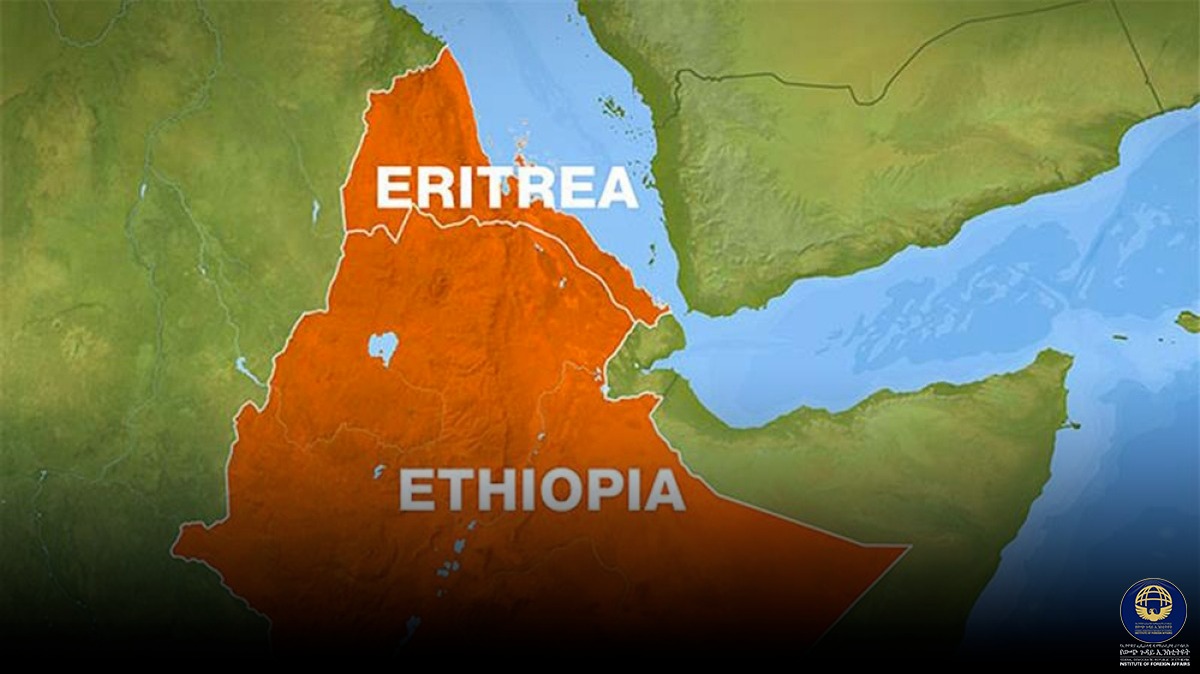
Recent developments in Ethiopia’s foreign relations reveal an increasingly sharp divergence between Addis Ababa’s diplomatic posture and Eritrea’s destabilizing regional conduct. While Ethiopia has intensified engagement centered on de-escalation, negotiated solutions, and regional cooperation, Eritrea appears to be pursuing a calculated strategy of escalation that threatens not only Ethiopian sovereignty but the broader stability of the Horn of Africa. This pattern is neither reactive nor incidental; rather, it reflects a deliberate preference for militarization and indirect destabilization over diplomacy and institutional engagement.
Correspondence issued by the Ethiopian Ministry of Foreign Affairs formally articulates these concerns. Ethiopian authorities document Eritrean military penetration deeper into Ethiopia’s northeastern border areas, alongside coordinated activities with armed groups operating along the northwestern frontier. These actions are framed not as isolated provocations but as a sustained pattern of interference undermining Ethiopia’s territorial integrity and internal security. Accordingly, Ethiopia has formally demanded the immediate withdrawal of Eritrean forces from Ethiopian territory and the cessation of all collaboration with non-state armed actors, underscoring the urgency of restoring stability through lawful and diplomatic means.
By embedding the language of this correspondence within a broader diplomatic framework, Ethiopia signals both resolve and restraint. While categorically rejecting violations of its sovereignty, Addis Ababa has deliberately prioritized evidence-based diplomatic engagement over reciprocal military escalation. This calibrated approach serves a dual purpose: reassuring domestic constituencies of the state’s defensive readiness while signaling to international partners Ethiopia’s continued commitment to regional stability and rules-based conduct.
Ethiopia’s response is best understood through a pragmatic foreign policy lens. On the one hand, the government continues to advance a multi-layered, open-door diplomacy grounded in peace, good-neighborliness, and mutual economic benefit. This includes a stated willingness to negotiate shared regional interests, including Ethiopia’s long-standing pursuit of reliable maritime access, potentially through the port of Assab. Even amid sustained provocations, Ethiopia has preserved diplomatic channels, reflecting strategic patience rather than impulsive confrontation.
On the other hand, the Ethiopian state remains accountable to its national interest and constitutional obligation to protect its people. Consistent with earlier communications addressed to the United Nations, the United States, and other international stakeholders, the Ministry’s letter clearly defines non-negotiable red lines. While diplomacy remains the preferred pathway, continued violations of sovereignty are framed as conditions that would compel proportionate defensive measures. Within this context, any Ethiopian military response would not constitute escalation, but the lawful exercise of a state’s inherent right to self-defense.
This posture is reinforced by Ethiopia’s latest articulation of its regional policy, delivered in November 2025 by Foreign Minister Gedion Timotheos at a Foreign Policy Forum co-organized by Horn Review and Addis Ababa University. The Minister rejected superficial explanations of current tensions, including claims that Ethiopia’s maritime aspirations triggered the crisis, stressing instead the historically complex political and economic roots of Ethiopia-Eritrea relations. While acknowledging serious provocations and Eritrean material support to armed groups operating against the Ethiopian state, he emphasized Ethiopia’s deliberate choice of restraint, cautioning that such restraint is neither indefinite nor unconditional. Framing the Horn as a shared geo-economic and cultural space, he advanced regional integration as the only durable path to peace and underscored that Ethiopia’s pursuit of dialogue, including on maritime access, is rooted in enlightened self-interest and contingent on good faith engagement.
This posture was formally articulated in a diplomatic letter dated 7 February 2026, addressed by Ethiopia’s Ministry of Foreign Affairs to the Eritrean government and signed by Foreign Minister Gedion Timotheos. The communication accused Eritrean forces of occupying Ethiopian territory, providing direct material support to militant groups, and conducting joint military maneuvers with rebel forces. It characterized these actions as acts of “outright aggression” and formally demanded the immediate withdrawal of Eritrean troops and the cessation of all collaboration with armed groups. At the same time, the letter reaffirmed Ethiopia’s willingness to engage in good faith negotiations on all issues of mutual interest, including maritime access, underscoring a deliberate strategy that combines firmness on sovereignty with openness to diplomacy.
The communication further situates Eritrea’s actions within a broader strategy of indirect intervention. Ethiopian authorities highlight coordination between Eritrean forces and various domestic armed groups.
Eritrea’s conduct must also be viewed within its broader regional record. Its 2008 military incursion into Djibouti at Ras Doumeira, which drew international condemnation, remains unresolved. More recently, reports of Eritrean involvement with armed actors in Sudan amid an ongoing civil war have further reinforced perceptions of a foreign policy reliant on militarization and proxy engagement rather than conflict mediation.
Taken together, these dynamics reveal a widening strategic divergence within the Horn of Africa. Ethiopia continues to frame the region as a shared political, economic, and security ecosystem governed by dialogue and institutional cooperation. Eritrea, by contrast, has persisted in privileging coercion, disruption, and unilateral force. This divergence extends beyond bilateral tensions, shaping the broader regional security architecture.
The present moment, therefore, raises a critical question of regional leadership. Ethiopia, by virtue of its demographic weight, economic scale, and diplomatic reach, is uniquely positioned to anchor a comprehensive regional peace framework. This leadership role need not be exclusive, but it is indispensable. Any durable Horn-wide security architecture will require Ethiopia’s convening capacity, regional legitimacy, and willingness to integrate security guarantees with economic interdependence.
The Ethiopian Ministry of Foreign Affairs’ communication reflects a sophisticated dual strategy: asserting sovereignty, defining clear limits, and signaling resolve while preserving avenues for negotiation on matters of mutual interest. By articulating the gravity of Eritrea’s actions without abandoning diplomacy, Ethiopia advances a pragmatic framework that balances strategic patience with accountability. This approach seeks not only to safeguard national interests but also to lay the groundwork for a more stable, cooperative, and durable peace architecture in the Horn of Africa.
These dynamics underscore a widening strategic divergence in the Horn of Africa. Ethiopia has consistently advanced a regional vision rooted in shared political, economic, and security interests, emphasizing dialogue, institutional cooperation, and respect for sovereignty as the foundation for lasting stability. Rather than pursuing militarization, Ethiopia continues to advocate for collective security and negotiated solutions that recognize the deep interdependence of states across the region. Eritrea, by contrast, persists in privileging coercion, disruption, and unilateral force, a posture that extends beyond bilateral tensions and threatens the broader regional security architecture. In this context, the African Union bears a clear responsibility to act decisively to de-escalate rising tensions and ensure the immediate withdrawal of Eritrean military forces from Ethiopian territory. Failure to intervene risks further escalation, undermining regional stability and weakening the continent’s collective security framework.
By Bemnet Alemayehu, Associate Researcher, IFA
Disclaimer:
The content disseminated by the Institute of Foreign Affairs (IFA) – including, but not limited to, publications, public statements, events, media appearances, and digital communications – reflects the views of individual contributors and does not necessarily represent the official positions or policies of the Institute, its partners, or any affiliated governmental or non-governmental entities.
While the IFA endeavors to ensure the accuracy, integrity, and timeliness of the information presented, it makes no representations or warranties, express or implied, regarding the completeness, reliability, or suitability of such content for any purpose. The Institute expressly disclaims any liability for errors or omissions, as well as for any actions taken or decisions made based on the information provided.
The inclusion of external links, references, or third-party resources does not constitute an endorsement by the Institute. Additionally, engagement on social media platforms – including, but not limited to, likes, shares, retweets (RTs), or reposts – shall not be interpreted as an endorsement or validation of the views expressed therein.Readers and audiences are encouraged to exercise critical judgment and seek independent verification when interpreting or relying upon any information disseminated through publications and posts on the Institute’s platforms or representatives.