

Background
The Great Lakes region derives its name from the freshwater lakes and river basins in Central and Eastern Africa.[i] The countries that comprise the Great Lakes region are contested and defined in various ways. In its narrow sense, it refers to the former Belgian colonies: Rwanda, Burundi, and the Democratic Republic of the Congo (DRC). In its broadest sense, the region is understood from its eleven members of the International Conference on the Great Lakes Region: Angola, Burundi, the Central African Republic, Congo Republic, DRC, Kenya, Rwanda, Sudan, Tanzania, Uganda, and Zambia.[ii] It is a space where political borders do not neatly match cultural, ethnic, and livelihood realities, creating both opportunities and profound challenges.[iii]
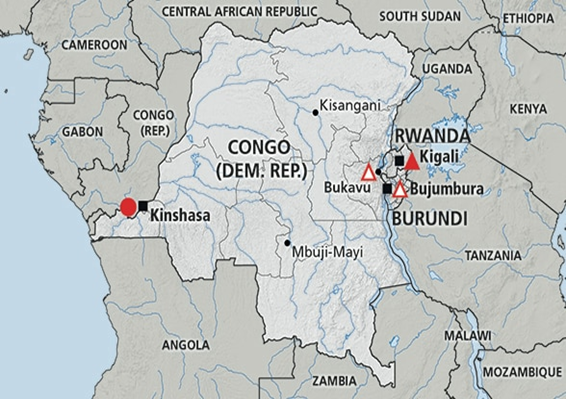
The Great Lakes region is endowed with significant natural and mineral resources that provide substantial opportunities for economic progress. The region possesses vast deposits of valuable minerals for the global supply chain, including coltan, cobalt, gold, tin, diamond, etc., particularly in the mineral-rich eastern areas of the Democratic Republic of Congo. In addition to its abundant mineral wealth, the region is blessed with fertile land for agriculture, abundant water resources such as Lakes Albert, Edward, Kivu, and Tanganyika, and considerable hydropower potential[iv]. If these resources are effectively managed and harnessed, they could support better livelihoods, enhance regional trade, and promote industrialization.
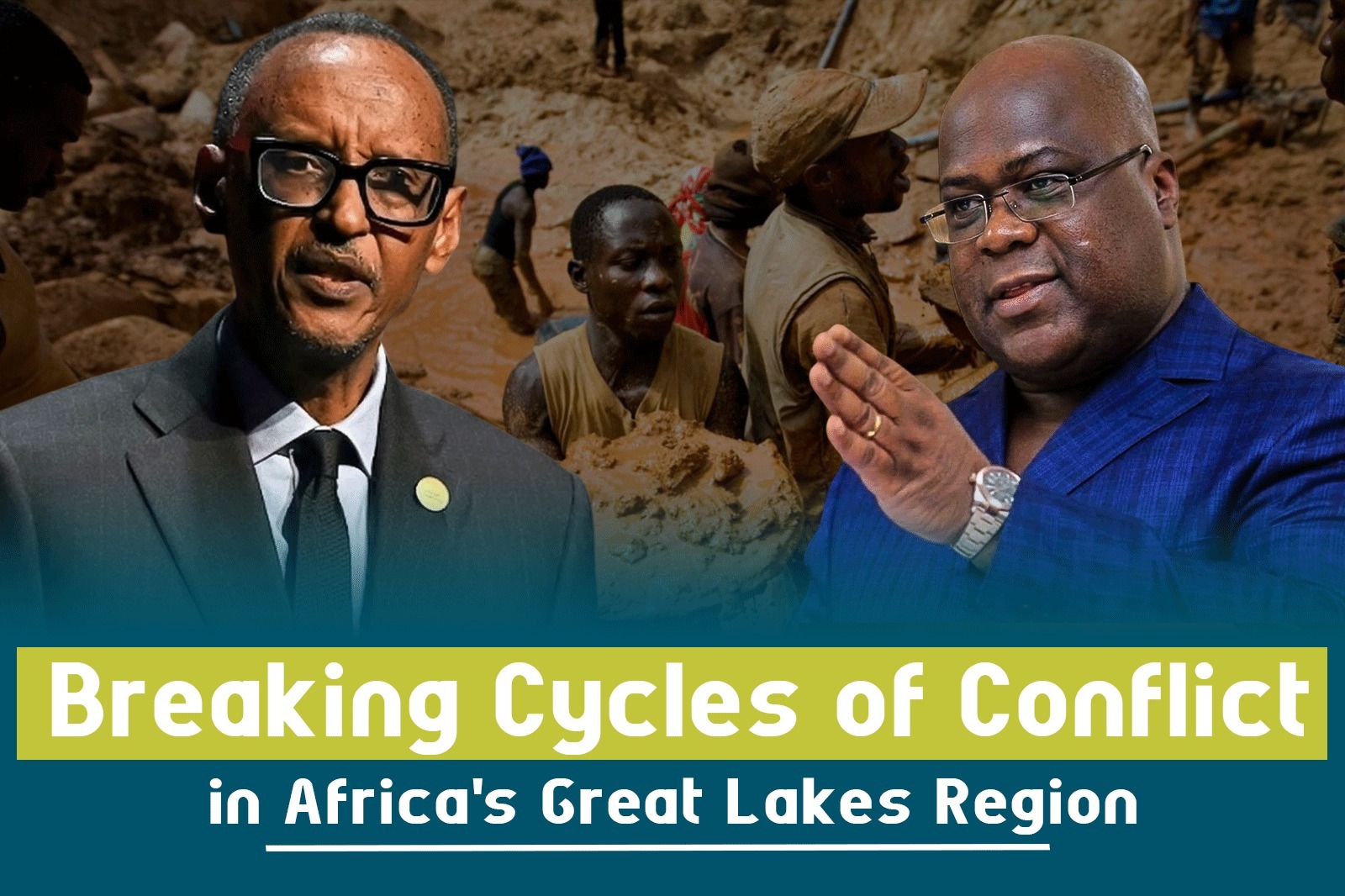
Despite the immense resources it possesses, unfortunately, the region often struggles with persistent, recurring inter- and intra-state conflicts and political instability since the post-colonial independence period, driven by military forces, foreign-backed armed groups, rebel movements, and local militias. The Rwandan genocide of 1994, recurrent conflicts in eastern DRC, and cycles of political crisis in Burundi are honorable mentions of conflict in the area and have left legacies of prolonged conflict, distrust, and displacement, with the largest concentrations of refugees and internally displaced persons (IDPs) on the continent, with eastern DRC alone hosting nearly 7 million IDPs today.[v]
The contemporary regional conflict in the Great Lakes region is often traced back to the 1994 genocide in Rwanda, during which more than one million people were massacred. The roots of the crisis, however, go further back to the colonial period, when the Tutsi ethnic group had the privilege from the Belgian colonial administration to rule over Rwanda and Burundi despite their minority numbers, and the Hutus had developed discontent over the course of time. After independence, the Hutu-dominated administration in Rwanda was established, and political and ethnic tensions rose, leading many Tutsis to flee Rwanda and seek refuge in neighboring countries, particularly Uganda. In exile, these displaced communities formed the Rwandan Patriotic Front, which launched an armed struggle to return to Rwanda and challenge the ruling regime. Consequently, the then Hutu-led government in Rwanda faced growing tensions with the advanced Rwandan Patriotic Front. The situation dramatically escalated when the then-Rwandan president, Juvenal Habyarimana, was killed in an aircraft crash in April 1994, an event that immediately triggered the outbreak of the Rwandan genocide, blaming the Patriotic Force for the president’s death.
The advance of Rwandan Patriotic Front led by Paul Kagame eventually brought an end to the genocide. But the seizure of Rwanda by the Patriotic Front contributed to large-scale refugee flows and the movement of the armed groups into the eastern DRC, laying the foundation for interconnected conflicts since then. Conflicts in the Great Lakes region have taken on a strong regional dimension rather than remaining confined within state borders. The geographic proximity of countries such as the DRC, Rwanda, Burundi, and Uganda, combined with porous borders, has facilitated the cross-border movement of armed groups, refugees, and illicit trade networks.
Key drivers of conflicts in the Great Lakes region
Conflicts in the African Great Lakes region are driven by complex, historical, and structural factors that have contributed to a persistent and unsettled security situation across the region. In general, three major drivers of conflict can be discussed here. The first driver is the historical factors that are past episodes of political violence that continue to shape contemporary conflicts in the region. When the Rwandan Patriotic Front advanced and took political power in Rwanda, a large number of refugees who were involved in the genocide, mainly Hutus, fled and settled in the eastern DRC.
This refugee population reportedly grew to nearly a million people, and some former militants later reorganized into the Democratic Forces for the Liberation of Rwanda (FDLR), an armed group formed to continue fighting against the Rwandan government. The government of Rwanda has consistently marked FDLR as a security threat to the country and its people, and often cites the presence of this group as a key reason for its disagreement with the DRC government and involvement in a proxy war. Rwanda has also been accused of backing M23, previously known as the National Congress for the Defense of the People (CNDP), for two main reasons: to counter the presence of FDLR in eastern DRC and to protect the communities known as Banyarwanda, who are widely believed to be of Tutsi origin. This reciprocity and reliance on proxy armed groups have drawn both Rwanda and the Democratic Republic of the Congo deeper into confrontation, while also inviting the involvement of other neighboring states in the region.
The presence of abundant and highly valuable natural resources in Africa’s great lakes region constitutes another major driver for the recurring conflict, as competition over the control, extraction, and illicit trade of minerals has intensified rivalries among armed groups, local actors, and external interests. The availability of mineral resources in the DRC causes enormous economic interests for neighboring countries, which benefit from the illegal trade of minerals during civil wars.[vi]
The third driver is the diversity and presence of transnational ethnic communities across the region, many of which were divided by colonial borders that did not reflect existing social and ethnic realities. Same ethnic groups live across several neighboring states, creating strong cross-border social and political ties. For example, Tutsi communities are found in Rwanda, Burundi, Uganda, and parts of the eastern Democratic Republic of the Congo. When there is a lack of inclusive governance, recognition, and proper representation of ethnic groups, grievances grow, and violence breaks out. Questions of land use and ownership, and citizenship underlie many of the conflicts among ethnic communities in the eastern Democratic Republic of Congo (DRC).[vii] Because of the transnational nature of communities in this region, violence in one country often generates political reactions, refugee movements, and security concerns in neighboring states, thereby contributing to the spill-over and regionalization of conflicts.
Regional and international Mediation initiatives in addressing the region’s conflict
Various regional and international peacebuilding initiatives in the Great Lakes region have been attempted since the 1960s to enhance stability and regional cooperation.[viii] The Arusha Peace Agreement in 1993 between the government of Rwanda and the Rwanda Patriotic Front was the first major international peace initiative addressing conflict in the Great Lakes region, which sought to end the civil war in Rwanda through power-sharing between warring parties. The agreement that most people were hopeful about collapsed following the Rwandan Genocide. The other milestone in peacebuilding in the region is the Arusha Peace and Reconciliation Agreement in 2000, mediated by Julius Nyerere and later Nelson Mandela, which introduced an ethnic power-sharing framework in Burundi to end the civil war.
The regional war that broke out in the late 1990s in the Democratic Republic of the Congo was addressed through the Lusaka Ceasefire Agreement (1999) including cessation of hostilities, establishment of a joint military commission (JMC), withdrawal of foreign groups, disarming, demobilizing and reintegrating of combatants, release of prisoners and hostages, and facilitate the deployment of peacekeeping forces by the United Nations.[ix] Regional peacebuilding efforts were later institutionalized by establishing the International Conference on the Great Lakes Region and its Pact on Security, Stability, and Development in the Great Lakes Region in 2006.[x] Subsequent initiatives included the Nairobi Peace Agreement (2007) and the Peace, Security and Cooperation Framework for the DRC and the Region[xi], commonly known as the Addis Ababa agreement in 2013, which emphasized regional cooperation, non-interference, and long-term stabilization in the Great Lakes region.
For a while, conflict in the region remained dormant until the resurgence of M23 in 2021, which marked a new phase of conflict in the region, particularly in the eastern DRC. The group re-emerged and rapidly captured several strategic areas in North and South Kivu, intensifying humanitarian crises and regional tensions. The renewed conflict has complicated existing peacebuilding efforts and heightened diplomatic disputes between the Democratic Republic of the Congo and Rwanda, with accusations of external support to the rebels.
Rwandan-backed M23 rebels and the government of the DRC have signed a framework for peace in Doha, Qatar, along with the US and the African Union, which have been trying to mediate an end to decades of conflict in the resource-rich region.[xii] On 4 December 2025, the presidents of Rwanda and DRC, attended by various regional leaders, signed the Washington Accords for Peace and Prosperity in Washington, hosted by United States (US) President Donald Trump. The accords reaffirm commitments to the June 2025 peace agreement, complemented by a Regional Economic Integration Framework. The M23 is one of the biggest parties in this conflict, but was not directly involved in the US-brokered ceasefire deal.[xiii]
Despite all those diplomatic efforts, the M23 has continued to expand its territorial control, and fighting has persisted in eastern DRC, particularly in North Kivu region, highlighting the limitations of current mediation efforts. Consequently, the United States government, on March 2, 2026, announced sanctions on the Rwanda Defence Force and top military officials because of their continued support for the M23 armed group in the DRC, further destabilizing the region, and called for their immediate withdrawal from the mineral-rich region. [xiv]
Conclusion
The Great Lakes region is an example of a regional security complex where the conflict in one country often spills over into the nearby states. The security interconnectedness stems from porous borders, shared ethnic communities across colonial boundaries, cross-border armed group activities, and competition over natural resources, all of which make the security dynamics of countries in the region closely interlinked. As a result, the region became the epicenter of violent and nonviolent conflicts, causing tremendous humanitarian crises for decades. Various regional and international peace initiatives have been attempted to bring the conflict and instability in the region so far, but those diplomatic efforts have not been successful.
- Way forward
Based on the discussion above, the following recommendations can be put forward.
- Recent Peace initiatives in the Great Lakes region have mainly involved agreements between governments, such as between Rwanda and the DRC, or between governments and insurgents separately, like M23. While these efforts aim to reduce immediate violence, they often overlook deeper causes of conflict. Bringing all warring parties to the negotiation table is essential for achieving inclusive dialogue. Additionally, Sustainable peace requires more comprehensive and inclusive peacebuilding that involves local communities, promotes reconciliation, and addresses longstanding grievances in the region.
- One of the key drivers of conflict in the Great Lakes region is competition over natural resources, which often fuels local and cross-border tensions. Weak resource governance across Africa allows illicit exploitation and the financing of armed groups to persist. Strengthening resource governance frameworks and equitable distribution of resources can significantly reduce conflict and promote regional stability.
- Furthermore, for a large and populous country like DRC and other African countries, especially endowed with resources, strengthening the security sector is necessary to enhance the state’s capacity to maintain law and order, protect citizens, and enable it to effectively respond to both internal and cross-border threats, thereby supporting broader stability and development.
Reference
[i] Sikenyi, M. (2013). Challenges of Regional Peacebuilding: A Case of the Great Lakes Region. Beyond intricacy. https://www.beyondintractability.org/casestudy/sikenyi-great-lakes
[ii] Shyaka, A. (2008). Understanding the Conflicts in the Great Lakes Region: An Overview. Journal of African conflicts and peace studies
[iii] https://www.undp.org/africa/resilience-hub-africa/blog/policy-brief-great-lakes-regional-insights-trade-socio-economic-growth-livelihoods
[iv] Ibid
[v] Ibid
[vi] Sikenyi, M. (2013). Challenges of Regional Peacebuilding: A Case of the Great Lakes Region. Beyond intricacy. https://www.beyondintractability.org/casestudy/sikenyi-great-lakes
[vii] https://minorityrights.org/communities/banyarwanda/
[viii] Leeuwen van (2008). Centre canadien d’étude et de coopération internationale (CECI), Action citoyenne pour la paix (Acipa)
[ix] https://peacemaker.un.org/en/node/9615
[x] INTERNATIONAL CONFERENCE ON THE GREAT LAKES REGION(2006). The Pact on Security, Stability and Development For the Great Lakes Region, December. Amended November 2012
[xi] https://www.peaceagreements.org/media/documents/ag789_5720e1fb1b563.pdf
[xii] https://www.bbc.com/news/articles/cwy7zlngwepo
[xiii] https://www.bbc.com/news/articles/cwy7zlngwepo
[xiv] https://www.reuters.com/world/africa/us-imposes-sanctions-rwanda-defense-force-2026-03-02/
About the author
Yalemsew Genetu, Researcher African Affairs Department at IFA
Disclaimer:
The content disseminated by the Institute of Foreign Affairs (IFA) – including, but not limited to, publications, public statements, events, media appearances, and digital communications – reflects the views of individual contributors and does not necessarily represent the official positions or policies of the Institute, its partners, or any affiliated governmental or non-governmental entities.
While the IFA endeavors to ensure the accuracy, integrity, and timeliness of the information presented, it makes no representations or warranties, express or implied, regarding the completeness, reliability, or suitability of such content for any purpose. The Institute expressly disclaims any liability for errors or omissions, as well as for any actions taken or decisions made based on the information provided.
The inclusion of external links, references, or third-party resources does not constitute an endorsement by the Institute. Additionally, engagement on social media platforms – including, but not limited to, likes, shares, retweets (RTs), or reposts – shall not be interpreted as an endorsement or validation of the views expressed therein.
Readers and audiences are encouraged to exercise critical judgment and seek independent verification when interpreting or relying upon any information disseminated through publications and posts on the Institute’s platforms or representatives.