

Executive Summary
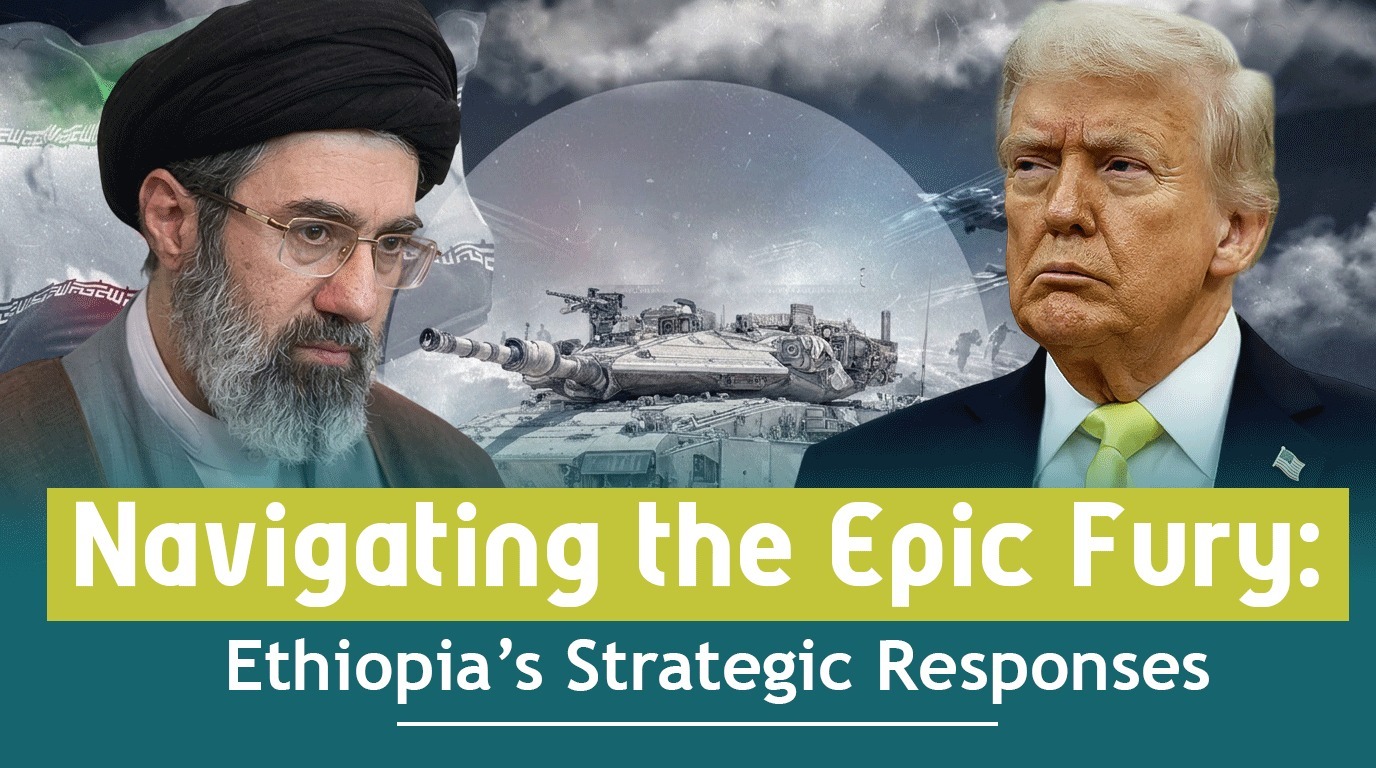
In a globalized world of communication and various forms of interdependence, the impact of wars covers a much broader horizon. Located in the backyard of the Middle Eastern and Gulf regions, the countries in the Horn are complexly connected to the warring actors in the conflict that broke out in late February 2026 involving the USA, Israel, and Iran. The war significantly affects many aspects of the countries of the Horn region [1][2][3]. For Ethiopia, the conflict poses a threat to the country’s energy supply, with all its implications, which in turn affects macroeconomic outcomes. At the same time, the conflict and many aspects of its impact, such as the closure of the Hormuz strait signals the strategic imperatives for Ethiopia to go ahead in its current pursuit for access to the sea and or maritime ambitions [2]. This brief argues for a policy of strategic hedging, prioritizing energy diversification and proactive energy diplomacy within the BRICS+ framework to mitigate the risks of a protracted Middle Eastern war.
Introduction
The Middle Eastern conflict initiated by strikes and targeted killings under the banner of Operation Epic Fury (US) on February 28, 2026, has brought an end to the long-standing period of shadow warfare between the belligerents. The conflict—characterized by decapitation strikes, aerial bombardments, and ballistic missile and drone attacks—has caused significant damage to the energy infrastructure of the Gulf countries, Iran, and Israel. The subsequent impact has also spilled over to disruption in the regional security infrastructures [2]. The impact of the war on landlocked but heavily populated Ethiopia is profound. Its dependency on fuel from the affected Gulf countries—, which also account for the lion’s share of its aviation business and growing investment partnerships—necessitates a recalibration of its foreign policy to protect its developmental gains.
Economic Challenges
One of the most significant challenges for Ethiopia is energy price volatility, specifically its vulnerability regarding fuel imports, as the country depends heavily on the UAE and Saudi Arabia for its supply. The strikes on refineries, combined with the Iranian declaration closing the Strait of Hormuz, have already caused oil prices to skyrocket from $70 to $140 per barrel. This increases Ethiopia’s monthly fuel bill *1. The resulting impact is yet to be reflected in rising inflation for goods and commodities due to increased fuel costs—particularly in the logistics and transport sectors—which threatens several aspects of the economy, including the government’s macro-stabilization program. *2 Furthermore, the impact on Ethiopian Airlines (ET) has been immediate, as the industry has been forced to cancel or reroute numerous flights.*3
Security Implications
More than the economic risks, the current conflict has already implicated the security of the region, which is located at the heart of the Red Sea and the Bab El-Mandeb, which once again became a principal theater of Iranian proxy retaliation. Member of the “Axis of Resistance,” the Houthis in Yemen threatened shipping passing through the Red Sea. This raises the stakes of a physical blockade for Ethiopia, which heavily depend for its imports and exports. Any prolonged disruption to the ports in the Red Sea could translate immediately into a complete isolation of Ethiopia from connecting with the rest of the world. *4
This conflict could force Ethiopia’s key partners in the Gulf to become engrossed in managing their own internal national security affairs—challenges that are already being exacerbated by the threat of direct regional escalation and infrastructure vulnerability. [4]. This could result in a potential short-term reduction in funding for critical infrastructure projects across the Horn of Africa, including Ethiopia. This funding challenge could be mitigated through Ethiopian government ongong initiatives for diversified partnership and the search for alternative financing for its home grown development programs*5 .
Potential Opportunities for Ethiopia
As a Regional Anchor state with multiple nodes of connections and potential for a regional leadership role, the crisis in the Middle East creates a vacuum in the Horn. This could open a new opportunity for Ethiopia to realize its role of filling the vacuum created by the retreat of Middle Eastern powers from Horn mediation. *6. Ethiopia could use this vacuum as an opportunity to realize its regional integration and neighborhood first policy*7. To this end, it can leverage GERD’s renewable energy surplus to accelerate the existing initiatives in terms of electrification of neighboring countries, offering cheap power to them in exchange for favorable transit agreements *8.
Conclusion
The USA-Israel-Iran war broke out on the 28th of February, 2026, and is still ongoing. It has shaken the entire security and geo-economic architecture of the Middle East and the Gulf region with far reaching implication on the states in the Horn of Africa whose economic and security affairs are intricately linked with the Middle East and Gulf region on the one hand and the group of states involved in the war on the other. The Middle Eastern crisis posed several challenges to the Ethiopian economy and regional security interests. This requires a strategy for adapting to the emerging challenges. The instrumentalization of a pragmatic foreign policy instrument, together with an interest-driven approach that balances between different actors, could serve this purpose at least for the short term. The emerging challenges could also open a new avenue of opportunity for Ethiopia to accelerate its efforts in achieving its long term strategic goals, like securing access to the sea by using the power vacuum created in the Horn region due to a potential withdrawal of Gulf nations.
Policy Recommendations
The crisis in the Middle East has jeopardized the global energy supply, underscoring the strategic imperative for countries like Ethiopia—which rely heavily on Gulf imports—to prioritize energy resilience and diversification. To this end, Ethiopia should:
- Create a strategic petroleum Reserve that serves at least 100 days
- Diversify its contracts for procuring fuels by engaging with African producers like Nigeria and South Sudan
- Rectify the security spillovers of the conflict; keep on pursuing the policy of neutrality.
- Use the BRICs and African Union Mechanism to engage with Iran and ensure the safety of Ethiopian-flagged vessels crossing Hormuz.
- Finalize negotiations for a “Port-for-Power” swap with Kenya (Lammu Port) to create a southern alternative to the Red Sea route.
- Deal with the domestic impacts of the crisis; implement targeted subsidies for essential food items, targeting the most vulnerable from war-induced inflation.
Notes
- Institute of Foreign Affairs (IFA), The Hormuz Shock: Ethiopia’s Energy Security in a World of Chokepoints (Addis Ababa: IFA Press, 2026), 4.
- The Africa Report, “How the Middle East conflict tests Ethiopia’s fragile reserves,” March 5, 2026.
- Addis Standard, “Ethiopia emerging as strategic player in Red Sea amid Israel–Iran tensions,” March 6, 2026.
- Seid Mohammed, “The Red Sea Regional Security Complex,” Asian Journal of Middle Eastern and Islamic Studies (2024): 210.
- International Crisis Group, “A Sprawling Middle East War Explodes,” March 6, 2026.
- Addis Standard, “Ethiopia emerging as strategic player,” March 6, 2026.
- Berouk Terrefe, Ethiopia’s Red Sea Politics (London: Bloomsbury, 2025), 88.
- IFA, Navigating a New Era (Addis Ababa: IFA Press, 2025), 15.
About the author
Miftah Mohammed, Researcher, African Affairs Research Director General
Disclaimer:
The content disseminated by the Institute of Foreign Affairs (IFA) – including, but not limited to, publications, public statements, events, media appearances, and digital communications – reflects the views of individual contributors and does not necessarily represent the official positions or policies of the Institute, its partners, or any affiliated governmental or non-governmental entities.
While the IFA endeavors to ensure the accuracy, integrity, and timeliness of the information presented, it makes no representations or warranties, express or implied, regarding the completeness, reliability, or suitability of such content for any purpose. The Institute expressly disclaims any liability for errors or omissions, as well as for any actions taken or decisions made based on the information provided.
The inclusion of external links, references, or third-party resources does not constitute an endorsement by the Institute. Additionally, engagement on social media platforms – including, but not limited to, likes, shares, retweets (RTs), or reposts – shall not be interpreted as an endorsement or validation of the views expressed therein.
Readers and audiences are encouraged to exercise critical judgment and seek independent verification when interpreting or relying upon any information disseminated through publications and posts on the Institute’s platforms or representatives.