


As the global order teeters on the precipice of transformation, two intersecting conflicts, one geopolitical and the other economic, are reshaping the contours of international relations. In both of these unfolding dramas, Africa finds itself conspicuously marginalized, left to navigate the shifting tides of global power without a seat at the table. The first is a maritime security crisis in the Red Sea region, precipitated by the United States’ military intervention against the Houthis in Yemen. While this conflict appears to have minimal direct impact on U.S. interests, especially when measured against the broader context of the Gaza-Israel war following the October 7 attacks, Washington has elected to intervene unilaterally. This decision has been made without securing the explicit endorsement of critical regional stakeholders such as Eritrea, Saudi Arabia, Egypt, or even China, all of whom possess a vested interest in the security of one of the world’s most vital maritime trade routes.[1] Africa, despite its geographical proximity, remains peripheral to this critical conversation, as its influence over the outcome is negligible.
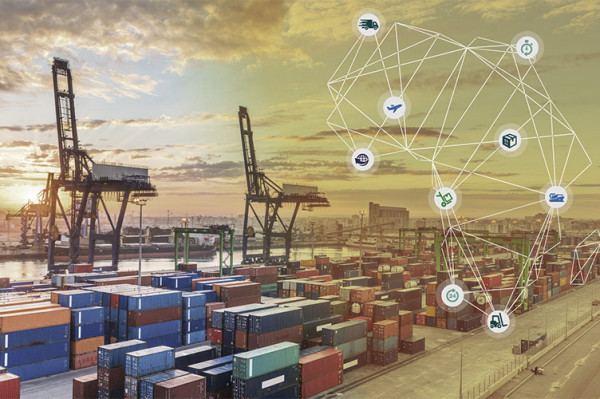
The second conflict, of a distinctly economic nature, pertains to the ongoing and intensifying trade war between the United States, China, and a host of other economic powers. What began as a series of punitive tariffs imposed by the U.S. on China, Mexico, and Canada has since spiraled into an all-encompassing trade confrontation that includes major global economies, including the European Union. The imposition of tariffs on China, initiated on February 1, 2025, at a modest 10%, quickly escalated to 20% after reciprocal measures by China.[2] By mid-April, tariffs had surged to unprecedented levels, with the U.S. imposing a staggering 145% tariff on Chinese imports, which amounted to $438.95 billion in 2024, and China retaliating with a 125% tariff on $143.55 billion worth of U.S. goods.[3] These moves were followed by the U.S.’s imposition of tariffs on all nations other than China, further deepening the divide.
The ramifications of this trade war are nothing short of seismic, as it has catalyzed a realignment of the global economic order. According to the International Monetary Fund’s 2024 Economic Outlook, the U.S., the EU, and China collectively represent the lion’s share of the global economy, with respective GDPs of $30.3 trillion, $20.29 trillion, and $19.53 trillion.[4] Their trade war is not merely a bilateral dispute between two nations, but rather an economic confrontation that could destabilize the broader global economic system, with profound implications for all economies, including those of Africa.
The U.S. Trade Representatives’ Foreign Trade Barrier Report, released on March 1, 2025, provides a detailed examination of the principal sources of contention. The report highlights China’s protectionist policies, which have systematically impeded U.S. companies’ access to key sectors of the Chinese market, while also emphasizing the European Union’s regulatory approach, which, according to the U.S., has created significant obstacles for American businesses. The EU’s deforestation regulation, if fully implemented, could impose an additional $8 billion annually in compliance costs for U.S. companies, further exacerbating trade frictions.
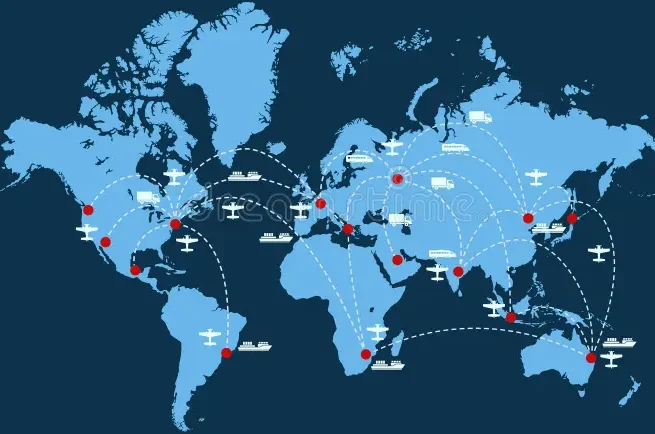
For Africa, the question remains: where does the continent find itself within the broader context of this evolving global economic landscape? What are the potential consequences for African economies amidst this turbulence, and how can they effectively navigate the volatile currents of international trade to capitalize on emerging opportunities? As the world’s major economic powers engage in a struggle for dominance, Africa’s role, though often overlooked, is crucial and warrants careful examination. Several potential scenarios merit attention as Africa contemplates its position in this complex and shifting global order.
The first possibility is that the U.S., EU, and China remain locked in a prolonged trade conflict. The 90-day tariff suspension announced on April 11, 2025, offers a fleeting window for negotiations between the U.S. and the EU, as well as other key players such as Japan and South Korea. However, the prospects for a comprehensive deal are fraught with complexity. The U.S. has raised serious concerns about its trade deficit with the EU, and there are growing frustrations with the regulatory environment in Europe, which U.S. officials argue hinders American firms’ competitiveness. The EU, for its part, is confronted with internal divisions regarding the most effective strategy to confront U.S. tariffs. Whether the EU can maintain a unified front or whether individual member states will strike separate deals with the U.S. will be a key determinant of the future trajectory of this trade war.
Should the EU manage to maintain its cohesion, it could emerge as a formidable counterweight to both the U.S. and China, positioning itself as a third pole in the global economic order. However, this dynamic carries significant implications for Africa. While the competition among the U.S., EU, and China might drive increased investment flows to the continent as these powers vie for influence, the reality is that Africa risks being relegated to the status of a peripheral player in the broader geopolitical struggle. Africa’s role in this new world order may be determined more by external competition than by internal agency, as the continent’s vast economic potential remains untapped, subject to the whims of foreign powers.

The second scenario is one where the U.S. and the EU forge a strategic alliance in opposition to China. This could emerge if the EU yields to U.S. demands in trade negotiations or if the U.S. prioritizes its transatlantic relationship over its economic engagements with Asia. In this case, the world could witness the emergence of a new “economic Cold War,” with the U.S. and EU aligning against China. For Africa, this would present a highly disadvantageous situation. A deepening U.S.-EU economic bloc would likely exclude the continent from the economic considerations of both powers. Their trade and investment relations would become more insular, focused on deepening transatlantic ties at the expense of African markets. Furthermore, the combined economic weight of the U.S. and the EU could pressure African countries to curtail or sever their economic relationships with China, further marginalizing Africa in the global trade network.
The third, and perhaps most concerning, scenario is the emergence of the U.S. as the sole dominant economic power. Should the EU and China fail to reconcile their differences and respond cohesively to U.S. demands, the U.S. could leverage its economic strength to secure a commanding position on the global stage. This would signal a dramatic shift in the balance of power, with far-reaching consequences for Africa. The continent’s reliance on both the EU and China as key trading partners would place it in a vulnerable position, particularly if both of these economic giants experience stagnation or decline in the face of U.S. dominance. The result would likely be a reduction in African trade and investment flows, further exacerbating the continent’s economic marginalization.
In each of these scenarios, Africa faces an existential challenge. The ongoing trade war between the U.S., EU, and China is one in which the continent has little direct influence, given the limited size and power of its economies. Unlike during the Cold War, when Africa could occasionally leverage its strategic position to secure economic and political gains, the current trade conflict is predominantly an economic struggle, offering little opportunity for Africa to claim neutrality or capitalize on external tensions.
The implications of this trade war are not only economic but also political. Africa’s exclusion from the heart of this global contest highlights the continent’s ongoing marginalization in the international arena. The absence of meaningful African participation in global trade governance underscores a stark reality: Africa’s future cannot be shaped solely by external forces. Rather, the key to Africa’s future lies in its own hands, within its own borders.
Thus, the most prudent course of action for Africa is to invest in its own economic development. Intra-continental trade must become the focal point of Africa’s strategy moving forward. The African Continental Free Trade Area (AfCFTA) presents a unique opportunity to foster regional integration, dismantle internal trade barriers, and create a single, unified market capable of competing on the global stage. In parallel, African nations must focus on developing business-friendly policies, improving infrastructure, and diversifying their economies to reduce reliance on external powers. By nurturing its own economic capabilities, Africa can begin to carve out a more assertive role in the global economic order, shifting from a position of dependency to one of leadership.
In conclusion, Africa’s future does not need to be defined by the trade wars of external powers. While it currently faces marginalization in the context of the ongoing geopolitical and economic disputes between the U.S., EU, and China, the continent has both the potential and the agency to redefine its place in the global system. Africa’s path to economic prosperity lies not in relying on the shifting fortunes of foreign powers but in its own ability to innovate, integrate, and lead. By leveraging its vast resources, talent, and growing markets, Africa has the opportunity to emerge as a dominant force on the world stage. The time to act decisively is now, Africa must seize control of its economic destiny and become the architect of its own future.
[1] https://warontherocks.com/2025/04/how-the-biden-administration-won-tactically-but-failed-strategically-in-the-red-sea/
[2] https://edition.cnn.com/2025/04/12/business/us-china-tariffs-trump-timeline-dg/index.html
[3] https://www.statista.com/statistics/277679/total-value-of-us-trade-in-goods-with-china-since-2006/
[4] https://www.imf.org/external/datamapper/NGDPD@WEO/EU/CHN/USA
About the Author
Dareskedar Taye (PhD), Europe and America Affairs Research Director General at the Institute of Foreign Affairs (IFA).
Disclaimer: The opinions stated in this article solely belong to the author and do not reflect the views or positions of the IFA