

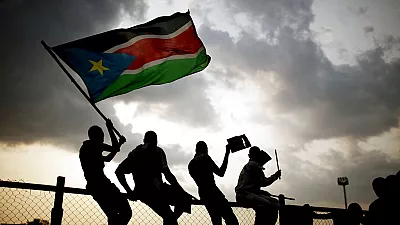
The signing of the Comprehensive Peace Agreement (CPA) on 9 July 2005 between the Sudan People’s Liberation Movement/Army (SPLM/A) and the Government of Sudan brought a formal end to decades of civil conflict and laid the foundation for the emergence of South Sudan as an independent state in 2011. Yet, the euphoria of nationhood quickly gave way to disillusionment. By December 2013, South Sudan plunged into internecine violence as rival factions loyal to President Salva Kiir and Vice President Riek Machar contested the reins of power.[1] Amid dwindling oil revenues and a faltering political consensus, the SPLM/A fractured, imperiling the nascent state’s stability and dashing hopes for a peaceful democratic transition.[2]
Subsequent peace initiatives[3], notably the Agreement on the Resolution of the Conflict in South Sudan (ARCSS) in 2015[4] and its Revitalized counterpart (R-ARCSS) in 2018[5], achieved only a tenuous cessation of hostilities. While these accords led to the formation of a unity government, the essential pillars of political transition – constitutional drafting, security sector reform, the establishment of a unified army, and credible electoral preparations – remained conspicuously fragile.[6].[7] The fragility of the peace was laid bare once again on 4 March 2025, when hostilities erupted between the South Sudan People’s Defense Forces (SSPDF) and the White Army, culminating in the arrest and detention of Riek Machar and his associates[8]. This development starkly exposed the tenuous foundations of the R-ARCSS and underscored the ever-present threat of a catastrophic collapse.

In response to the deteriorating situation, regional and international actors intensified their engagement. The African Union (AU), the Intergovernmental Authority on Development (IGAD)[9], the United Nations, the Troika (Norway, the United Kingdom, and the United States), and other stakeholders sought to stem the descent into chaos. The AU Peace and Security Council (AUPSC) emerged as a key actor, consistently affirming the R-ARCSS as the sole viable framework for sustainable peace. Through a series of communiqués[10], the AUPSC called for immediate cessation of hostilities, trust-building measures, and the acceleration of key transitional processes, including the operationalization of the National Constitutional Review Commission and the National Elections Commission, as well as the creation of a unified national force.
At its 1265th and 1270th meetings, the Council underscored the imperative of restraint and dialogue, warning against any action likely to deepen divisions.[11].[12]. The Chairperson of the African Union Commission, deploying the Panel of the Wise in March 2025, sought to reinvigorate mediation efforts and avert a return to full-scale civil war.[13] Concurrently, IGAD convened an extraordinary summit of Heads of State and Government, emphasizing the urgency of de-escalation, the incorporation of holdout groups into the peace process, and the completion of pending provisions under the Tumaini Initiative.[14].[15].
The United Nations, for its part, issued grave warnings. Secretary-General António Guterres urged South Sudanese leaders to recommit to the peace agreement, framing its full implementation as the only credible path toward free and fair elections in December 2026.[16] UN Special Envoy Nicholas Haysom, addressing the AUPSC, echoed these concerns, lamenting the deepening ethnic fractures, the manipulation of public information, and the erosion of political will that together imperil the fragile peace.[17].[18]. The detention of opposition leaders, the undermining of oversight mechanisms, and the apparent disregard for due legal process have further compounded the volatility, risking a descent into a Hobbesian state of nature with profound regional ramifications.
The internal convulsions of South Sudan, however, do not occur in isolation. The relapse into conflict would reverberate across the region, exacerbating already acute vulnerabilities.[19] Uganda, historically a close ally of the Kiir government, swiftly deployed troops to Juba following the March 2025 clashes, framing its intervention as a stabilizing measure.[20].[21].[22]. Kampala’s decisive action underscored its enduring strategic interest in preventing hostile forces from gaining a foothold in South Sudan and in safeguarding its own northern frontier.[23].[24].[25]. Similarly, Sudan’s internal strife between the Sudanese Armed Forces and the Rapid Support Forces has bled into South Sudan, fueling arms proliferation, population displacement, and cross-border skirmishes, particularly in Upper Nile State, thereby inflaming local conflicts and straining diplomatic relations.[26].[27].
Ethiopia, too, stands precariously poised. The 2013 civil war precipitated an influx of South Sudanese refugees into its Gambella region, aggravating local tensions.[28] A renewed outbreak of violence would almost certainly trigger another humanitarian crisis, compounding Ethiopia’s internal challenges and further destabilizing the wider Horn of Africa. More broadly, the erosion of South Sudan’s tenuous peace adds to the region’s fragility, increasing the number of failing states and inviting external interventions driven by competing geopolitical interests.
Amidst these perilous dynamics, diplomatic efforts have intensified but remain hobbled by fragmentation and inconsistency. The absence of a coherent, unified international strategy- coupled with the evident parochialism of many external actors – has severely undermined mediation attempts. In particular, the retreat of the United States from active leadership within the Troika has deprived the process of critical leverage, rendering the enforcement of peace commitments increasingly elusive.
What emerges is a bleak portrait: a nascent state crippled by elite predation, institutional decay, and ethnic fragmentation; a peace process largely suspended in formality; and a regional order increasingly imperiled by South Sudan’s instability. In this context, an African Union-led initiative – impartial, robust, and genuinely African in orientation – offers the most credible avenue for salvaging South Sudan’s transition. Absent such a decisive, coordinated effort, the prospect of renewed civil war looms large, with consequences certain to be devastating not only for South Sudan but for the region as a whole.
[1] Mutasa, Charles and Virk, Kudrat.(2017). Building Peace in South Sudan: Progress, Problems, and Prospects. Center for Conflict Resolution.
[2] Theron, Sonja and Mohale, Kutlwano.(2024).Revitalized Agreement on the Resolution of the Conflict in South Sudan (R-ARCSS) post-2024. Science and Innovation and Human Sciences Research Council. Policy Brief. Retrieved from https://hsrc.ac.za/wp-content/uploads/2024/12/HSRC_Policy_brief_Agreement-Resolution-of-conflict-in-South-Sudan.pdf
[3] Ylonen, Aleksi.(2014). Peace or Stability? A Critical Appraisal of External Interventions in South Sudan. Journal of Peacebuilding & Development, 9(3): 102-108.
[4] Mutasa, Charles and Virk, Kudrat.(2017). Building Peace in South Sudan: Progress, Problems, and Prospects. Center for Conflict Resolution.
[5] Maphasa, Thulani.(2020). Finding Peace in Uncertain Times: South Sudan and the Revitalized Peace Process. Occasional Paper 312. South African Institute of International Affairs.
[6] In its history, South Sudan has never held an election. Rather, elections are repeatedly postponed.
[7] Deng, Luka.(2024). What Could End the Long Postponement of South Sudan’s First Elections? IPI Global Observatory.
[8] The Soufan Center.(2025). South Sudan Drawing Closer to the Brink of All-Out War. IntelBrief. Retrieved from https://thesoufancenter.org/intelbrief-2025-march-13/
[9] Members of IGAD Plus include Representatives of IGAD (Djibouti, Ethiopia, Kenya, Somalia, Sudan, Uganda), Representatives of AU 5 (Algeria, Chad, Nigeria, Rwanda, South Africa), the African Union Commission , the People’s Republic of China, the European Union, the Co-Chair of IGAD Partners Forum, the Kingdom of Norway, the United Kingdom, the United States of America and the United Nations
[10] AUPSC.(2024a). Communiqué of the 1219th the Peace and Security Council Meeting on Consideration and Adoption of the Report of the PSC Field Mission to South Sudan, conducted from 23 to 26 June 2024[PSC/PR/COMM.1219 (2024)], adopted by the PSC at its 1219th meeting held on 28 June 2024. Retrieved from https://www.peaceau.org/en/article/communique-of-the-1219th-meeting-of-the-peace-and-security-council-held-on-28-june-2024-on-consideration-and-adoption-of-the-report-of-the-psc-field-mission-to-south-sudan-conducted-from-23-to-26-june-2024
AUPSC.(2024b). Communiqué of the 1202nd Meeting of the Peace and Security Council held on Briefing on the Situation in South Sudan [PSC/PR/COMM.1202 (2024)], Adopted by the Peace and Security Council (PSC) of the African Union (AU) at its 1202nd meeting held on 27 February 2024.Retrieved from https://130www.peaceau.org/en/article/communique-of-the-1202nd-meeting-of-the-psc-held-on-27-february-2024-on-briefing-on-the-situation-in-south-sudan
About the authors
Henok Getachew (PhD) is a senior researcher of African Affairs at the Institute of Foreign Affairs.
Yalemsew Genetu is a researcher of African Affairs at the Institute of Foreign Affairs
Disclaimer:
The opinions stated in this article solely belong to the authors and do not reflect the views or positions of the IFA
[11] AUPSC(2025b). Communiqué of the 1265th Meeting of the Peace and Security Council [PSC/PR/COMM.1265 (2025)], held on 18 March 2025, on the Consideration of the Situation in South Sudan. Retrieved from https://www.peaceau.org/uploads/1265.comm-en.pdf.
[12] AUPSC.(2025a). Press Statement of the 1270th Meeting of the Peace and Security Council, held on 31 March 2025, on the Situation in South Sudan. April 1, 2025. Retrieved from https://www.peaceau.org/en/article/press-statement-of-the-1270th-meeting-of-the-peace-and-security-council-held-on-31-march-2025-on-the-situation-in-south-sudan
[13] https://au.int/en/pressreleases/20250331/au-commission-chairperson-deploy-panel-wise-south-sudan-mediation
[14] Marsden, Dame.(2025). South Sudan’s shaky peace is at risk of collapse. Can it be saved? Chatham House. Retrieved from https://www.chathamhouse.org/2025/04/south-sudans-shaky-peace-risk-collapse-can-it-be-saved
[15] https://igad.int/communique-of-the-43rd-extraordinary-summit-of-igad-heads-of-state-and-government-on-the-situation-in-the-republic-of-south-sudan/
[16] United Nations (UN). (2025b). ‘Perfect storm’ in South Sudan demands urgent action, says Guterres (28 March 2025). Retrieved from https://news.un.org/en/story/2025/03/1161666
[17] United Nations.(2025a). South Sudan on the brink of civil war, top UN official warns (24 March 2025). Retrieved from https://news.un.org/en/story/2025/03/1161456
[18] UNMISS.(2025). Remarks of the Special Representative of the Secretary-General and Head of UNMISS, Nicholas Haysom African Union Peace and Security Council Meeting on South Sudan. Retrieved from https://reliefweb.int/report/south-sudan/remarks-special-representative-secretary-general-and-head-unmiss-nicholas-haysom-african-union-peace-and-security-council-meeting-south-sudan
[19] Kuol, Luka.(2018). Navigating the Competing Interests of Regional Actors in South Sudan. Africa Center for Strategic Studies. Retrieved from https://africacenter.org/spotlight/navigating-the-competing-interests-of-regional-actors-in-south-sudan/
[20] https://reliefweb.int/report/south-sudan-republic/uganda-now-steps-sends-troops-south-sudan
[21] https://www.aljazeera.com/news/2025/3/11/uganda-deploys-troops-in-south-sudan-as-civil-war-fears-grow
[22] Parliament of the Republic of Uganda.(2025)..Parliament Approves UPDF Deployment in South Sudan. Retrieved from https://www.parliament.go.ug/news/3645/parliament-approves-updf-deployment-south-sudan
[23] Prunier, Gérard (2004) Rebel Movements and Proxy Warfare: Uganda, Sudan and the Congo (1986–99). African Affairs, 103 (412), pp. 359–383.
[24] Ylonen, Aleksi.(2014). Peace or Stability? A Critical Appraisal of External Interventions in South Sudan. Journal of Peacebuilding & Development, 9(3): 102-108.pp.105.
[25] ACCORD.(2015). South Sudan-Uganda Relations. ACCORD Conflict Trends.
[26] Marsden, Dame.(2025). South Sudan’s shaky peace is at risk of collapse. Can it be saved? Chatham House. Retrieved from https://www.chathamhouse.org/2025/04/south-sudans-shaky-peace-risk-collapse-can-it-be-saved
[27] Marsden, Dame.(2025). South Sudan’s shaky peace is at risk of collapse. Can it be saved? Chatham House. Retrieved from https://www.chathamhouse.org/2025/04/south-sudans-shaky-peace-risk-collapse-can-it-be-saved
About the authors
Henok Getachew (PhD) is a senior researcher of African Affairs at the Institute of Foreign Affairs.
Yalemsew Genetu is a researcher of African Affairs at the Institute of Foreign Affairs
Disclaimer:
The opinions stated in this article solely belong to the authors and do not reflect the views or positions of the IFA