

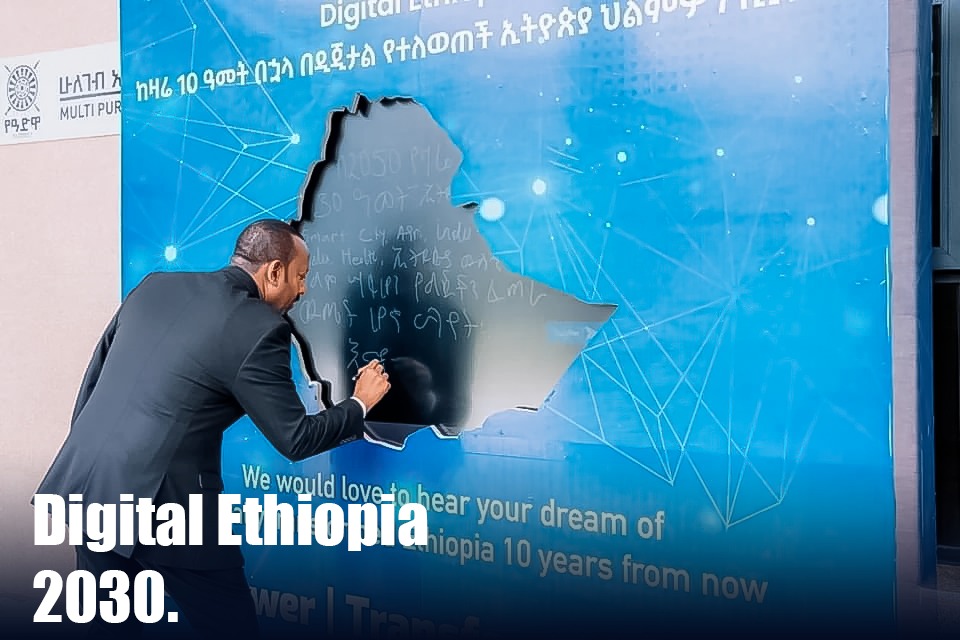
- Introduction
The transformation of the Federal Democratic Republic of Ethiopia from an agrarian-centered economy into a digitally empowered “African Beacon of Prosperity” represents one of the most ambitious socio-economic transitions in the Horn of Africa. This strategic evolution, catalyzed by the completion of the Digital Ethiopia 2025 roadmap and the rollout of the Digital Ethiopia 2030 (DE2030) framework, marks a shift from diagnostic policy planning to institutionalize digital execution. These twin frameworks emphasize scalable Digital Public Infrastructure (DPI), telecommunications liberalization, and innovation-oriented legislation. The approach aims to harness the opportunities of the Fourth Industrial Revolution (4IR) while mitigating vulnerabilities associated with data dependency and technological inequities (World Bank, 2024).
- The Digital Transformation Policy Architecture
Ethiopia’s digital transformation is grounded in an integrated policy ecosystem that links national planning to regional and global agendas. The Digital Ethiopia 2025 strategy identified four pillars: enabling infrastructure, digital governance, entrepreneurship, and human capital development. Its 2030 successor, DE2030, expands this agenda by embedding digital transformation within Ethiopia’s Ten-Year Development Plan (2021–2030) and the African Union’s Digital Transformation Strategy for Africa (2020–2030) (AUC, 2025).
A central feature of DE2030 is its alignment with the Digital Public Infrastructure (DPI) model—interoperable platforms for identification, payments, and data exchange. The introduction of the Fayda Digital ID system and the expansion of the EthioPay digital payments framework symbolize Ethiopia’s commitment to inclusive financial and digital participation (National Bank of Ethiopia, 2024). These reforms are designed not only to increase efficiency but also to strengthen citizens’ trust in the state’s ability to deliver digital governance securely and transparently.
Moreover, the Startup Proclamation (No. 1220/2024) and the Data Protection Proclamation (No. 1218/2024) provide the regulatory backbone for innovation and privacy. The Startup Law offers fiscal incentives, incubation programs, and a regulatory sandbox for emerging technology sectors, while the Data Protection Law establishes accountability mechanisms in data usage, processing, and international transfer (MoIP, 2024). Together, these legislative measures mark Ethiopia’s transition from policy conceptualization to legal codification of digital sovereignty.
2. Telecommunications Liberalization and Infrastructure Scaling
Telecommunication sector liberalization is the fulcrum of Ethiopia’s DPI expansion. The partial privatization of Ethio Telecom and the licensing of Safaricom Ethiopia, a subsidiary of the Vodacom-led consortium, have fostered a competitive environment conducive to innovation and investment (AfDB, 2024). Broadband penetration increased from below 20 percent in 2020 to nearly 45 percent by 2025, partly due to the national fiber optic backbone project that extends connectivity to rural and industrial zones.
The 2030 roadmap envisions universal broadband access, guided by the principle of “digital equity.” Initiatives such as the Woredanet 2.0 and SchoolNet Digital Expansion programs are intended to close regional divides in access to education and e-governance services (MoIP, 2024). Parallel investments in data centers—specifically in the cities of Adama, Hawassa, and Bahir Dar—aim to support Ethiopia’s growing ambitions as a regional data hub, reducing reliance on external cloud infrastructure (Kassa, 2024).
3. Digital Sovereignty, Security, and Global Alignment
At the heart of Ethiopia’s digital ambitions lies the doctrine of digital sovereignty—the capacity of states to control their digital ecosystems, including data governance, infrastructure, and algorithmic transparency. The Data Protection Proclamation reflects Ethiopia’s determination to harmonize domestic regulations with international standards such as the EU’s General Data Protection Regulation (GDPR) while preserving national autonomy (Agarwal, 2025).
In geopolitical terms, Ethiopia’s pursuit of digital sovereignty aligns with the African Continental Free Trade Area (AfCFTA) e-commerce protocol, which aims to reduce barriers for digital trade and cross-border data flows. By aligning national infrastructure projects with continental frameworks, Ethiopia is positioning itself as a reference point for “African data localization”—ensuring that data generated within Africa serves African development priorities rather than external profit logics (AUC, 2025).
Furthermore, Ethiopia’s active participation in multilateral initiatives such as the UN Global Digital Compact underscores its commitment to shaping equitable digital governance at a global level. This approach seeks to avert “digital colonialism,” where control over technological supply chains is disproportionately concentrated in advanced economies (United Nations, 2024).
Cybersecurity remains an evolving challenge. The establishment of the National Cyber Security Agency (NCSA) and the adoption of the National Cybersecurity Policy Framework (2025) introduced mechanisms for safeguarding national infrastructure and combating online misinformation, cyber-fraud, and foreign surveillance. The policy’s integration with the African Union’s regional Convention on Cyber Security and Personal Data Protection (Malabo Convention) further situates Ethiopia’s digital sovereignty within a cooperative continental defense paradigm.
4. Financing the Digital Economy
The financial underpinnings of Ethiopia’s DE2030 are built upon hybrid public–private investment models. The collaboration between the New Development Bank (NDB), World Bank, and Africa50 forms the funding base for infrastructure expansion, with cumulative commitments exceeding USD 4 billion by 2025 (NDB, 2025).
Ethiopia’s approach emphasizes leveraging Special Economic Zones (SEZs) and ICT Innovation Hubs as investment catalysts. These zones—particularly in Hawassa, Dire Dawa, and Bole Lemi—function as platforms for digital startups and transnational technology partnerships. Financing mechanisms such as Digital Infrastructure Bonds and performance-linked financing are also being explored to sustain long-term infrastructure projects (Kassa, 2024).
5. Outlook and Challenges
While Ethiopia’s digital transformation is remarkable, implementation risks persist. Challenges include uneven connectivity in peripheral regions, limited private capital absorption, and insufficient skills development for an increasingly digital workforce. The government’s Digital Skills Initiative (DSI) aims to upskill five million Ethiopians by 2030, targeting gender parity and youth inclusion in STEM disciplines (MoLSA, 2025).
Another developmental concern lies in maintaining data ethics while capitalizing on AI applications in governance and agriculture. As Ethiopia scales AI-enabled systems, continuous monitoring of algorithmic transparency, human rights, and accessibility will be critical to ensuring technology enhances public welfare rather than exacerbating inequality.
6. Conclusion
Ethiopia’s DE2030 strategy represents a bold endeavor to redefine the intersection between technology, governance, and development. With institutional reforms, infrastructure expansion, and regional leadership, Ethiopia is redefining what digital sovereignty looks like in Africa: innovation-driven yet sovereignty-conscious, globally integrated yet locally anchored.
If implemented effectively, the Digital Ethiopia 2030 framework could propel Ethiopia’s transformation into a mid-income, knowledge-based economy while securing its role as a technological hub within the Horn of Africa and beyond.
References
African Development Bank (AfDB) (2024) Horn of Africa regional infrastructure collaboration report 2024. Addis Ababa.
Agarwal, S. (2025) AI ethics and governance in emerging economies: African partnership models. Global Policy Review, 8(2), pp. 55–71.
African Union Commission (AUC) (2025) Addis Ababa Declaration on Climate Change and Call to Action. AUC Press.
Kassa, M. (2024) Ethiopia’s economic diplomacy in a multipolar era. Addis Ababa University Review, 12(1), pp. 33–49.
Ministry of Innovation and Technology (MoIP) (2024) Digital Ethiopia 2030 implementation report. Addis Ababa: MoIP.
Ministry of Labour and Skills (MoLSA) (2025) National Digital Skills Initiative progress brief 2025. Addis Ababa: MoLSA.
National Bank of Ethiopia (2024) Digital payment systems performance report 2023/24. Addis Ababa: NBE.
New Development Bank (NDB) (2025) Expanding Horizons: Project financing statistics 2024–2025. NDB Annual Report.
United Nations (2024) Global Digital Compact: Summary and outcomes report. New York: United Nations Publications.
World Bank (2024) Ethiopia economic update: Refugees, inclusion, and development. Washington, D.C.: World Bank Group.
Yitina Gebre (Ph.D.), Senior Researcher at the Multilateral Affairs Department, Institute of Foreign Affairs
Disclaimer:
The content disseminated by the Institute of Foreign Affairs (IFA) – including, but not limited to, publications, public statements, events, media appearances, and digital communications – reflects the views of individual contributors and does not necessarily represent the official positions or policies of the Institute, its partners, or any affiliated governmental or non-governmental entities.
While the IFA endeavors to ensure the accuracy, integrity, and timeliness of the information presented, it makes no representations or warranties, express or implied, regarding the completeness, reliability, or suitability of such content for any purpose. The Institute expressly disclaims any liability for errors or omissions, as well as for any actions taken or decisions made based on the information provided.
The inclusion of external links, references, or third-party resources does not constitute an endorsement by the Institute. Additionally, engagement on social media platforms – including, but not limited to, likes, shares, retweets (RTs), or reposts – shall not be interpreted as an endorsement or validation of the views expressed therein.Readers and audiences are encouraged to exercise critical judgment and seek independent verification when interpreting or relying upon any information disseminated through publications and posts on the Institute’s platforms or representatives.