

Introduction
Diplomacy and election process are deeply intertwined, as domestic political processes often shape the foreign policy of a particular nation. Conversely, diplomatic issues affect the outcome of election by making the process healthy and democratic. In the contemporary political environment, election systems are critical institutions where authority derived from the consent of the people. Obviously, the consent of the governed is always ensured by holding a periodic, free and fair democratic election (Legal Clarity Team, 2025). Yet, it is worth noting that conducting a mere periodic election is not a sufficient condition to enjoy the fruition of a democratic government. Most of the time, African countries have conducted regular – periodic, but not free and fair elections. Consequently, the level of electoral integrity has sparked post-electoral violence in several African countries. For instance, in 2020, Africa witnessed volatile elections right from Burundi in the east to Guinea in the west. Some common factors and trends could be seen in these countries despite their distant geographic locations (Sudhakar, 2020).
Electoral processes in Africa must be re-examined to ensure whether they effectively contribute to the democratization process (Ikoko and Latif, 2025). Despite having introduced multiparty politics, there has been a deterioration of the democratic system over the years mainly due to electoral violence. Electoral violence is a multi-dimensional concept. While the outcome of electoral violence is usually physical, there are psychological and structural attributes to it. According to Sudhakar (2020), it can be defined as “all forms of organized acts or threats – physical, psychological, and structural – aimed at intimidating, harming, blackmailing a political stakeholder before, during and after an election.”
Like many African countries, the history of election in modern Ethiopia has not followed a linear path of democratic exercise, reflecting a complex trajectory across different regimes. Commencing from monarchy, stretching through Marxist military rule, and to the eventual establishment of the ethnic federal republic, election in Ethiopia has had multiple manifestations. Ethiopia had no electoral system before 1955 though it introduced a parliament in accordance with its 1931 constitution. In the then parliament, members of the Upper Chamber were appointed by the emperor, while the lower house remained largely symbolic. In relative terms, the 1955 revised constitution allowed the election of members by a circle of the ruling elites, while the king still maintained overriding authority. In this respect, it can be said that the imperial regime (1955-1974) exercised a limited majoritarian electoral system (Ahmed, 2026). Following the collapse of the regime, the Derg militaristic rule introduced regular election for the National Assembly, known as ‘Shengos’ despite it was far from a democratic practice (Tolosa, 2019).
Comparatively, Ethiopia held its first multi-party election under the leadership of the EPRDF government in 1995. Ethiopia held several multi-party parliamentary elections where the ruling EPRDF party declared victory in all elections through violence, involving intimidation, manipulation, detentions of political opponents, torture, and political assassinations. The first electoral violence during EPRDF regime took place in the 1992 regional and local elections. The conflict led to the withdrawal of important political parties such as the Oromo Liberation Front from the transitional government and the Council of Representatives. The 2005 electoral violence was the worst electoral violence in Ethiopia’s political history, resulting in the death of 193 protestors and the imprisonment of more than 40, 000 people (Wondwosen, 2009).
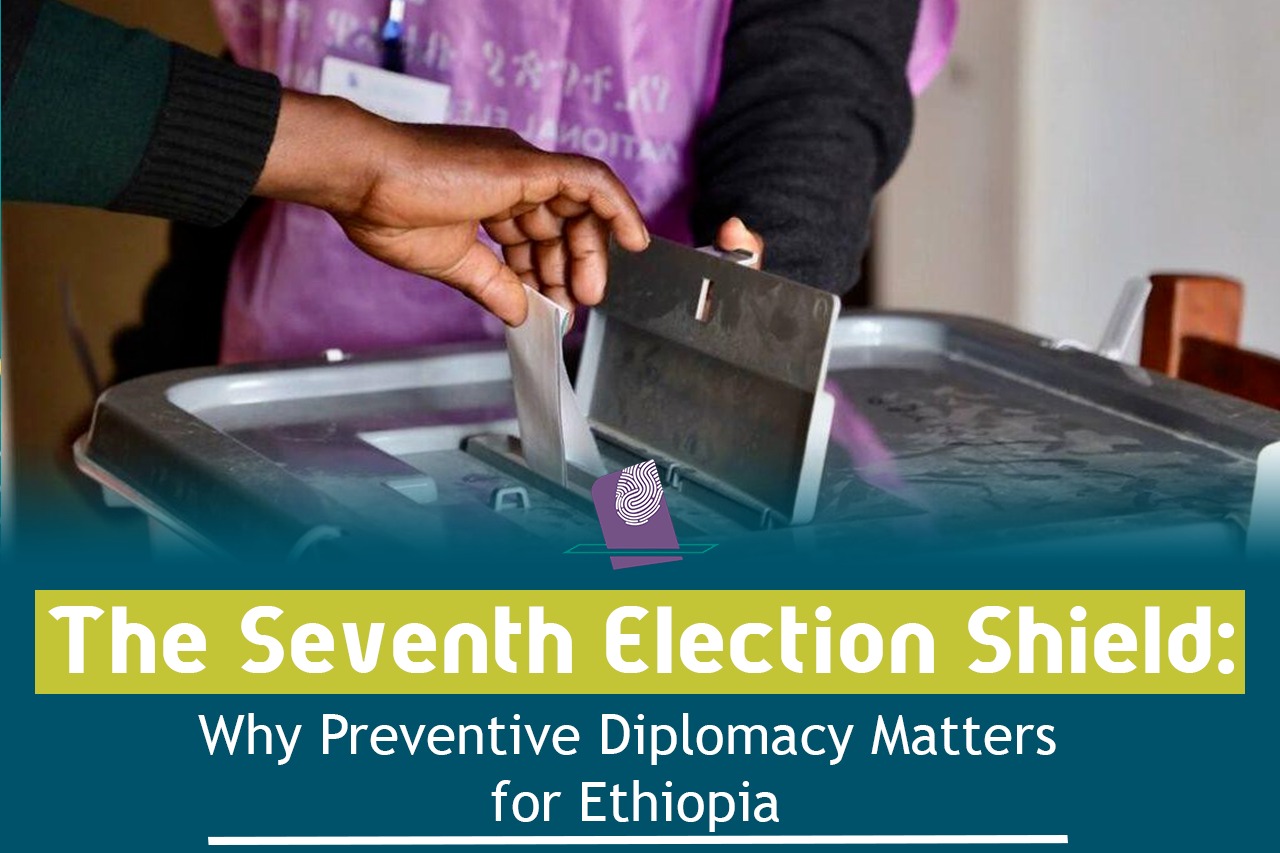
Since 1995, six rounds of general elections were conducted in Ethiopia, of which the last one took place in 2021. This election resulted in a landslide victory of the ruling Prosperity Party. Currently, Ethiopia is preparing for its seventh general election, scheduled on 01 June 2026. The success of this election hinges on the full implementation of the Post-2018 political reforms in the country (Habiba, 2026). Prime Minister Dr. Abiy Ahmed underscored that the upcoming election will be the country’s “best” election in its history (Africa Practice, 2026). In hisstatement before parliament on October 28/2025, the Prime Minister declared that the seventh general election will go ahead as scheduled regardless of security-related concerns or political objections in the country (Addis Standard, 2026). He further assured that the country has the capacity and the will necessary to conduct the “best organised” elections (Africa Practice, 2026). In this connection, the contribution of preventive diplomacy is indispensible through which possible conflicts and irregularities in the voting process can be prevented or managed.
Notable writers such as Sisk categorize Ethiopia, Kenya, Burundi, Guyana, Haiti, Srilanka, and Zimbabwe as countries where electoral processes have been chronically violent ridden (Wondwosen, 2009). Ethiopia’s place in such classification underscores the importance of preventive diplomacy in the country’s political atmosphere. Obviously, as measures to be taken before the beginning of the conflict, and measures to be taken when conflicts begin differ in their nature, preventive diplomacy needs to be given much emphasis (Murati, 2018).
Preventive Diplomacy and Election Process
Preventive diplomacy makes the electoral process healthy by fostering dialogue among competing political parties and actors. It facilitates peaceful elections in all stages – pre-electoral, electoral and post-electoral cycles. Lesson from the post–Cold War democratization process and election related risks informed the African Union (AU) to uphold democracy without jeopardizing security. Thus, AU established the Panel of Wise in 2007 and engaged in preventive diplomacy (Gerenge, 2015). The Panel consists of five highly credible African persons with outstanding track record of contributions to peace and security. Since its formation, the Panel has been engaged in various African countries including Guinea, the DRC, Senegal, Sierra Leone, Egypt, Kenya, and Tunisia. While acknowledging the task of the Panel in leading the AU’s preventive diplomacy efforts through mediation, the then Minister of Foreign Affairs of Ethiopia, Ambassador Taye Atske Selassie, discussed with the Panel on the role of Ethiopia and other partners in bringing peace and stability in the Horn of Africa (Ethiopia News Agency, 2024). The discussion reflects Ethiopia’s commitment on promoting preventive diplomacy and its willingness to abide by AU frameworks to prevent or manage electoral violence.
Preventive diplomacy engages in early interventions, monitoring, and mediation to address potential disputes before they erupt into violence (Gerengé, 2015). As the upcoming Ethiopia’s election is scheduled to take place amid security concerns across various regions of the country, preventive diplomacy is expected to play a greater role during in the election. Most importantly, it can reduce the risk of political violence, encourages negotiation and compromise between ruling and opposition parties, builds trust in electoral institutions and creates a peaceful environment. In this way, preventive diplomacy can ensure elections in Ethiopia to be conducted in a stable and cooperative atmosphere.
Conclusion and Policy Recommendations
The success of election is contingent upon the integrity and goodwill of the institutions, stakeholders and procedures involved. Unfortunately, around one in five elections across the globe suffers from election violence. Preventive diplomacy, if properly tailored to each context and implemented alongside complementary conflict prevention initiatives, can help to realize a fruitful election process at all stages: pre–electoral, electoral and post – electoral cycles. In this context, preventive diplomacy matters the 2026 general election in Ethiopia, as the country is navigating a tense political environment where security concerns remain unresolved in various regions. Preventive diplomacy opens a window of opportunity for dialogue, negotiation, and trust-building. It is worth noting that as election related disputes are complex and can occur in all phases, the application of preventive diplomacy should be cascaded with each stage of the election process. It should also be emphasized that preventive diplomacy is most effective when initiated at an early stage; therefore, concerted diplomatic efforts are urgently important in light of the upcoming election.
References
Africa Practice. (2026). Ethiopia’s 2026 electoral dilemma. Available at https://africapractice.com/insights/ethiopias-2026-electoral-dilemma/
Ellena, K. & Quirk, P. (2024). Supporting credible elections to advance democracy globally in 2024 and beyond. Atlantic Council.
Gerengé, R. (2015). Preventive Diplomacy and the AU Panel of the Wise in Africa’s Electoral-related Conflicts. South African Institute of International Affairs.
Habiba, Yesuf. (2026). Breaking the Marble Ceiling: Women’s Political Participation in Ethiopia’s Election. Available at https://newsite.ifa.gov.et//2026/03/13/breaking-the-marble-ceiling-womens-political-participation-in-ethiopias-election/
Ikoko MO and Latif D. (2025). Analysis of factors impacting electoral integrity in Africa between 2006-2023 – Examining the association between free and fair election and rule of law. PLoS One. 2025 Oct 9;20(10):e0334505.
Legal Clarity Team.(2025). What Is the Democratic Process and How Does It Work? Available at https://legalclarity.org/what-is-the-democratic-process-and-how-does-it-work/
Sudhakar, A. (2020). Ballots and Bloodshed Trends of electoral violence in Africa. NIAS International Peace Research Initiative. IPRI Brief No. 6.
Tolessa, D. (2019).Election Practices In Ethiopia: An Overview. Advances in Social Sciences Research Journal, 6(8)119-127
United Nations. (2024). The Role of the United Nations in Ensuring Free and Fair Elections. United Nations Western Europe.
Wondwosen. T. (2009). Electoral Violence in Africa: Experience from Ethiopia. World Academy of Science, Engineering and Technology International Journal of Humanities and Social Sciences Vol:3, No.7
About the author
Suadiq Sufian (PhD), Senior Researcher at the Institute of Foreign Affairs He can be reached at Sufiansuadiq8@gmail.com
Disclaimer:
The content disseminated by the Institute of Foreign Affairs (IFA) – including, but not limited to, publications, public statements, events, media appearances, and digital communications – reflects the views of individual contributors and does not necessarily represent the official positions or policies of the Institute, its partners, or any affiliated governmental or non-governmental entities.
While the IFA endeavors to ensure the accuracy, integrity, and timeliness of the information presented, it makes no representations or warranties, express or implied, regarding the completeness, reliability, or suitability of such content for any purpose. The Institute expressly disclaims any liability for errors or omissions, as well as for any actions taken or decisions made based on the information provided.
The inclusion of external links, references, or third-party resources does not constitute an endorsement by the Institute. Additionally, engagement on social media platforms – including, but not limited to, likes, shares, retweets (RTs), or reposts – shall not be interpreted as an endorsement or validation of the views expressed therein.
Readers and audiences are encouraged to exercise critical judgment and seek independent verification when interpreting or relying upon any information disseminated through publications and posts on the Institute’s platforms or representatives.