

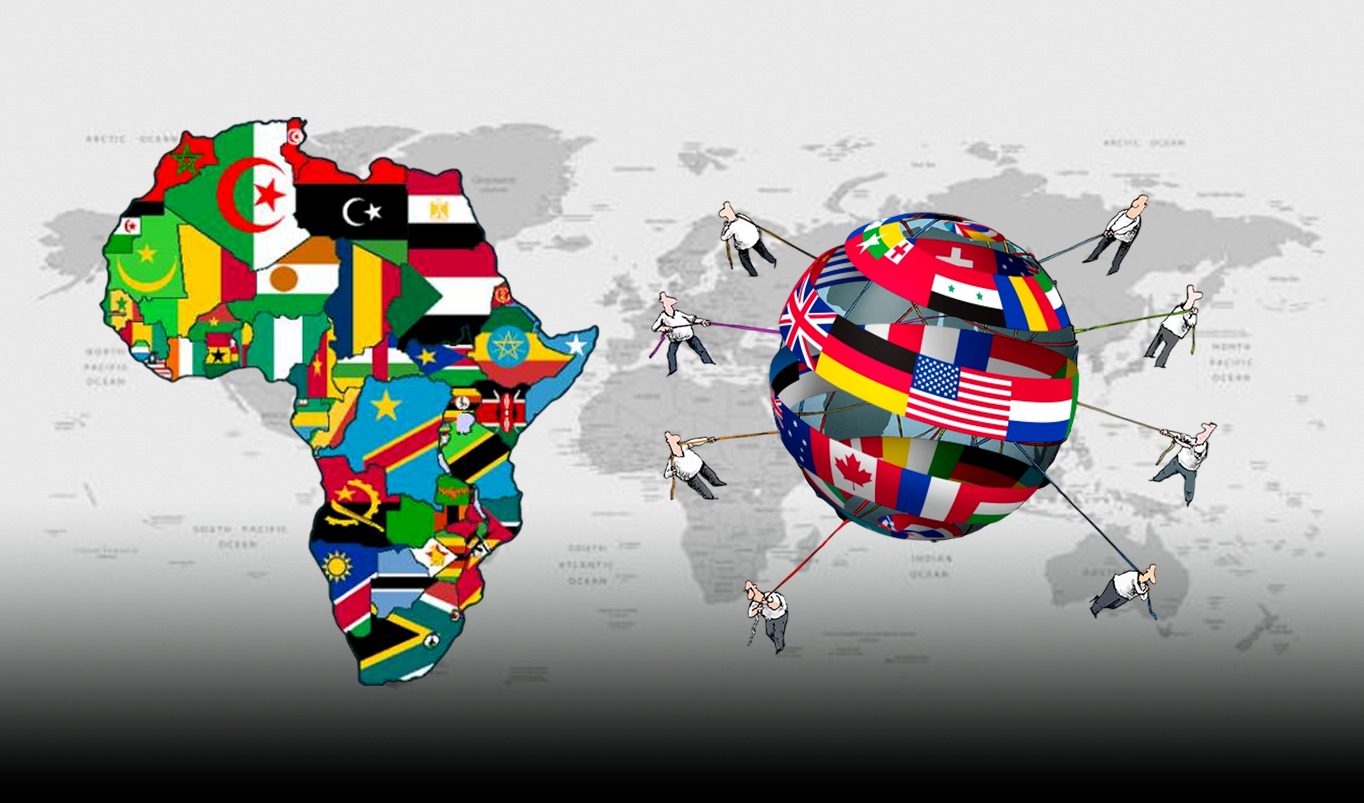
As usual, the African Union holds its annual summit in mid-February. The thirty-ninth Assembly of the Heads of State and Government is currently being held under the theme for the year: “Assuring Sustainable Water Availability and Safe Sanitation Systems to Achieve the Goals of Agenda 2063.” This year’s summit will focus on water security, sanitation, and sustainable development, all of which are part of the Sustainable Development Goals (SDGs) and Agenda 2063. The theme of the year is more relevant as the United Nations Under-Secretary-General and Executive Secretary of the Economic Commission for Africa, Mr. Claver Gatete, emphasized, “across Africa, more than 300 million people still lack access to safe drinking water, and roughly 780 million lack adequate sanitation.”[1] This year, the theme will provide an opportunity for African states to galvanize their efforts to ensure the social and economic dimensions of water as well as to meet the SDGs.
Without disregarding the significance of the year’s theme, the AU Assembly should also give priority to the current changing global order. It is a truism that this summit will be held at a time of global uncertainty, when multilateralism is eroding more than ever, and collective efforts to address global challenges are waning. The global uncertainty was reflected during Ethiopia’s Foreign Minister, Gedion Timothewos, address to the AUEC meeting on 12 February 2026. In the remark, Mr. Gedion stated that Africa is “grappling with the evolving geopolitical landscape in which multilateralism and global cooperation are eroded, which adversely affects the continent’s peace and security.”[2] Africa is indeed more than any other continent; it is the one that has suffered the most from the unprecedented changes we are witnessing.
For the last couple of decades, Africa has sought to overcome its marginalization from the changing global order, which is, in part, characterized by defunct global institutions that do not reflect current reality. Among the reform agenda Africa campaigns for reforming the United Nations Security Council is the Ezulwini Consensus that was the African Union’s (AU) 2005 “common African position on the proposed reform of the United Nations.”[3] The common position demands “full representation of Africa” in the UNSC with “not less than two permanent seats with all the prerogatives and privileges of permanent membership, including the right of veto and five non-permanent seats.”[4] This position was also reaffirmed in the Sirte Declaration on the reform of the United Nations. The enlargement of the Security Council to address the historical injustice has remained a topic of discussion at various international forums. Furthermore, Africa is also calling for reforming the international financial institutions, as well as climate justice.[5] Although the reform agenda has gained wider recognition, it has so far not translated into reality.
The worrying trend the continent is currently facing is that various and contradictory forces are trying to give the emerging global order a new defining feature. At this juncture, Africa and its continental organization seem to be silent. The continent’s silence and inability to take not merely a position but also a common external policy will put the member states on the receiving end of the rules rather than positioning them as the rule-makers in the midwife of a ‘new’ global order.
Africa will have two choices in the current changing global uncertainties. The first one remains silent and continues to act as a rule receiver. In such circumstances, Africa will remain marginalized, as it did after the end of the Second World War and the Cold War. Lacking consensus, struggling with domestic affairs, and failing to institutionalize its common positions in external relations could put the continent in an awkward position in the foreseeable future. The second choice is at least united, takes a unified position, and gives the AU the authority to act as a vibrant foreign policy actor in negotiations with middle and major powers vying to shape the existing order in their own image.
In parallel to this discussion on the theme of the year, it is imperative to raise the current global uncertainties and Africa’s place in the changing global order. In this regard, the current African leaders need to realize that the fate of their descendants lies in the wise decisions they make today. The AU Assembly needs to establish a task force composed of representatives from each region. Assigning the task force the responsibility for designing architecture and developing a common position on current global changes would be important. The common position needs to be an elaborated document that reflects the current reality, Africa’s position, needs, and aspirations. It should clearly outline the strategies Africa needs to adopt in the face of the glaring reality. This will help bring about an agreement on how to address the unfolding uncertainties. Position alone is indeed not enough! History has shown that Africa and its continental organization have not shied away from taking positions on various issues. Notwithstanding this reality, a unified position supported by institutional architecture is important and should not be left for the future.
The newly established external relations architecture will indeed not be functioning in a vacuum. It will have the support of the legal and institutional frameworks that are already in place. For instance, the Solemn Declaration on a Common African Defense and Security Policy and the Protocol on the establishment of the Peace and Security Council are necessary legal and normative frameworks that could serve as building blocks for Africa’s external relations infrastructure. The African Peace and Security Architecture-The African Standby Force, the Peace and Security Council, the Continental Early Warning System, the Panel of the Wise, and the Peace Fund-are the necessary institutional establishments that shoulder the responsibilities of the external relations of the continent
Indeed, as critics argued, the continent first is required to address the internal crisis, augment its institutional capacity, and develop economic resilience “rather than striving for continent-wide positions and actions to enhance the continent’s geopolitical agency.”[6] Without brushing aside the validity of the argument, it is also imperative to work on building the institutional setup of the organization that would be entrusted to run the continent’s external affairs at the current moment. Although it is argued that Africa has the potential, emanating from increased diversified partnerships, demography, and abundant critical minerals, to impact the evolving global order, these alone are not sufficient to redress historical injustices and its marginalization. Rather, it is necessary to have a clear position regarding “how to go about seeking redress, whether to make a case for abolishing the system in toto or expanding it to accommodate the historically excluded.”[7]
[1] Economic Commission for Africa.(2026). Statement by Claver Gatete at African Union Executive Council. 11 February 2026. Retrieved from https://www.uneca.org/stories/statement-by-claver-gatete-at-african-union-executive-council
[2] POA English.(2026). Ethiopia’s FM, Gedion Timothewos called for deeper African unity, stronger continental leadership.
[3] Executive Council (2005). The Common African Position on the Proposed Reform of the United Nations: “the Ezulwini Consensus”. The 7th Extraordinary Session that was held between 7 and 8 March 2005. Addis Ababa, Ethiopia.
[4] Executive Council (2005). The Common African Position on the Proposed Reform of the United Nations: “the Ezulwini Consensus”. The 7th Extraordinary Session that was held between 7 and 8 March 2005. Addis Ababa, Ethiopia.
[5] African Union (AU).(2025). Africa Calls for Fairer Global Finance at G20–Africa High-Level Dialogue. Retrieved from https://au.int/ar/node/45676
[6] Cilliers, Jackie and Maru, Mehari.(2024). Africa’s foreign policy must focus on continental needs. Institute for Security Studies. Retrieved from https://issafrica.org/iss-today/africa-s-foreign-policy-must-focus-on-continental-needs
[7] Obadare, Ebenezer.(2024). What does Africa really want? The continent’s case for “global restructuring” is muddled. Council on Foreign Relations. Retrieved from https://www.cfr.org/articles/what-does-africa-really-want
About the author
| Henok Getachew (Ph.D.) is a Senior Researcher of African Affairs and an adjunct Professor at the School of International Relations and Diplomacy as well as the School of Law at the Ethiopian Civil Service University (ECSU) and the Ethiopian International Peacekeeping Taining Centre (EIPKTC). His research focus is African Union Peace and Security Architecture, political transition, security regionalism, global governance, and state fragility in sub-Saharan Africa. Henok works on Ethiopia’s role in the AUPSC and China’s increasing involvement in the Horn of Africa. His recent publications include The Post-African Union Transition Missionin Somalia and its Regional Security Implications, Ethiopia in an Era of Expanded BRICS: A Brief Look at Ethiopia’s Entry and Experience within the Organization, Lowering the Costs of the Red Sea Rivalry for the Horn of Africa, The Enigmatic Path of Political Transition in the Horn of Africa, Ethiopia’s Regional Position in the Horn of Africa: Constraints, Perspectives, and Scenarios and Taxed Foreign Policy of Ethiopia. He can be contacted via henokgetachew1983@gmail.com |
Disclaimer:
The content disseminated by the Institute of Foreign Affairs (IFA) – including, but not limited to, publications, public statements, events, media appearances, and digital communications – reflects the views of individual contributors and does not necessarily represent the official positions or policies of the Institute, its partners, or any affiliated governmental or non-governmental entities.
While the IFA endeavors to ensure the accuracy, integrity, and timeliness of the information presented, it makes no representations or warranties, express or implied, regarding the completeness, reliability, or suitability of such content for any purpose. The Institute expressly disclaims any liability for errors or omissions, as well as for any actions taken or decisions made based on the information provided.
The inclusion of external links, references, or third-party resources does not constitute an endorsement by the Institute. Additionally, engagement on social media platforms – including, but not limited to, likes, shares, retweets (RTs), or reposts – shall not be interpreted as an endorsement or validation of the views expressed therein.
Readers and audiences are encouraged to exercise critical judgment and seek independent verification when interpreting or relying upon any information disseminated through publications and posts on the Institute’s platforms or representatives.