



War, Carbon, and Chokepoints: How the Iran Conflict Is Recasting Climate Politics
The Iran war is being read, understandably, as a military crisis, an energy shock, and a diplomatic rupture. It is all three. But it is also something else: a test…
Fragmented Sovereignty and Expanding Battlefields: South West Somalia’s Crisis in a Wider War Theatre
Initially, the reported advance of federal troops toward Baidoa appears as yet another episode in Somalia’s long struggle to consolidate central authority over its federal member states. Yet, this reading—while…
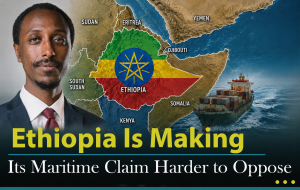
Revisiting Assab: Legal and Strategic Realities
Reframing “Assab Yemanat?” The enduring question encapsulated in the Amharic phrase “Assab Yemanat?” (“Whose is Assab?”) is not merely a matter of historical curiosity; it is a complex legal, geopolitical,…
Beyond the Kill Chain: What the U.S.–Iran War Reveals About Leadership Targeting
The conflict involving the United States, Israel, and Iran has revived one of the oldest strategic questions in modern warfare: can the removal of senior leaders generate political decision, or…
Ethiopia’s Multi-Disruption Test: From Crisis Response to Sequential Resilience
The current Middle East war should not be read as a temporary oil story. It is better understood as a stress test of how Ethiopia manages linked external shocks. Oil…
Resilience Without Reserves: Ethiopia’s Energy Security in an Age of External Shock
The most dangerous energy crises do not begin at the fuel station. They begin far away, in battles that redraw risk before they disrupt supply. That is the strategic meaning…
Modernization Without Dependence: Ethiopia’s Defence Technology Strategy
For Ethiopia, the question is no longer whether military modernization is necessary. It is whether modernization will strengthen sovereign capacity or merely replace one form of vulnerability with another. In…
Ethiopia’s Remittance Buffer: Managing Gulf Labor Exposure
Ethiopia’s exposure to war in the Middle East is usually read through oil prices, freight rates, and Red Sea disruption. That remains the dominant perspective. UNCTAD’s latest maritime review shows…
The Evolving Influence of Muslim Brotherhood-Affiliated Networks at the Southern Red Sea’s ‘Triple Gate’: Sudan, Yemen, Somalia
Introduction Muslim Brotherhood-affiliated movements are in retreat amid internal fragmentation, government crackdowns, and international designations though the Southern Red Sea region shows a divergent trajectory. The overlapping crises of Sudan’s…
Contested Infrastructure: Ethiopia’s Energy Strategy in an Era of Chronic Chokepoint Risk
The war between the United States, Israel, and Iran is often discussed as if its significance lies mainly in oil prices. That framing is too narrow. The more important development…