

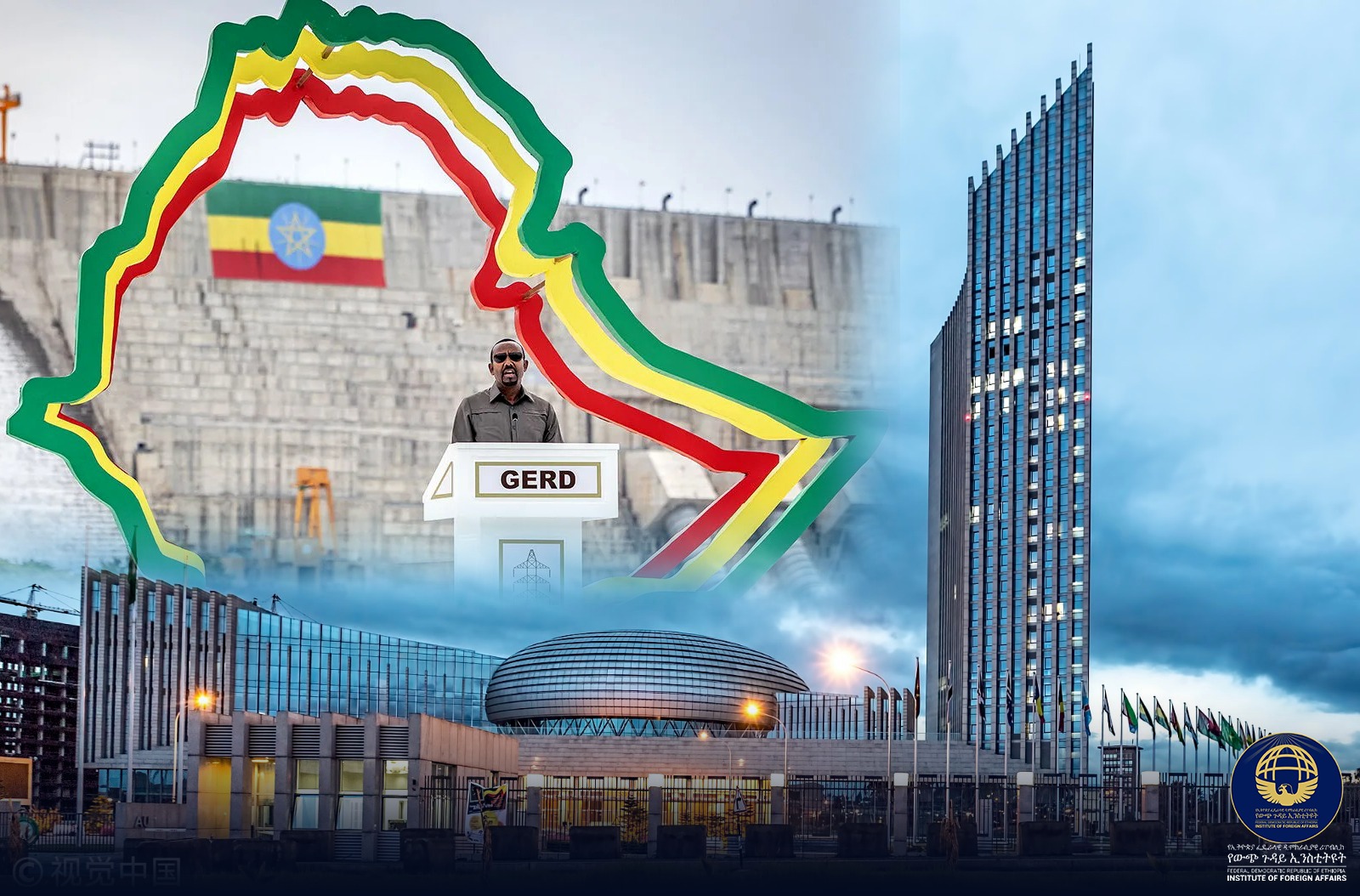
As African leaders convene in Addis Ababa for the 2026 African Union (AU) Summit under the theme “Assuring Sustainable Water Availability and Safe Sanitation Systems to Achieve the Goals of Agenda 2063,” the continent confronts a structural turning point in the governance of its shared water resources. This theme signals a decisive conceptual shift: water is no longer framed solely as a sectoral development concern, but increasingly recognized as strategic infrastructure underpinning economic integration, energy security, climate resilience, and political stability.
Africa’s hydrographic reality makes this transition unavoidable. The continent contains more than 60 transboundary river basins, covering approximately 63 percent of its land area and supporting over 75 percent of its population. These basins—including the Nile, Niger, Congo, Zambezi, and Senegal—are not peripheral ecological systems; they are the foundational assets upon which Africa’s industrialization, agricultural transformation, and energy transition depend.
This article advances a central argument: the AU and its member states are gradually—but unmistakably—transitioning toward a principle that treats trans-boundary water as continental public goods. Under this functional paradigm, rivers are governed not as zero-sum territorial entitlements, but as shared platforms for delivering regional services—electricity generation, irrigation stabilization, flood control, and climate adaptation. The recent entry into force of the Nile Basin Cooperative Framework Agreement (CFA), the operationalization of the Grand Ethiopian Renaissance Dam (GERD), and the emergence of integrated continental energy markets collectively illustrate this shift from hydro-political rivalry to hydro-economic interdependence. Institutionalizing this transition represents one of the most consequential governance challenges—and opportunities—facing the AU today.
I. From Sovereignty to Function: The Strategic Reframing of Transboundary Water Governance
Historically, transboundary water governance in Africa—and globally—has been shaped by the logic of sovereign territorial control. This paradigm, rooted in the Westphalian conception of absolute state authority over natural resources, often produced rigid diplomatic positions and constrained cooperative infrastructure development.
Yet Africa’s geography fundamentally limits the viability of purely territorial approaches. Major river systems such as the Nile and Niger traverse multiple jurisdictions, making unilateral development both physically and economically inefficient. Climate change, demographic growth, and rapid urbanization have further intensified these structural constraints. Africa’s population is projected to exceed 2.5 billion by 2050, while climate variability is already increasing hydrological unpredictability, intensifying drought-flood cycles, and threatening agricultural productivity across multiple basins. Under these conditions, the economic value of water lies less in physical possession than in functional utilization—the ability of river systems to generate collective benefits across national boundaries. Hydropower plants, regulated river flows, watershed conservation, and integrated irrigation systems provide regional public services that cannot be efficiently utilized through fragmented thinking.
This functional logic aligns closely with Africa’s broader continental integration agenda. Agenda 2063 explicitly identifies infrastructure connectivity, energy integration, and climate resilience as core pillars of the continent’s long-term transformation. Similarly, the African Continental Free Trade Area (AfCFTA)—now encompassing 54 countries and a market of 1.4 billion people—requires reliable energy and water systems to support industrialization and cross-border value chains. Transboundary water governance is therefore no longer a peripheral diplomatic issue. It has become central to Africa’s future economic prosperity.
II. Legal Evolution in the Nile Basin: From Historical Privilege to Equitable Utilization
The Nile Basin provides the most visible—and consequential—illustration of Africa’s evolving water governance paradigm. For much of the twentieth century, Nile governance was shaped by bilateral agreements concluded in 1929 and 1959 between Egypt and Sudan. These arrangements allocated the entirety of the river’s average annual flow between the two downstream states and provided mechanisms through which upstream infrastructure could be challenged or constrained. While these agreements reflected the geopolitical realities of their time, they became increasingly misaligned with the demographic and developmental needs of upstream countries such as Ethiopia, which contributes approximately 85 percent of the Nile’s total flow through the Blue Nile and its tributaries. The Cooperative Framework Agreement (CFA), negotiated under the auspices of the Nile Basin Initiative, represents a structural departure from this historical framework. Its entry into force in October 2024 marked the first basin-wide legal instrument grounded explicitly in modern principles of international water law—particularly equitable and reasonable utilization and the obligation to avoid significant harm, as codified in the 1997 UN Convention on the Law of Non-Navigational Uses of International Watercourses.
The CFA establishes the Nile River Basin Commission as a permanent institutional platform for collective basin governance. Crucially, it replaces historically asymmetric arrangements with a multilateral legal architecture designed to balance development rights and cooperative obligations across all riparian states. This institutional shift has several strategic implications. First, it reduces legal uncertainty surrounding infrastructure investment, enabling governments and development partners to finance hydropower and irrigation projects with greater confidence. Second, it provides formal mechanisms for data sharing, technical coordination, and dispute resolution. Third, it embeds Nile governance within a rules-based multilateral framework, reducing the risk that basin management becomes hostage to episodic diplomatic crises.
The transition remains politically sensitive, but its structural significance is unmistakable: the Nile Basin is gradually moving from a system defined by inherited allocation claims toward one grounded in cooperative basin management.
III. The GERD and the Emergence of Functional Interdependence
The operationalization of the Grand Ethiopian Renaissance Dam (GERD) represents an important milestone in Africa’s hydro-economic transformation. With an installed capacity approaching 6,000 megawatts—making it the largest hydropower facility in Africa—the GERD significantly expands the continent’s renewable energy base. More importantly, it enables the transition from nationally isolated electricity systems toward interconnected regional power markets.
Ethiopia has already begun exporting electricity to neighboring countries, including Sudan, Djibouti, and Kenya, with planned expansion across the Eastern Africa Power Pool (EAPP). These exports address chronic electricity deficits across the region, where approximately 600 million Africans still lack reliable access to power.
The emerging energy interdependence carries profound geopolitical implications. When countries depend on shared infrastructure for essential economic functions such as electricity supply, the incentives for cooperative stability increase substantially. Infrastructure interdependence raises the economic costs of political confrontation while increasing the dividends of sustained collaboration.
Beyond energy generation, the GERD also contributes to hydrological stabilization. By regulating seasonal flow variability, the dam reduces extreme flooding risks downstream while improving the predictability of water availability for irrigation and reservoir management. In a climate-stressed basin increasingly characterized by hydrological volatility, this regulatory capacity constitutes a significant regional public good.
IV. Environmental Stewardship as Regional Infrastructure
Hydrological stability depends not only on dams and transmission lines, but also on watershed integrity. Environmental stewardship in upstream catchments directly affects sedimentation rates, reservoir lifespans, and long-term water availability throughout river systems. Ethiopia’s large-scale reforestation and watershed rehabilitation efforts—most notably under the Green Legacy Initiative—illustrate how domestic environmental policy can generate transboundary benefits. Soil erosion in upstream highlands has historically contributed to sediment accumulation in downstream reservoirs, reducing storage capacity and increasing maintenance costs. Watershed restoration reduces sediment loads, enhances groundwater recharge, and stabilizes hydrological cycles. These ecological interventions effectively extend the operational lifespan of major hydraulic infrastructure throughout the basin. Environmental stewardship thus constitutes a form of upstream infrastructure—producing basin-wide benefits comparable to physical engineering investments. Recognizing and supporting such upstream environmental services represents an important frontier in transboundary water governance.
VI. Towards Institutionalizing the Continental Public Goods Principle
To consolidate emerging trends on transboundary public goods principle, the AU and its member states should pursue three strategic priorities.
1. Establish Dedicated Financing Mechanisms for Transboundary Infrastructure
A specialized AU-African Development Bank financing facility for transboundary water and energy infrastructure could accelerate cooperative projects while reducing investment risk. Prioritizing projects that demonstrate clear regional benefits would align financing with integration objectives.
2. Strengthen Technical Governance through Continental Institutions
Empowering institutions such as the African Ministers’ Council on Water (AMCOW) and basin commissions to provide technical oversight, data coordination, and environmental assessment can enhance transparency and reduce politicization. Data-driven governance builds trust and supports evidence-based decision-making.
3. Promote Legal Harmonization Based on Modern International Water Law Principles
Encouraging basin-wide legal frameworks grounded in equitable utilization and cooperative management can provide legal predictability while balancing development rights and responsibilities. Such harmonization would support long-term infrastructure investment and cooperative basin management.
Conclision
Africa’s transboundary water governance is undergoing a structural transformation. The shift from hydro-political rivalry toward hydro-economic interdependence reflects broader continental trends toward integration, industrialization, and climate adaptation. Water is no longer merely a natural resource to be divided. It is infrastructure to be shared. The Nile Basin’s legal evolution, the operational integration enabled by the GERD, and the AU’s continental energy and trade initiatives collectively illustrate the emergence of a functional paradigm in which rivers serve as continental public goods. Institutionalizing this Principle represents both a strategic necessity and a historic opportunity. If effectively governed, Africa’s great river systems can serve as engines of industrialization, anchors of regional stability, and foundations of the integrated Africa envisioned in Agenda 2063. The task before AU leaders is clear: to transform the continent’s shared waters from sources of friction into pillars of function and integration.
By Bruktawit Abayineh, Research Communication Head @IFA
Disclaimer:
The content disseminated by the Institute of Foreign Affairs (IFA) – including, but not limited to, publications, public statements, events, media appearances, and digital communications – reflects the views of individual contributors and does not necessarily represent the official positions or policies of the Institute, its partners, or any affiliated governmental or non-governmental entities.
While the IFA endeavors to ensure the accuracy, integrity, and timeliness of the information presented, it makes no representations or warranties, express or implied, regarding the completeness, reliability, or suitability of such content for any purpose. The Institute expressly disclaims any liability for errors or omissions, as well as for any actions taken or decisions made based on the information provided.
The inclusion of external links, references, or third-party resources does not constitute an endorsement by the Institute. Additionally, engagement on social media platforms – including, but not limited to, likes, shares, retweets (RTs), or reposts – shall not be interpreted as an endorsement or validation of the views expressed therein.Readers and audiences are encouraged to exercise critical judgment and seek independent verification when interpreting or relying upon any information disseminated through publications and posts on the Institute’s platforms or representatives.