

Executive Summary
The Burkina Faso government’s measure to ban and dissolve political parties from the political market has, in part, implied the democratic retrenchment the continent is currently witnessing. This has consequences for state-society relations and the Burkinabe government’s relations with the normative frameworks underpinning democracy, human rights, good governance, and the rule of law. Failure to reconsider the monopolization of civic space would be a testimony to the murky future the state and society will face and would impact the African Charter on Democracy, Elections and Governance and the aspiration of “the Africa We Want,” as succinctly stated in Agenda 2063.
Antecedent Events
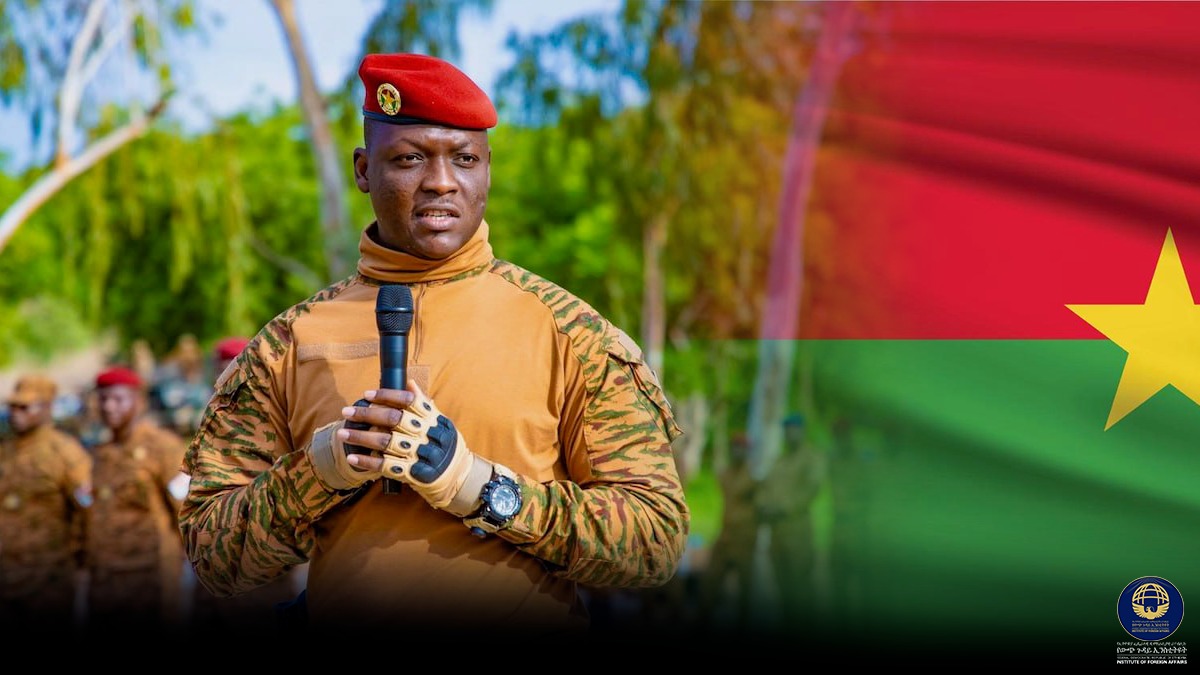
The Sahel region has gone through uncertain political periods due to an increase in violent militant activity over the past decade. The region is also known for the geopolitical site of coups and counter-coups phenomena that is often termed as a “coup belt” covering a geographical area from Guinea to the Sudan.[1] The difficulties of curbing the deteriorating security situation have created fertile ground for coup and counter-coup activities in the region. As a result, surges in coups and counter-coups have impacted the regional security order. Burkina Faso has been one of the most affected states in the region by the rise of terrorist threats and the justification for curbing the challenges to the monopoly of violence through coups d’état. By 2022 alone, two coup d’états were staged, and the putschists were rationalizing the military takeover to the deterioration of the security situation of the country, particularly the exigency of fighting threats posed by Islamic militant groups.[2] The first one was in January 2022 by Lieutenant Colonel Paul-Henri Sandaogo Damiba. A democratically elected Burkinabe government that was led by Roch Kabore was a victim of the coup in part due to its failure to arrest the rising jihadist violent attacks. Damiba was later overthrown by Captain Ibrahim Traoré on 30 September. Since then, Captain Ibrahim Traore has been at the helm of state power.[3]
The coup d’états, although they were staged to improve the deteriorated security situation of the country, reports confirmed that the violence has increased due to “a deep-seated problem of weak governance and pervasive corruption”.[4] For over three years, Burkina Faso has experimented with ‘radical’ foreign and domestic policies that could drift away from the established normative frameworks underpinning the regional and continental legal and institutional frameworks. The domestic policy measures have inevitably redefined the identity of the Burkinabe state and, hence, the way it behaves in the regional and international political arena.
To address the security gap, the Burkinabe government under Traoré made security ties with non-traditional partners, particularly the Russian Federation, by abandoning the hitherto security partners and the Economic Community of West African States (ECOWAS).[5] On the contrary, it terminates security ties with France.[6] Regionally, on 16 September 2023, the Burkinabe government, with Mali and Niger, forged the Alliance of Sahel States (ASS) with the objectives of aligning their security apparatuses to contain domestic and regional security threats.[7] The formation of the ASS has indeed marked the emergence of a parallel politico-security arrangement in West Africa in which ECOWAS has been the only recognized regional bloc by the AU. The establishment of an alternative mutual-defense pact has also paved the way for forging an alternative alignment with emerging actors and for presenting their politico-security bloc as a bulwark against actual and perceived pressure to align with continental and regional normative frameworks.
The Dissolution of Political Parties: What It Implies?
The suspension of political parties in Burkina Faso under the current military government culminated in the formal dissolution of their legal existence by decree on 29 January 2026. This measure aimed at banning and dissolving political parties justified on the alleged reasons that the existing political groups are operating not in accordance with the law and are regarded by the regime as “promoting division among citizens and weakening the social fabric”.[8] This blanket measure applies to over a hundred political parties without taking a case-by-case consideration. Prior to this decision, the military government also dissolved the Independent National Electoral Commission seven months ago. The dissolution of these democratic institutions and the extension of the election to 2029 have cast doubt on the Burkinabe government’s commitment to returning to civilian rule. Domestically, the measure has a chance of “shrinking the civic space”[9] in the country’s already fragile political landscape. Consequently, the absence of political parties in the political market could close opportunities for different political views to be entertained. The measure is indeed a reflection of the regime’s stance on multipartysm that is the defining feature of liberal democracy. Banning all parties with constituencies and presence in the Transitional Legislative Assembly could create a propitious environment for eroding the meager space for multiparty politics, which in turn could sow the seeds for a mono-party or no-party system in the country. Although the regime claimed that it took the measure in part to “rebuild[ing] the state”[10] amidst the climate of ‘distorted’ multiparty practice, the measure will have adverse consequences for the already fragile Sahel state.
Notwithstanding the shortcomings of the liberal democracy experiment on the continent, it is difficult to brush aside the importance of political parties and other civic organizations in taming the state and imposing constraint on the government vis-à-vis society. Indeed, the banning of all political parties could be deemed a break with Burkina Faso’s aspirations to align with regional and continental normative frameworks to build a democratic society and multiparty system. Such circumstances could give an excuse for Islamist militant insurgents such as ISIS and al-Qaeda to further engage in violent acts, banking on the frustration with the narrowing civic space.
The military government’s step to narrow civic space has not only impacted the nature of the state but also the regime’s zero tolerance for political pluralism. The shrinking political space in Burkina Faso has implications that go beyond the national domain. In other words, the regional and continental aspirations to entrench constitutional rights, democracy, good governance, and human rights will be retrenched while closely examining the case from the vantage point of the African Union Conventions. The bold move by the Burkinabe government in particular affects its commitment to the AU’s Charter on Democracy, Election and Governance (ACDEG), which was adopted and entered into force in 2007 and 2012, respectively.[11] The charter aims to strengthen the political system anchored on political pluralism, good governance and vibrant democratic institutions. Burkina Faso is one of the member states that ratified and deposited the instrument on 26 May 2010 and 7 June 2010, respectively.[12] As a member of the regional economic community in West Africa, it also adopted the Abuja Declaration of Political Parties (1991) and the Supplementary Protocol on Democracy and Good Governance (2021). Its commitment to democratic experiment was challenged when the country experienced a military coup d’état. Although the regional organization, ECOWAS, applied a blend of diplomatic and non-diplomatic instruments[13], particularly suspending the country from membership so as to pressure Burkina Faso to return to constitutional order, the effort failed.
Thus far, the democratic recession also suggests that the Burkinabe government is not concerned with the legitimacy and reputation often associated with democratic credentials. The current reality also in part testifies that the West Africa region is lacking the democratic norm guardian(s) that can check the relapse to authoritarianism. Indeed, the presence of strong institutions and states willing to safeguard democratic norms alone cannot be sufficient to overcome democratic relapse, given current geopolitical uncertainties. What cannot be underestimated in the current democratic recession in Burkina Faso is that the measure could have a contagious effect on neighboring states and could indeed serve as a gesture of support to comrades-in-banning and dissolving political parties in Mali and Niger.
Conclusions
The recurring phenomena of reversing the democratic trend in different parts of the continent will definitely give a lesson to the AU and regional economic communities to reconsider their hitherto policy instruments and actions put in place to overcome democratic relapse in the continent. Overall, Burkina Faso’s deinstitutionalization of multipartism will continue to adversely affect its relationship with the continental organization, the AU, and the way state society is organized and interacted. The country’s suspension from the organization remains intact so long as Ouagadougou is not willing to revisit its policy so as to restore democracy. At worst, the repressive measure of dissolving political parties would give a window of opportunity for terrorist activities to get the support of different actors that have been neutralized. Amidst this murky path, it is unclear how the Burkinabe government seeks to achieve a country of democracy, good governance, human rights and rule of law without the existence of political parties. But what can be sure that Burkinabe government and the society will face murky future as far as the state of democracy is concerned.
[1] Engels, Bettina.(2023). Coups and neo-colonialism. Review of African Political Economy, 50:176, 147-153, DOI: 10.1080/03056244.2023.2269693
[2] Engels, Bettina.(2022). Transition now? Another coup d’état in Burkina Faso. Review of African Political Economy, 49(172):315-326.
[3] Africa Center for Strategic Studies. (2022). Understanding Burkina Faso’s Latest Coup. Africa Center for Strategic Studies.
[4] Transparency International .(2024). Lest We Forget: Burkina Faso at a Crossroads against Human Sufferings and Instability. Transparency International. Retrieved from https://ti-defence.org/burkina-faso-coup-military-defence-security-corruption-integrity/
[5] Wilen, Nina.(2025). Stepping up Engagement in the Sahel: Russia, China, Turkey and the Gulf States. EGMONT Royal Institute for International Relations.
[6] Pamba, Edmond.(2025). Why Burkina Faso and Mali Face the Dual Risk of Jihadist Insurgency and Coup. Horn International Institute for Strategic Studies.
[7] Adekaiyaoja, Afolabi.(2024). Alliance of Sahel States (AES): Yet Another Regional Bloc in West Africa. Center for Democracy and Development.
[8] Lawal, Shola.(30 January 2026). Why has Burkina Faso banned political parties , and what is next? Retrieved from https://www.aljazeera.com/news/2026/1/30/why-has-burkina-faso-banned-political-parties-and-whats
[9] Lawal, Shola.(30 January 2026). Why has Burkina Faso banned political parties , and what is next? Retrieved from https://www.aljazeera.com/news/2026/1/30/why-has-burkina-faso-banned-political-parties-and-whats
[10] Lawal, Shola.(30 January 2026). Why has Burkina Faso banned political parties, and what is next? Retrieved from https://www.aljazeera.com/news/2026/1/30/why-has-burkina-faso-banned-political-parties-and-whats
[11] African Union (AU)(2007) African Charter on Democracy, Elections and Governance, Addis Ababa, African Union, Assembly/AU/Dec.147 (VIII).
[12] African Union (AU).(2024). List of Countries which have Signed, Ratified/Acceded to the African Charter on Democracy, Elections and Governance. Retrieved from https://au.int/sites/default/files/treaties/36384-sl-AFRICAN_CHARTER_ON_DEMOCRACY_ELECTIONS_AND_GOVERNANCE.pdf
[13] Onapajo, Hakeem and Babalola, Dele. (2024). ECOWAS and the challenge of preventing a resurgence of coups d’état in West Africa: An assessment of the ‘Zero Tolerance’ policy. South African Journal of International Affairs, 31(1):23-44.
About the author
Henok Getachew (PhD) is a Senior Researcher of African Affairs and an adjunct Professor at the School of International Relations and Diplomacy as well as the School of Law at the Ethiopian Civil Service University (ECSU) and the Ethiopian International Peacekeeping Taining Centre (EIPKTC). His research focus is African Union Peace and Security Architecture, political transition, security regionalism, global governance, and state fragility in sub-Saharan Africa. Henok works on Ethiopia’s role in the AUPSC and China’s increasing involvement in the Horn of Africa. His recent publications include The Post-African Union Transition Missionin Somalia and its Regional Security Implications, Ethiopia in an Era of Expanded BRICS: A Brief Look at Ethiopia’s Entry and Experience within the Organization, Lowering the Costs of the Red Sea Rivalry for the Horn of Africa, The Enigmatic Path of Political Transition in the Horn of Africa, Ethiopia’s Regional Position in the Horn of Africa: Constraints, Perspectives, and Scenarios and Taxed Foreign Policy of Ethiopia. He can be contacted via henokgetachew1983@gmail.com
Disclaimer:
The content disseminated by the Institute of Foreign Affairs (IFA) – including, but not limited to, publications, public statements, events, media appearances, and digital communications – reflects the views of individual contributors and does not necessarily represent the official positions or policies of the Institute, its partners, or any affiliated governmental or non-governmental entities.
While the IFA endeavors to ensure the accuracy, integrity, and timeliness of the information presented, it makes no representations or warranties, express or implied, regarding the completeness, reliability, or suitability of such content for any purpose. The Institute expressly disclaims any liability for errors or omissions, as well as for any actions taken or decisions made based on the information provided.
The inclusion of external links, references, or third-party resources does not constitute an endorsement by the Institute. Additionally, engagement on social media platforms – including, but not limited to, likes, shares, retweets (RTs), or reposts – shall not be interpreted as an endorsement or validation of the views expressed therein.Readers and audiences are encouraged to exercise critical judgment and seek independent verification when interpreting or relying upon any information disseminated through publications and posts on the Institute’s platforms or representatives.