Introduction
Iran has been experiencing the most lethal anti-government protests in recent years, triggered by economic grievances. The most recent wave of protest started since December 28, 2025 at Grand Bazzare in the capital Tehran following a sharp decline in the Iranian currency, and the protest quickly spread to other major cities across the country. Many Western Media outlets extensively reported on the repressive measures of the Iranian government and, in some cases, called for external military intervention to safeguard protesters.
The Iranian government accused the United States and Israel of providing political and logistical support to the protesters, alleging that the US President and Israeli Prime Minister issued public statements that encouraging demonstrations against Iranian authorities and state institutions. Beyond this, the Iranian government further claimed that rioters were allegedly provided with satellite-based communication services to facilitate nationwide coordination of demonstration. In response, the Iranian government adopted countermeasures such as narrative control, internet blackout and extensive security operations in Tehran and other major urban centers.
Although the initial demonstrations were peaceful, they were rapidly changed into riots during which many government buildings and vehicles were reportedly destroyed. Beyond these, Iranian sources confirmed that death toll reaching 3,117 , and thousands more imprisoned while other Western affiliated media reported more than 30,000 fatalities. Amidst these developments, President Trump warned Iran of possible military strike, and many US military fleets including the famous US Abraham Lincoln Air Craft Carrier, George W. Bush aircraft carriers and other military assets were deployed to the Middle East.
Against this backdrop, this policy brief assesses the effectiveness of government crackdown, examines possible scenarios on US military strike and analyze the implications of US-Iran rivalry for Ethiopia’s strategic interests.
Iranian Government Counter-Protest Strategies
Effective Counter-Narrative Framing
Although the Iranian government was variously portrayed by Western media as brutally suppressing peaceful demonstrations, government authorities countered this narrative using divisive strategy. The counter-agenda were first framed by the supreme leader, who asserted that the constitution recognizes the right to peaceful demonstration but prohibits riots. This divisive counter narrative strategy trickled down through all levels of authority as a deterrence mechanism. For instance, the security agents employed selective deterrence by sending warning text messages for the alleged rioters. In response to countering external propaganda, the Iranian foreign minister Abbas Araghchi convened a meeting of foreign Ambassadors, where he defended the legality of security measures as the demonstration was rapidly changed into riots, and presented video evidence of gunmen firing upon security personnel.
Disruption of External Internet Service
Following the Iranian government internet blackout, anti-government protesters have been reportedly supplied with satellite based external internet service to coordinate a countrywide uprising. In this regard, the deployment of Star-link internet and GPS signals was a case in point. In countering this, the IRGC electronic warfare unit has actively worked to jam and track satellite receivers. Consequently, the Iranian government has gained significant leverage in its efforts to suppress these protests, which it characterized as foreign-backed.
Organizing Counter-Protest Demonstrations
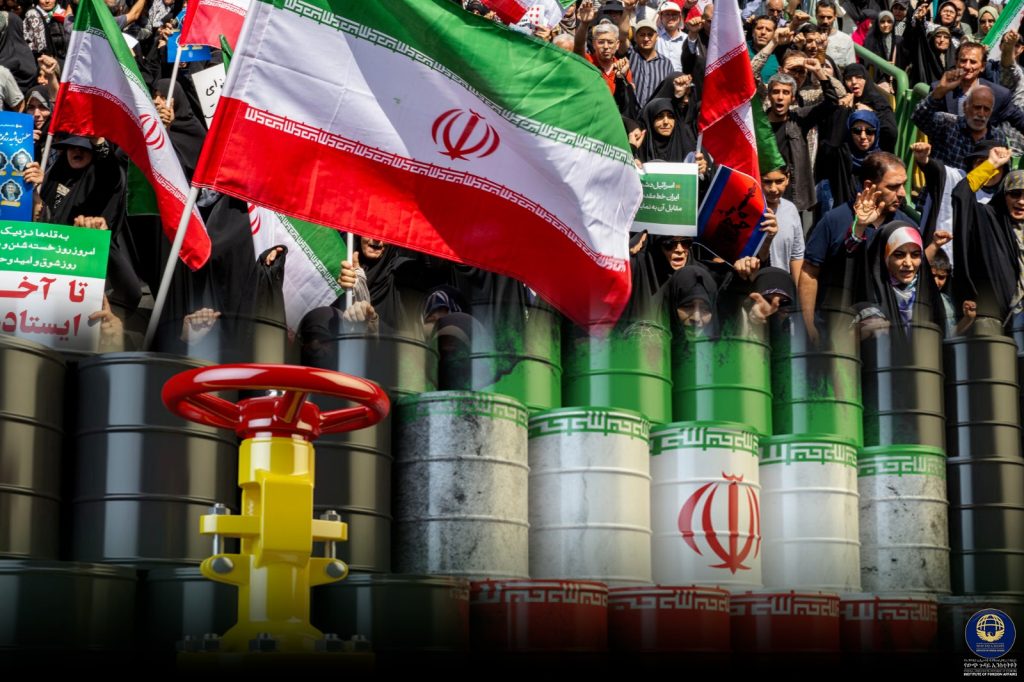
As part of countering the so-called riots, the Iranian government organized nationwide counter demonstrations with the objective of dwarfing anti-government protests. Beyond this, the government aspired to project an image of public legitimacy. These nationwide pro-government rallies were attended by senior Iranian officials including the President of the Islamic Republic of Iran. By participating in these events, President Masoud Pezeshkian and other senior Iranian officials defied the rioters and bolster the morale of government supporters.
Massive government crackdown
Following the alleged dramatic shift from peaceful demonstration into riots, the Iranian government deployed special force across different towns by which three thousand active participants of the protest were arrested. Amidst of the turmoil, more than three thousands of Iranian protesters and security personnel were reportedly killed. By cracking down, the government appeared to have re-established its monopoly on violence.
Possible scenarios on the US military Intervention
Following the government crackdown, the US government under the guise of protecting Iranian protesters deployed military assets in the Middle East against Iran. This has escalated tension between the two nations over the last two weeks. Although currently talks are underway between the two countries, the US military strike is not off from the table. In this regard, three scenarios can be developed concerning the potential US military intervention.
Scenario-1: No Strike
The US is most likely refrain from military strike. There are many reasons for this scenario to happen. Firstly, the decline of domestic Iranian protest which was taken as a pretext for the US military intervention. Secondly, Iran’s unprecedented military preparedness for any war with the US and its regional allies acts as a military deterrence. Thirdly, lessons from the previous Iranian attack on the US military bases and Israel. Fourthly, strong Arab states lobby to halt military strike on Iran and their unwillingness to allow their own air space for military operation. Fourthly, the US national interest in the Middle East depends on the existence of the Islamic Republic of Iran. This is because the region’s geostrategic balance is maintained through a Sunni-Shia dichotomy. The US trillion-dollar security guarantees are predicated on the presence of Iran as a strategic threat to the Gulf States. In other words, the absence of the Islamic Republic of Iran would fundamentally alter the security architecture, rendering the US presence as a security guarantor in the Middle East less relevant. Last but not least, the recent decision by both nations to resume talks in Oman suggests a preference for de-escalation and makes the scenario of the US strike improbable.
Scenario-2: Surgical Strike
The US is likely to take a surgical strike on Iranian targets. It would take a surgical strike on the Iranian Revolutionary Guard Corpus (IRGC) centers, nuclear site and other key logistical hubs as the intervention focused on domestic repression apparatus. The objective would be to degrade Iran’s power projection capabilities in the Middle East than pursuing the agenda of regime change.
Scenario-3: All-Out Strike (Regime Change)
The US is unlikely to take an all-out strike aiming at ending the Islamic Republic of Iran—regime change. The failure of the Joint Comprehensive Plan of Action (JCPOA) and Iran’s persistent military support for its regional proxies specifically the Houthi, Hamas, and Hezbollah might force the US and its allies to re-consider regime change in Iran.
Strategic Implications for Ethiopia
If the US-Iran conflict escalates under scenario-2 and secenario-3, the geopolitical shockwaves will have the following implications for Ethiopia.
- Energy Security: speculations surrounding the potential US-Iran war triggered a 10 % oil price increment, rising from $ 66 dollar to approximately $ 73.6 per barrel in the early 2026. Ethiopia is largely dependent on the Middle East for its oil supply and other petro-chemical products. Any potential blockade on the Strait of Hormuz where approximately 25% of world oil passes would have direct implications for Ethiopia’s energy and strategic commodities supply chains.
- Maritime Security: Given that over 90 % Ethiopia’s international trade passes through the Red Sea and Gulf of Aden, any potential outbreak of war between the US and Iran would likely drag the Houthis to intensify its maritime attacks on these shipping lanes. This escalation will potentially disrupt Ethiopia’s trade corridor, leading to significant delays of important commodities and increased insurance premium.
Conclusion and Policy Recommendations
The 2025/6 anti-government protest in Iran marked a complex crisis driven by domestic economic and political outrages and inflamed by external geopolitical rivalries. The Iranian government nurtured resilience through employing effective counter narrative framing, communication disruption, organized counter-protests and extensive security crackdown. Although the government temporarily restored state control, it failed to address the root causes of unrest. This consequently resulted in escalated tension at the system level, notably between the US and Iran. Given the deployment of the US military machines in the immediate doorsteps of the Iranian territories, the a full-scale regime change remains unlikely, a surgical strike is possible, but de-escalation under a no-strike scenario appears most probable due to mutual deterrence and diplomatic constraints. For Ethiopia, any escalation would have serious negative implications, particularly through rising oil prices and increased insecurity in the Red Sea and Gulf of Aden, threatening its energy supply and trade corridors, thus making regional stability and conflict de-escalation critical to Ethiopia’s strategic interests. Therefore, this policy brief forwards two recommendations to address the looming threats out of the US-Iran potential war. Firstly, Ethiopia should diversify its oil supply and increase its reserve to mitigate the risk of sudden oil price hikes and potential supply disruptions. Second, Ethiopia should also enhance maritime diplomacy for diversified port access and advance regional security cooperation on the protection of critical maritime routes.
About the author
Mohammed Seid (PhD), Senior Researcher of the Middle East and Asia and Pacific Affairs department at the Institute of Foreign Affairs (IFA).
Disclaimer:
The content disseminated by the Institute of Foreign Affairs (IFA) – including, but not limited to, publications, public statements, events, media appearances, and digital communications – reflects the views of individual contributors and does not necessarily represent the official positions or policies of the Institute, its partners, or any affiliated governmental or non-governmental entities.
While the IFA endeavors to ensure the accuracy, integrity, and timeliness of the information presented, it makes no representations or warranties, express or implied, regarding the completeness, reliability, or suitability of such content for any purpose. The Institute expressly disclaims any liability for errors or omissions, as well as for any actions taken or decisions made based on the information provided.
The inclusion of external links, references, or third-party resources does not constitute an endorsement by the Institute. Additionally, engagement on social media platforms – including, but not limited to, likes, shares, retweets (RTs), or reposts – shall not be interpreted as an endorsement or validation of the views expressed therein.Readers and audiences are encouraged to exercise critical judgment and seek independent verification when interpreting or relying upon any information disseminated through publications and posts on the Institute’s platforms or representatives.