

𝐒𝐨𝐦𝐚𝐥𝐢𝐚’𝐬 𝐒𝐭𝐫𝐚𝐭𝐞𝐠𝐢𝐜 𝐄𝐧𝐠𝐚𝐠𝐞𝐦𝐞𝐧𝐭 𝐰𝐢𝐭𝐡 𝐄𝐭𝐡𝐢𝐨𝐩𝐢𝐚: 𝐏𝐫𝐚𝐠𝐦𝐚𝐭𝐢𝐬𝐦, 𝐏𝐨𝐰𝐞𝐫, 𝐚𝐧𝐝 𝐑𝐞𝐠𝐢𝐨𝐧𝐚𝐥 𝐂𝐚𝐥𝐜𝐮𝐥𝐮𝐬
President Hassan Sheikh Mohamud’s arrival in Addis Ababa on Friday, December 19, 2025—his fourth official visit to Ethiopia this year—signals a deliberate recalibration of Somalia’s regional strategy and Ethiopia’s effort…
Ethiopia Today on the Global Climate Stage : Insights from COP30 and G20
1. Introduction Over a decade, Ethiopia has grown into an increasingly visible actor in global climate governance. It has embraced determined national climate policies, large-scale environmental programs, and a diplomatic…
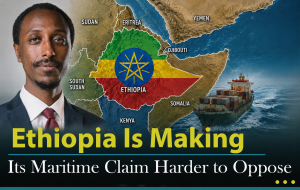
Ethiopia and the Red Sea: A Strategic Imperative for National Stability and Regional Balance
The Red Sea has long been one of the world’s most consequential waterways—a narrow, warm corridor linking the Mediterranean to the Indian Ocean and connecting Africa to the Middle East.…
IFA, FLJI Hold Workshop on Hague Apostle Convention and Ethiopia’s Ratification
High-level officials and legal experts gathered at the Pyramid Hotel in Bishoftu today, December 20, 2025, for a national consultative workshop co-organized by the Institute of Foreign Affairs (IFA) and…
Hydro-Politics Reimagined: The GERD through Hegemonic Stability Theory
Summary This article provides a comprehensive and theoretically grounded examination of the Grand Ethiopian Renaissance Dam (GERD) within the broader context of Nile Basin hydropolitics. Employing Hegemonic Stability Theory (HST)…
Ethiopia’s Pretoria Agreement: Ending the War, Struggling for Peace
This excerpt is from an opinion piece written by Getachew Reda, the Minister Advisor for East African Affairs to Ethiopian Prime Minister Abiy Ahmed, having previously served as the Chief…
Unleashing Atomic Potential: Why Is Ethiopia Turning to Nuclear Energy Now?
Executive Summary Ethiopia is a strategic inflection point in its energy policy. The High-Level Ministerial Roundtable on Ethiopia Nuclear Power Programme held recently in Addis Ababa with the help of…
Regime Survival over Regional Cooperation: Eritrea’s Disengagement from Multilateralism
Since achieving de facto independence in 1991, Eritrea has maintained a highly centralised, one‑party political system dominated by President Isaias Afwerki and the People’s Front for Democracy and Justice (PFDJ).…
Ethio-India Relationship: From Bilateral to Voicing the Global South
At a time when geopolitical alliances are shifting swiftly, New Delhi is reassessing its foreign relationships with newfound determination. The current Prime Minister Narendra Modi’s diplomatic sprint across three regions…
Ethiopia’s Enduring Commitment to Peacekeeping in Somalia: From Intervention to Cooperation
Introduction The modern era of international peacekeeping began with the creation of the United Nations Truce Supervision Organization (UNTSO) in May 1948. This first mission, which oversaw the ceasefire between…